 |
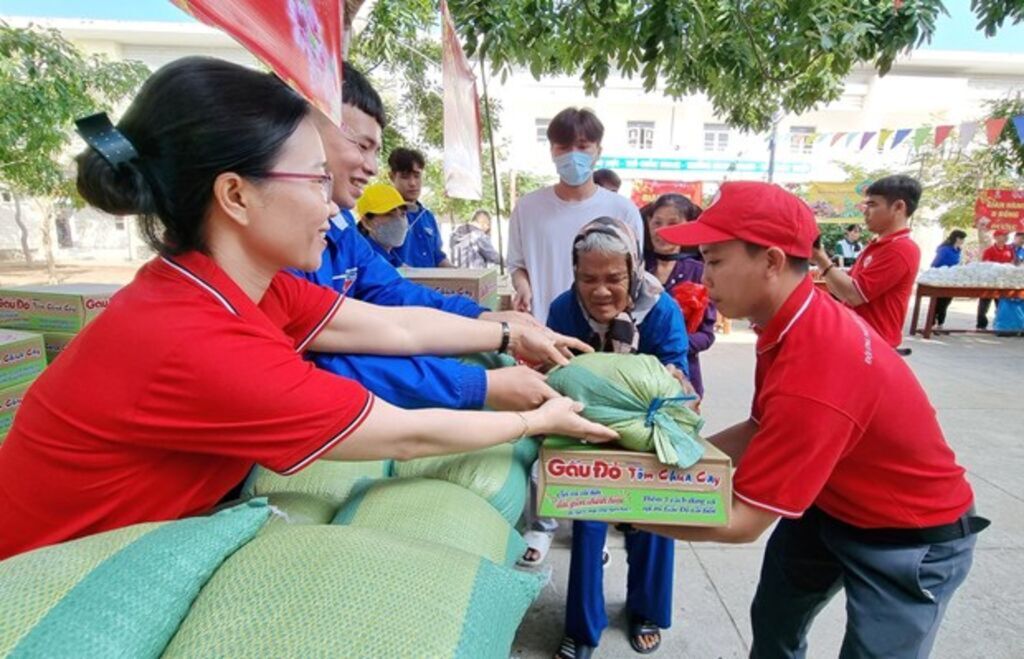
| Staff members of the Ninh Thuan provincial Red Cross Society assist elderly people with difficult circumstances in transporting goods at a humanitarian market fair. (Photo: VNA) |
Hanoi (VNA) – The 14th National Party Congress convenes as Vietnam is entering a new phase of development shaped by both opportunities and challenges, underscoring the need to pursue rapid and sustainable economic growth in tandem with social progress, equity and improved living standards, with humanitarian work playing a pivotal role in advancing human development and strengthening national unity.
Recent developments indicate that amid the growing impacts of natural disasters, epidemics, climate change and social risks, humanitarian activities must move beyond short-term, ad hoc assistance towards a more comprehensive and sustainable approach closely linked to long-term development goals.
Integrating humanitarian work into the Party’s overall development strategy
Over time, the Party and the State have progressively built and refined a framework of viewpoints, policies, guidelines and laws centred on human development, with due respect for and protection of human and citizens’ rights.
Within this framework, humanitarian work has emerged as an important complementary pillar, providing timely support to vulnerable groups while reinforcing ties between the Party, the State and the people. In 2025, despite major organisational changes stemming from administrative restructuring, humanitarian activities were carried out continuously without interruption. Total resources mobilised across the system exceeded 5.3 trillion VND (201.7 million USD), benefiting more than 8.9 million people.
According to Do Thi Thu Thao, President of the Vietnam Red Cross Society, staff, members and volunteers nationwide stepped up efforts to deliver a wide range of practical humanitarian initiatives. Emergency relief was provided promptly, voluntary blood donation campaigns were maintained effectively, social resource mobilisation improved, and the Society’s role in emergency response was increasingly recognised by both authorities and the public.
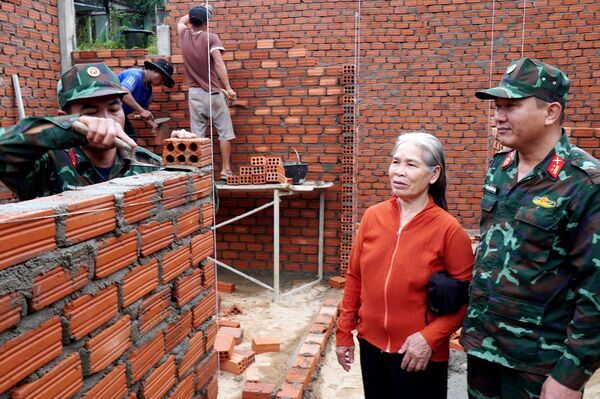
A key direction for humanitarian work in the new period is the shift from short-term relief to sustainable solutions. In 2025, alongside emergency assistance, thousands of households received support for livelihoods as well as housing construction and repairs, helping to secure long-term stability. This approach is consistent with the goal of sustainable poverty reduction and strengthens people’s capacity for self-reliance.
As disasters grow more complex, prevention and response have continued to be identified as core pillars of humanitarian action. In 2025, tens of thousands of households affected by storms and floods were assisted in a timely manner, while disaster response teams from the central level to the grassroots were further strengthened, with thousands of members ready to respond when incidents occur. Total spending on disaster prevention and response exceeded 1.234 trillion VND, supporting more than 513,000 people.
Public healthcare also remains a central component of humanitarian work. In 2025, healthcare activities worth over 307 billion VND were implemented, assisting around 2.6 million people through humanitarian medical examinations and treatment, community-based first aid and disease prevention communications. Meanwhile, the voluntary blood donation movement remained stable, with more than 1.75 million units of blood collected, largely meeting emergency and treatment demands.
These outcomes show that humanitarian work in 2025 not only expanded in scale but also steadily shifted towards a more sustainable orientation, closely aligned with the goal of ensuring social welfare and caring for people, in line with the consistent spirit of the Party’s policies and resolutions.
Toward sustainable humanitarian movements
In 2026, humanitarian efforts will continue to focus on consolidating organisational structures and improving operational efficiency, ensuring the stable and smooth functioning of the Red Cross system following administrative mergers.
Alongside organisational strengthening, humanitarian activities will remain closely linked to social welfare objectives and the improvement of people’s livelihoods, particularly for vulnerable groups, the poor, those in difficult circumstances, and people affected by natural disasters and epidemics.
In the field of disaster prevention and response, Red Cross chapters at all levels will prioritise enhancing organisational and management capacity, strengthening disaster response forces, expanding training for staff, members and volunteers, and working closely with local authorities and relevant agencies to provide timely assistance when disasters or incidents occur, contributing to social stability and production recovery.
Public healthcare activities will continue to focus on humanitarian medical care, community-based first aid, disease prevention communications and the sustained promotion of voluntary blood donation.
At the same time, greater emphasis will be placed on resource mobilisation, communications and external relations to encourage broader participation by organisations, businesses and all segments of society in humanitarian work./.