 |
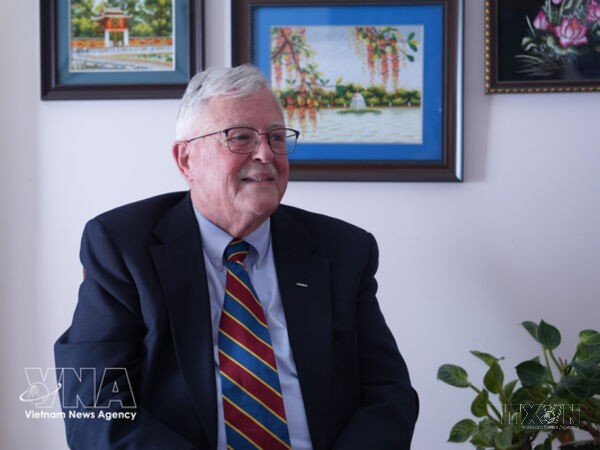
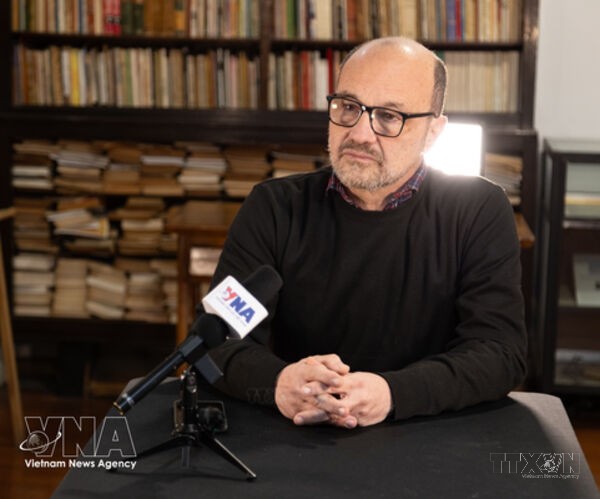
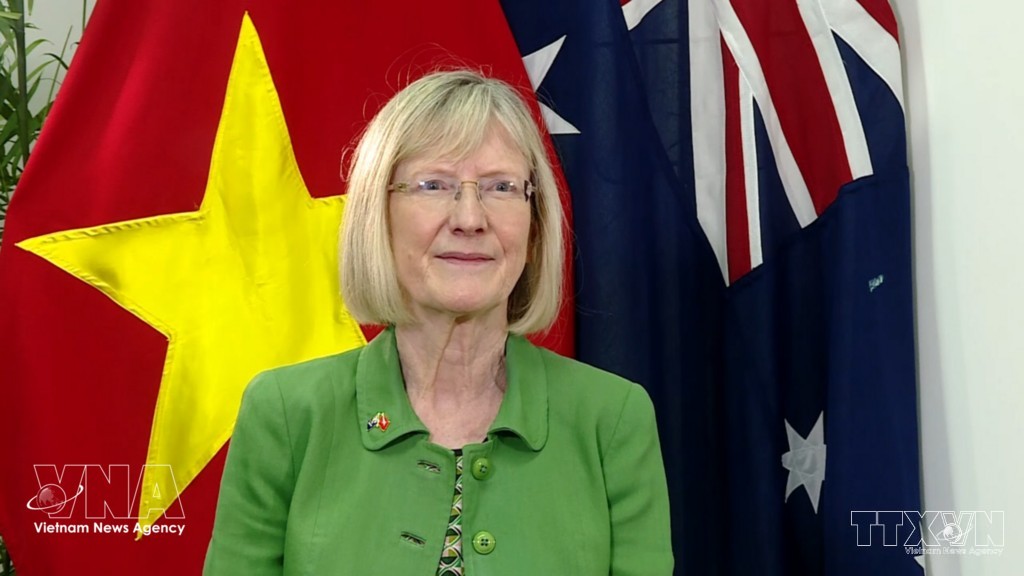
| Australian Ambassador to Vietnam Gillian Bird (Photo: VNA) |
Hanoi (VNA) - Vietnam’s growing engagement in regional and international affairs, in line with the Politburo’s Resolution No.59 -NQ/TW on international integration, is enabling the country to play a more active role in shaping the international environment and creating new opportunities to deepen the Vietnam-Australia Comprehensive Strategic Partnership, Australian Ambassador to Vietnam Gillian Bird said in a recent interview with the Vietnam News Agency (VNA).
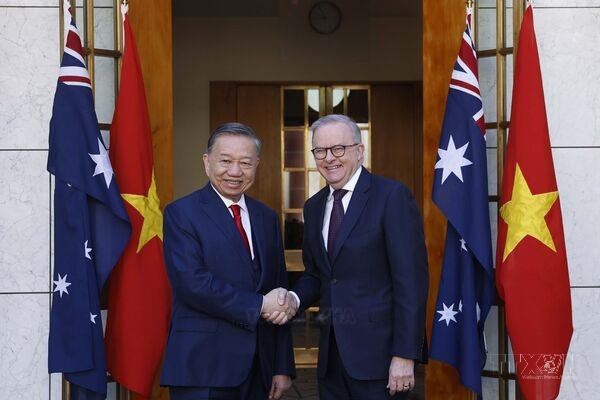
The diplomat affirmed that Australia highly values Vietnam as an important regional partner. She welcomed Vietnam’s expanding engagement with international partners, including recent high-level visits by General Secretary of the Communist Party of Vietnam Central Committee and President To Lam.
The Ambassador was delighted to see Vietnam moving beyond simply participating in regional affairs to playing a more active role in helping shape the region. She noted that this was particularly significant given the two countries’ shared vision for a peaceful, stable and prosperous region.
Economic integration remains a key area of cooperation between the two countries. The Ambassador affirmed that Australia strongly supports Vietnam’s ambition to become a high-income country by 2045 and is seeking to further expand economic cooperation.
Vietnam-Australia trade and investment have grown strongly in recent years. Two-way trade and investment have doubled since 2020, with two-way trade reaching a record 30 billion AUD (21.5 billion USD), she noted. Remarkably, during General Secretary and President To Lam’s state visit to Australia in August 2026, the two countries issued the Vietnam-Australia Joint Statement on Economic Resilience Cooperation, outlining ways to strengthen their economies amid a difficult and uncertain international environment.
Both sides also benefit from their participation in three major free trade agreements. The Ambassador highlighted Vietnam’s chairmanship of the Comprehensive and Progressive Agreement for Trans-Pacific Partnership (CPTPP) in 2026 and its upcoming chairmanship of APEC in 2027 as opportunities to further deepen bilateral economic cooperation.
However, she stressed that there is still room for further cooperation, particularly in digital transformation and the green economy.
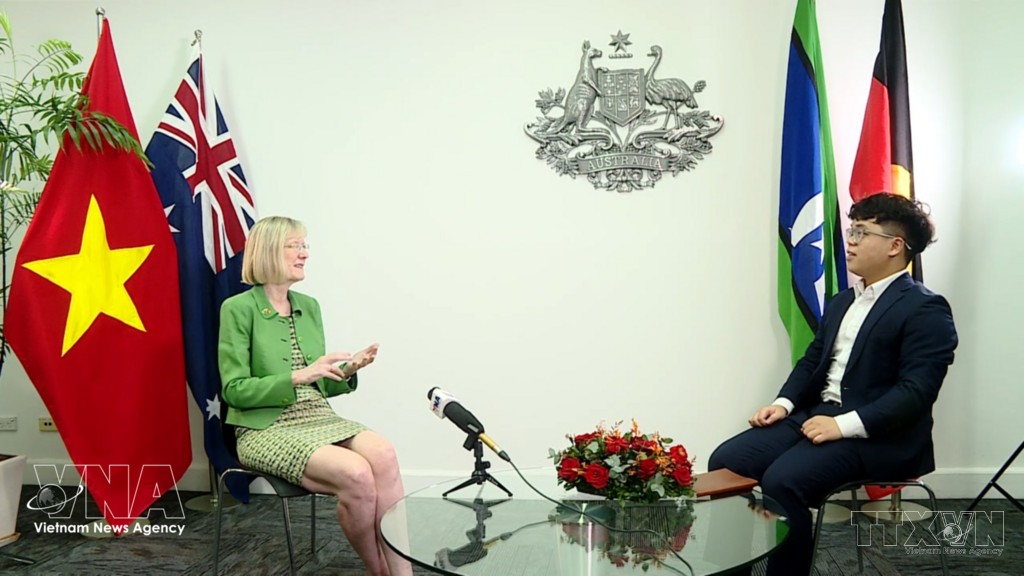 |
| Australian Ambassador to Vietnam Gillian Bird grants an interview to the Vietnam News Agency. (Photo: VNA) |
Science, technology and innovation have been identified as another important pillar of the bilateral ties, according to the Ambassador.
She mentioned the Australia-Vietnam Strategic Technologies Centre (AVSTC) in Hanoi as a concrete example, noting that its second phase was announced during the Vietnamese top leader’s recent state visit to Australia. The two countries have also launched the Australia-Vietnam Science, Technology and Innovation Cooperation Initiative (AVSTICI), which supports joint research projects involving researchers, universities and businesses from both countries. These initiatives provide a strong basis for further cooperation in an increasingly important area of bilateral relations, she said.
The ambassador also stressed the importance of translating the Comprehensive Strategic Partnership into tangible results for both countries. She cited General Secretary and President To Lam’s state visit to Australia earlier in August as the perfect example of a substantive and outcomes-focused high-level visit.
She underscored the notable outcomes of the visit, including three new joint statements on deepening the Comprehensive Strategic Partnership, economic resilience cooperation, and science, technology and innovation connectivity. The visit also resulted in six memoranda of understanding (MoUs) covering border protection, maritime law enforcement, the digital economy, agriculture and sustainable development, health, and vocational education and training.
According to the Ambassador, new aviation opportunities also emerged from the visit, as the two countries signed the Protocol to Amend and Supplement the Air Services Agreement. Additionally, Vietnam Airlines celebrated the 35th anniversary of its operations to Australia, while Vietjet announced plans to operate new flight routes between Sydney and Ho Chi Minh City through the new Western Sydney International Airport.
Education was another area highlighted by the Ambassador. During the visit, it was announced that RMIT would establish a major new campus in Hanoi, which would significantly expand the university’s presence in Vietnam.
Another concrete outcome was the announcement that Australian kangaroo and deer meat would again be exported to Vietnam, which the Ambassador welcomed as a significant further development in bilateral cooperation.
The diplomat said the agreements reached during the visit would provide a platform for the two sides to continue advancing their Comprehensive Strategic Partnership.
The Ambassador’s assessment underscores Australia’s strong support for Vietnam’s increasingly active international engagement, while highlighting the potential for the two countries to translate their Comprehensive Strategic Partnership into more substantive and multifaceted cooperation./.