Conference identifies drivers for Vietnam’s cultural development in new era
Guided by Resolution No. 80-NQ/TW on the development of Vietnamese culture, discussions highlighted institutional reform, a shift from administrative management to development-oriented governance, and strengthening the State’s facilitating role.
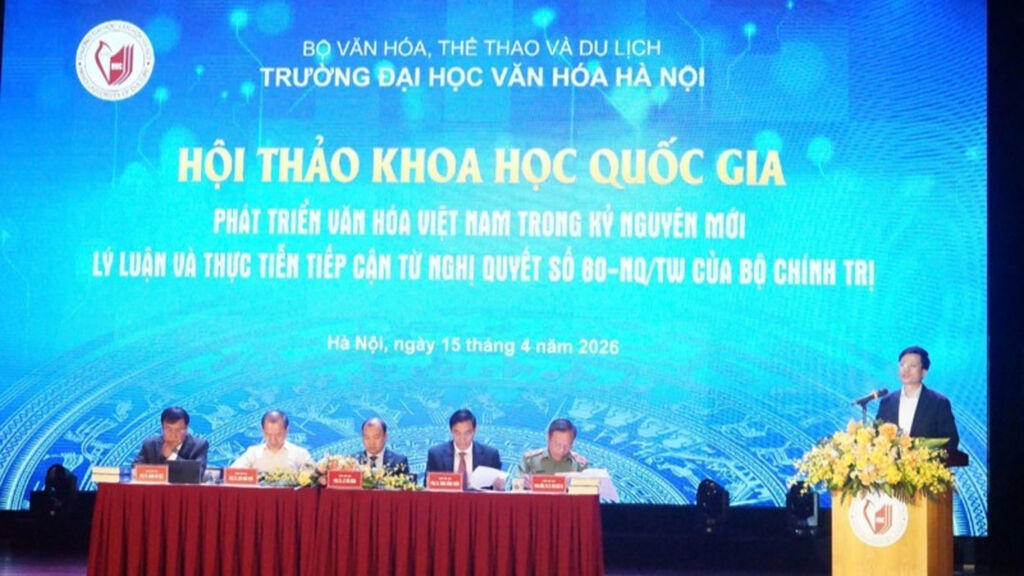
The conference is held by the Hanoi University of Culture on April 15. (Photo: nhandan.vn)

Hanoi (VNA) – A national scientific conference on developing Vietnamese culture in the new era under the Politburo’s Resolution No. 80-NQ/TW was held on April 15, bringing together scholars, researchers, lecturers, cultural regulators and artists nationwide to analyse the resolution's theoretical and practical approaches.

The event, organised by the Hanoi University of Culture, focused on key issues in cultural development in the new context. Guided by Resolution No. 80-NQ/TW on the development of Vietnamese culture, discussions highlighted institutional reform, a shift from administrative management to development-oriented governance, and strengthening the State’s facilitating role.

Participants underscored the need to build value systems for the nation and the Vietnamese people in the digital era amid the growing impact of social media. They also emphasised preserving and promoting cultural heritage in tandem with sustainable development, calling for greater digitalisation, improved public engagement and stronger links with tourism and community livelihoods.

The conference also analysed the potential and challenges in developing cultural industries, identifying them as a new growth driver, while pointing out bottlenecks related to policy frameworks, markets, copyright protection and digital infrastructure.

Human resources development was highlighted as a decisive factor that requires reforms in the training mindset to equip cultural workers with professional, governance and technological competencies suited to the new era.

Beyond identifying issues, the conference also provided an objective assessment of the current cultural landscape, noting both achievements and limitations, including uneven development, insufficient investment, risks of value distortion and challenges posed by the digital environment. Participants proposed practical recommendations to implement Resolution No. 80-NQ/TW.

The conference, which received 162 papers, reaffirmed a shared view that culture must develop in tandem with politics, the economy, and society, with a focus on building well-rounded Vietnamese people, improving institutions, mobilising resources, leveraging heritage and promoting cultural industries and the creative economy as drivers of fast and sustainable growth./.
See Also

PM outlines three key cooperation directions at expanded AZEC Summit

The Vietnamese leader reaffirmed Vietnam’s commitment to achieving net-zero emissions by 2050, identifying renewable energy development and green transition as strategic priorities. He proposed three key directions for cooperation to deal with energy risks and ensure supply chains.

Talent incubation centre debuts in Czech Republic to empower Vietnamese youth

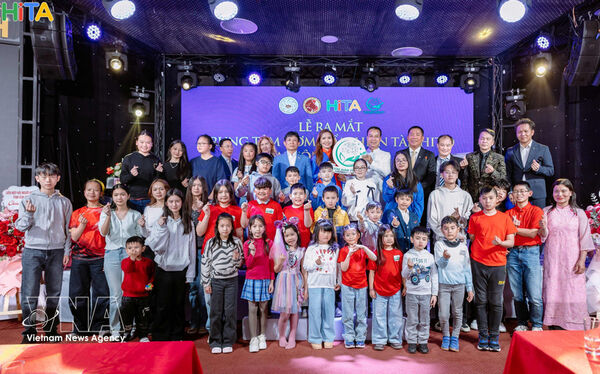
Many overseas Vietnamese families, despite prioritising education and living standards, may face gaps in parent-child connection due to language and cultural differences. Therefore, the Talent Incubation Centre (HITA) in the Czech Republic seeks to foster deeper understanding within families, helping young people build confidence and character from within.

Vietnam’s tourism defies fuel price shock with record Q1 “hat-trick”

According to data released by the National Statistics Office, foreign arrivals in March reached nearly 2.1 million, up 1.3% year-on-year. In total, Vietnam welcomed an estimated 6.76 million foreign tourists in the first quarter, a more than 12% jump from the same period in 2025 and the highest Q1 figure ever recorded.

Technology powers tourism growth in mountainous province

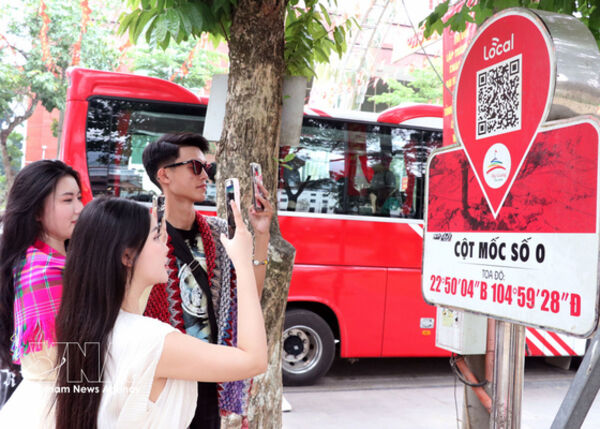
Last year, Tuyen Quang welcomed over 3.9 million visitors, and is aiming to attract around 4.1 million arrivals, including around 600,000 foreigners, this year. Tourism continues to be identified as a key economic sector, with development oriented toward sustainability, green growth, and enhanced competitiveness through digitalisation.

ITE HCMC 2026 to promote Vietnam’s tourism on global map

With its large scale, the ITE HCMC 2026 aims to promote tourism cooperation between Vietnam and priority markets such as Northeast Asia, Western Europe, North America, Southeast Asia, and Oceania while also boosting visitor arrivals from the Indian market

Vietnam’s total social investment up 10.7% in Q1

Vietnam’s total social investment rose strongly in the first quarter of 2026, reflecting improving investor confidence and a sustained recovery in the business climate, according to the National Statistics Office under the Ministry of Finance.