 |
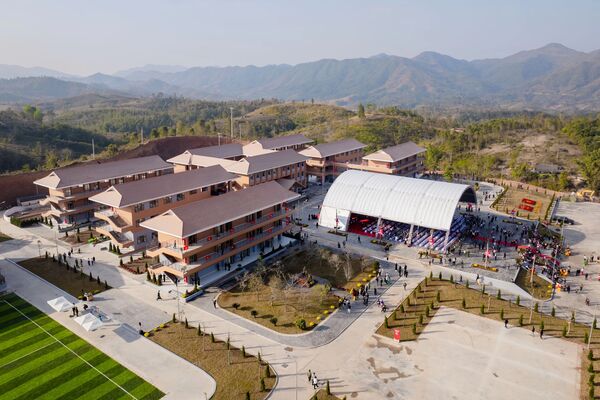
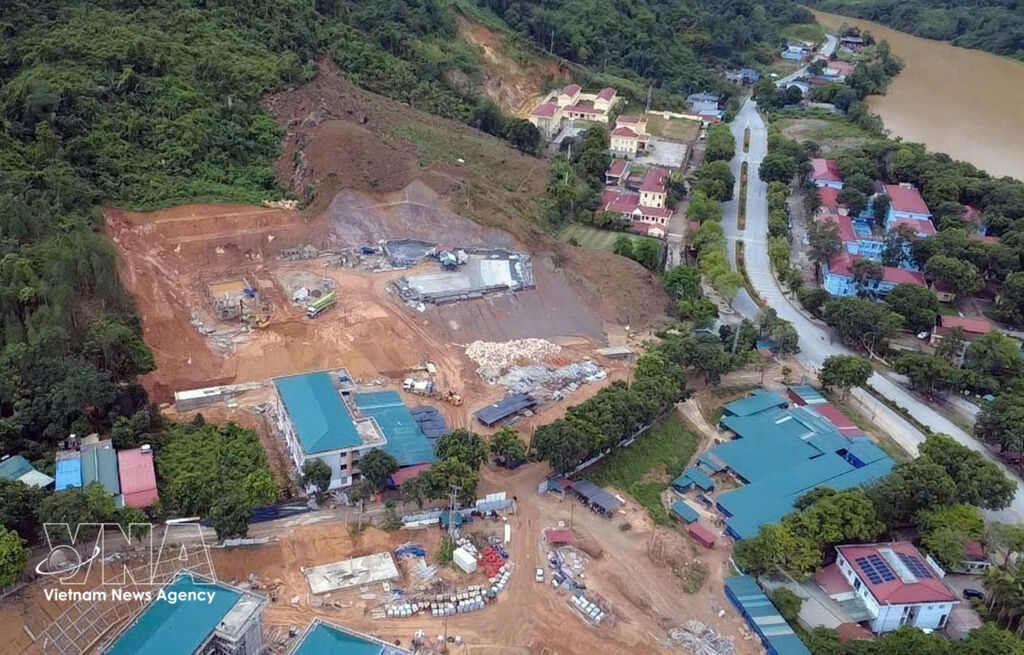
| An overview of the integrated primary and lower secondary boarding school project in Phong Tho commune, Lai Chau province. (Photo: VNA) |
Hanoi (VNA) – Deputy Prime Minister Le Tien Chau has signed an official dispatch issued by the Prime Minister on the construction of integrated boarding schools in land border communes – a major policy of strategic significance for educational development, social welfare, national defence and security, and the safeguarding of national border sovereignty.
The initiative has received special attention and direction from Party General Secretary and State President To Lam, the Politburo, and senior Party and State leaders.
The dispatch noted that while considerable efforts have been made, implementation remains challenging due to the project's innovative nature and stringent requirements regarding progress, quality and effectiveness. Several localities have been slow in completing investment preparations, site clearance and construction material arrangements, while total investment costs for a number of projects have exceeded initial estimates.
Against this backdrop, the PM requested ministries, central agencies and local authorities to step up efforts and ensure the timely, safe and effective completion of border-area school projects.
The Ministry of Education and Training was tasked with urgently finalising documentation to consolidate the steering committee overseeing the construction of such facilities. The ministry is also required to complete a draft Government resolution on the continued implementation of the remaining school projects, along with a draft decree on policies for students and boarding schools in border areas.
The Government leader further instructed the ministry to promptly issue guidance on student admissions, teacher and management staff allocation, and preparations to ensure the schools can begin operations immediately upon completion.
The Ministry of Finance was directed to review plans for allocating the remaining unassigned funds and guide local authorities in effectively utilising central budget resources to avoid delays affecting project progress.
The ministries of National Defence, Public Security, Construction, Agriculture and Environment, Home Affairs, Health, and Ethnic and Religious Affairs were assigned to coordinate efforts to address difficulties related to site security, human resources, construction materials, land procedures and institutional arrangements for the schools.
Local authorities were instructed to mobilise the entire political system and launch a “100-day peak campaign”, closely monitoring progress on a daily and weekly basis to ensure all 100 schools are completed before August 30 this year.
Alongside construction progress, preparations for post-investment operations were highlighted as a key priority. Under no circumstances should there be a situation where schools are waiting for equipment or teachers after completion, the dispatch stressed.
According to the Government, the construction of integrated boarding schools in land border communes will not only improve educational access and learning opportunities for students in disadvantaged areas, but also serve strategic goals in retaining population, safeguarding territory, strengthening national defence and security, and promoting sustainable development in border regions.
The initiative is regarded as one of the key tasks in narrowing development gaps between regions and ensuring that all children, including those in the most remote and disadvantaged areas, have access to a better educational environment./.