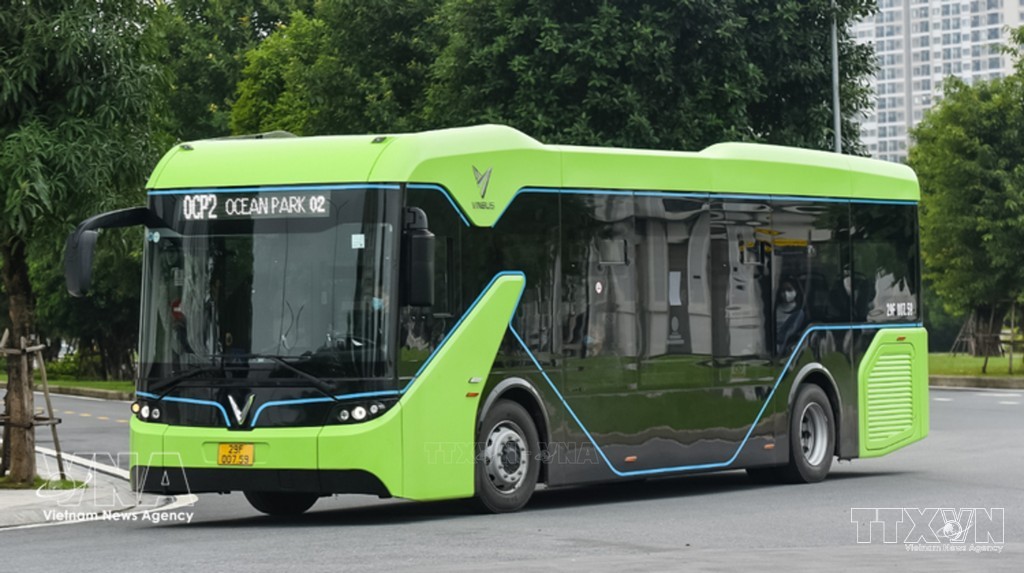
Hanoi adds electric buses on two more routes
The move is part of Transerco's green transition roadmap, which aims to raise the share of green vehicles in its fleet to more than 51% by the end of 2026.
Hanoi adds electric buses on two more routes (Photo: VNA)

Hanoi (VNA) – The Hanoi Transport Corporation (Transerco) on October 6 put 25 VinFast EB8 electric buses into service on routes No. 30 (My Dinh Bus Station–Gamuda City) and No. 50 (Long Bien–An Lac Urban Area), replacing diesel vehicles.

The buses, with a capacity of 60 passengers, feature low floors, disability-access facilities and other modern amenities, and carry Hanoibus's signature design.

Another 28 electric buses were put into operation on routes No. 22A (Gia Lam Bus Station–Kien Hung Urban Area) and No. 22B (Giap Bat Bus Station–Do Nghia) from October 5.

The move is part of Transerco's green transition roadmap, which aims to raise the share of green vehicles in its fleet to more than 51% by the end of 2026.

Under Hanoi's plan, all petrol- and diesel-powered buses in the city are to be replaced by electric or green-energy vehicles by 2030. In particular, all buses running within Ring Road 4 will be converted to electric ones./.
See Also

Vietnam, Japan promote exchanges on law and justice

Speaking at the working session, Chief Judge of the People’s Court of Hanoi - Region 2 Hoang Ngoc Thanh said the meeting provided an opportunity for the two sides to share practical experience in judicial activities, thereby enhancing mutual understanding of the laws and practices governing the settlement of IP-related cases in Vietnam and Japan.

Creating new drivers for Vietnam-Canada cooperation

The elevation of bilateral ties to a Strategic Partnership shows that Vietnam and Canada increasingly view each other not simply as trading partners, but as long-term partners in addressing economic, technological and regional challenges.

Vietnam seeks bigger share of global Halal market

Vietnam's Halal exports remain modest at around 900 million USD a year, accounting for less than 1% of the global market. Most exports are still raw agricultural and seafood products. Only around 1,000–1,300 Vietnamese businesses obtained or maintained Halal certification during 2024–2026.