 |
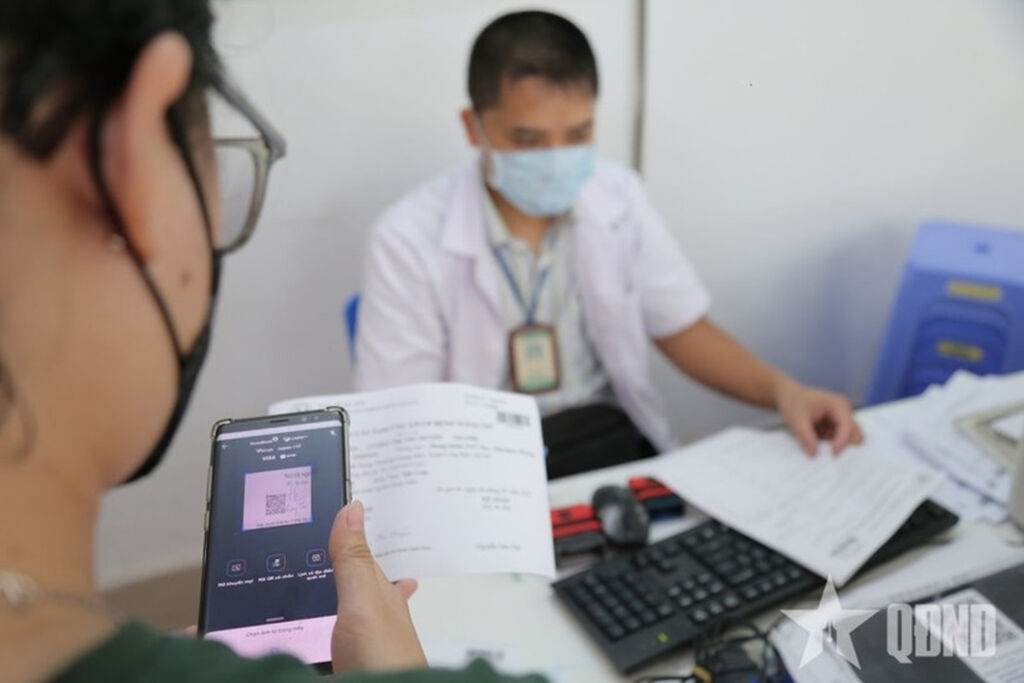
| A patient pays hospital fees using cashless transactions (Photo: qdnd.vn) |
Hanoi (VNA) – Hanoi’s health sector recorded significant progress in protecting and improving public health in 2025, ranging from better basic health indicators to a comprehensive push in digital transformation.
The rollout of electronic medical records, the digital health records based on the national e-identification platform VNeID, medical services using citizen ID cards, and the development of out-of-hospital emergency care have contributed to building a modern, efficient, and people-centred healthcare system.
According to the municipal Department of Health, the rate of malnutrition among children under five fell by 0.2 percentage points compared with 2024. Some 97% of the local population are now managed via electronic personal health records.
The sector saw 17.8 million patient visits using citizen ID cards in place of paper health insurance cards. All 42 public hospitals now accept cashless payment through banks or e-wallets. Self-service kiosks have helped reduce waiting times from 15 minutes to just one to two minutes while health data have been interconnected across the system.
Electronic medical records and VNeID digital health records have been widely deployed, with all 42 public hospitals completing the rollout of such records ahead of schedule. Around 3.1 million citizens have integrated their digital health records into VNeID. More than 95,000 referral letters and 446,000 follow-up appointment slips have been digitised.
Preventive healthcare, food safety management, population and child protection work, social vice prevention, IT application, and international cooperation also harvested positive results.
Notably, emergency transportation and medical response services now operate around the clock at seven emergency stations across the capital, ready to provide pre-hospital care and working closely with hospitals to deliver out-of-hospital emergency services. Health response plans were also successfully deployed for major events such as the parade marking the 80th anniversary of the August Revolution and National Day (September 2), as well as National Assembly sessions.
Director of the municipal Department of Health Dr Nguyen Trong Dien said digital transformation will remain a central and continuous task in improving healthcare quality. The sector will continue to expand the comprehensive use of digital technology in professional practices to improve management efficiency and service quality, aiming to develop a modern, transparent, and people-centred healthcare system.
At the same time, Hanoi will further enhance hospital service quality, streamline procedures, and strengthen professional support across all levels of medical establishments.
Alongside treatment activities, the development of out-of-hospital emergency services remains a major priority. In reality, many residents still struggle to access timely emergency care due to traffic congestion, narrow alleyways and other constraints. In this context, the 115 emergency network plays a vital role as the nearest point of healthcare contact, directly providing ambulance transport and pre-hospital treatment to help safeguard public health. The city’s health sector will continue to focus on minimising risks during emergency response to ensure patients receive safe, swift, and effective care, Dien added./.