Hanoi launches construction of five metro lines spanning over 300 km
The projects form a key part of Hanoi's strategy to develop a mass rapid transit network, gradually realise its urban railway master plan and support urban expansion in multiple directions.
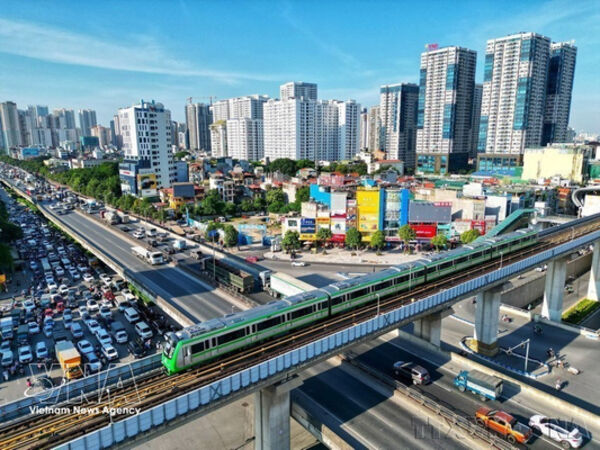
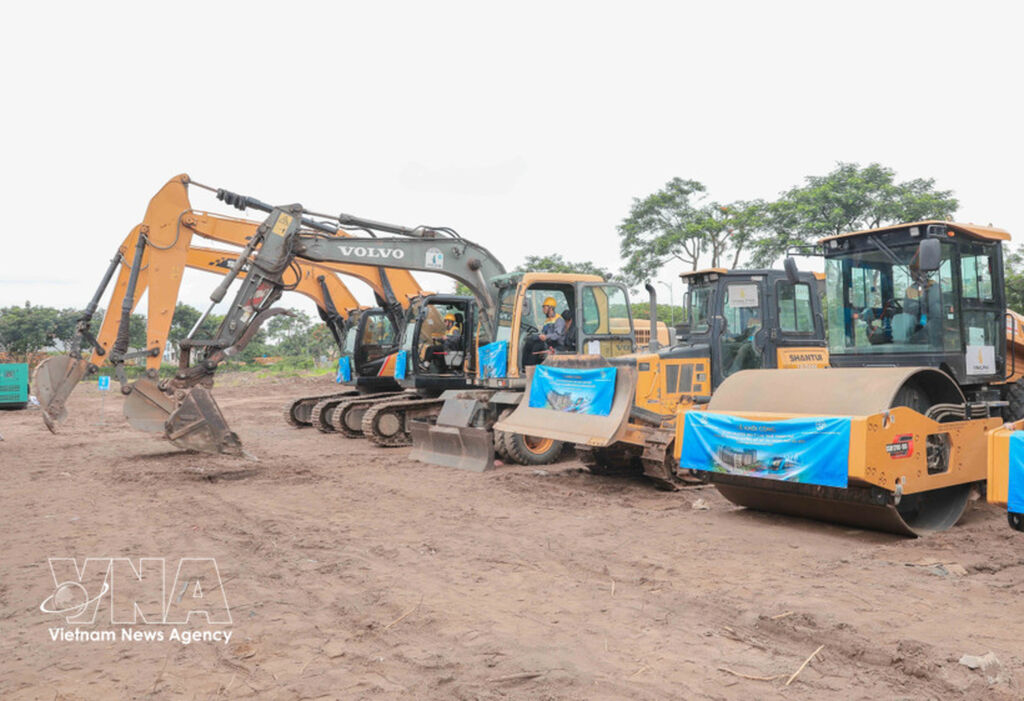
The five new urban railway projects, for which the Vinhomes–VinSpeed consortium serves as the EPC (engineering, procurement and construction) contractor, are scheduled for completion by 2030. (Photo: VNA)

Hanoi (VNA) - Hanoi is embarking on its largest-ever urban railway investment programme with the simultaneous launch of five metro lines stretching more than 300 km, aimed at strengthening connectivity between Noi Bai International Airport, Hoa Lac Hi-Tech Park, emerging urban areas and the city centre, while shaping the capital's development landscape for decades to come.

Construction on metro lines No. 1, 2, 8, 10 and 14 officially began on June 22. The projects form a key part of Hanoi's strategy to develop a mass rapid transit network, gradually realise its urban railway master plan and support urban expansion in multiple directions. The Vinhomes–VinSpeed consortium has been appointed as the EPC contractor (engineering, procurement and construction) for all five projects. The city aims to substantially complete the lines by 2030.

Among the projects, Line 1 is the largest in terms of investment scale. The 81-km route has an estimated investment of 389.53 trillion VND (14.8 billion USD). Line 1 links the Hung Vuong Stadium area, Ngoc Hoi, Hanoi Station, Gia Lam and Noi Bai International Airport. It will serve as an important north–south corridor, connecting the urban rail network with the national railway, high-speed rail and the airport.

The 56.5km-long Line 2 also connects the capital to Noi Bai airport, going through the historic city centre via Nam Thang Long, Hoan Kiem Lake, Tran Hung Dao, Thuong Dinh and southern urban areas.

Line 8 is roughly 91km in length, linking the Hoa Lac High‑Tech Park with logistics zones, industrial parks and eastern growth centres of the capital.

A closed circular route, Line 10 is approximately 43km long and connects Co Loa, Vo Chi Cong, Ring Road 3, Ring Road 2.5 and Times City before returning to Co Loa, helping to reduce traffic pressure in the inner city.

Line 14 is around 32km long, connecting the Thang Long Bridge and Ciputra area through central Hanoi to Ocean Park and the city’s eastern districts, supporting new urban development and strengthening regional links.

Under the capital’s master plan for 2021–2030, Hanoi authorities intend to develop 18 urban rail lines with a total length of approximately 979km. The city aims to complete around 500km of urban rail by 2035, with the remainder to be invested in the 2035–2045 period.

The simultaneous launch of five metro projects marks a major milestone in the development of Hanoi's public transport system and lays the groundwork for the long-term expansion of its urban railway network./.

Related News

Metro line 1 officially begins operation

Metro line 1 (Ben Thanh - Suoi Tien) is more than just an urban transit project; it represents Ho Chi Minh City's vision for growth, integration, and sustainable development. As a key milestone in the city's public transportation plan, it addresses the need for fast, efficient travel while helping to ease traffic congestion and reduce environmental pollution.

Digital transformation powers Hanoi metro expansion

Beyond convenience, stable fares and the elimination of fuel, parking and maintenance costs have made urban rail increasingly attractive. The growing preference for metro travel is also contributing to a greener, more modern urban lifestyle.

Hanoi prepares to launch 1.5-billion-USD Metro 2A extension project

The Hanoi Metropolitan Railway Management Board (MRB) announced that it will organise an Early Market Engagement (EME) event for the project on June 18-19 in Hanoi to collect feedback from domestic and international businesses and consultants before the official bidding process begins.

See Also

Vietnam continues to promote role as active, responsible member of UNESCO

As one of the earliest countries to join the 2003 convention and currently having 17 intangible cultural heritage elements inscribed by UNESCO, Vietnam consistently regards culture as the spiritual foundation of society, both a goal and a driving force for sustainable development, Van said, adding that the country has been working to improve its legal framework, place communities at the centre, and integrate heritage conservation with education, sustainable tourism and digital transformation.

NA Chairman calls on press to continue serving nation, people

National Assembly Chairman Tran Thanh Man called on Vietnam’s press to continue developing in a professional, humane, and modern manner while better serving the Fatherland and the people. He made the remarks at the 20th National Press Awards Ceremony in Hai Phong on June 21, marking the 101st anniversary of Vietnam Revolutionary Press Day.

Electric vehicle adoption accelerates in Vietnam

In the period leading up to 2030, the construction sector will prioritise areas with strong potential for reducing urban air pollution, particularly rail and road transport. Relevant agencies are developing criteria for green rest stops, green railway stations, green seaports, and green airports. These standards are expected to be finalised in 2026 and widely applied from 2027.

Museums at heart of creative economy

The Politburo's Resolution 80 identifies culture as a key internal driver of economic development. In Ho Chi Minh City, modernising and restructuring museums is no longer simply about preservation. It is increasingly seen as an economic strategy, positioning museums as anchors of the night-time economy and vital links in the cultural industries value chain, helping support the city's ambition of achieving double-digit growth.

Ho Chi Minh City targets AI, semiconductor investment in new-generation FDI drive

To prepare for a new generation of FDI attraction in line with Resolution No. 10-NQ/TW on the development of the foreign-invested sector, the city is expanding its high-tech development space. A newly approved 194.84ha expansion area in Long Phuoc ward is being planned under a “Green–Clean–Digital” model, with the goal of achieving carbon neutrality before 2050.