 |
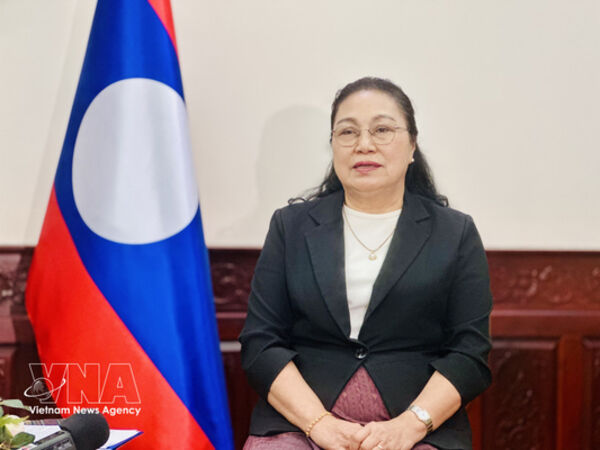
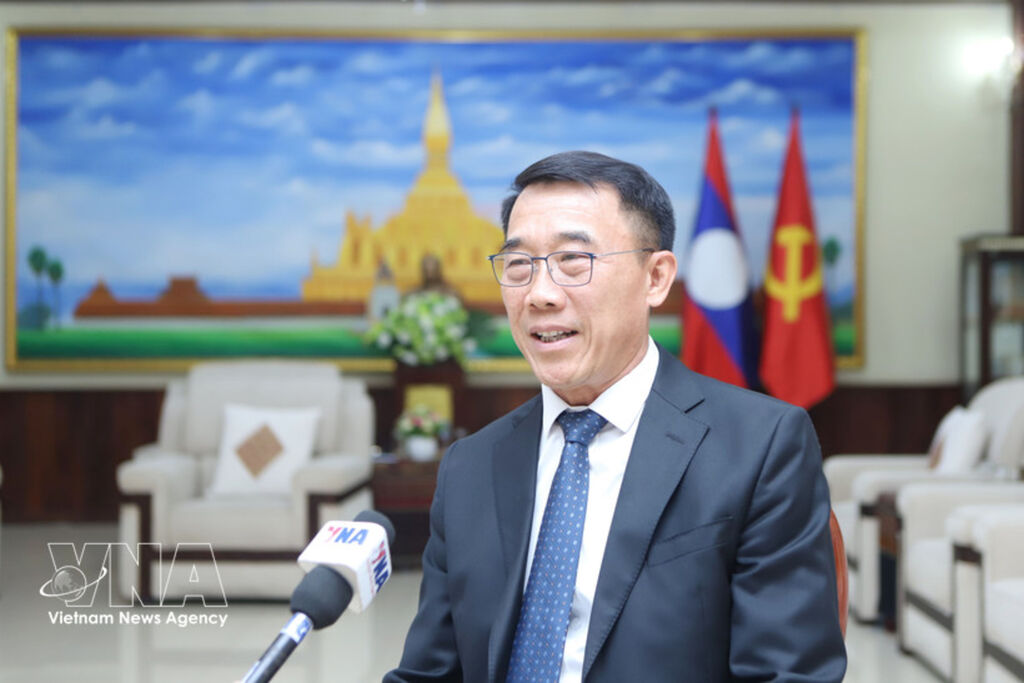
| Bounleua Phandanouvong, Secretary of the Lao People’s Revolutionary Party (LPRP) Central Committee and head of the LPRP Central Committee’s Commission for External Relations (Photo: VNA) |
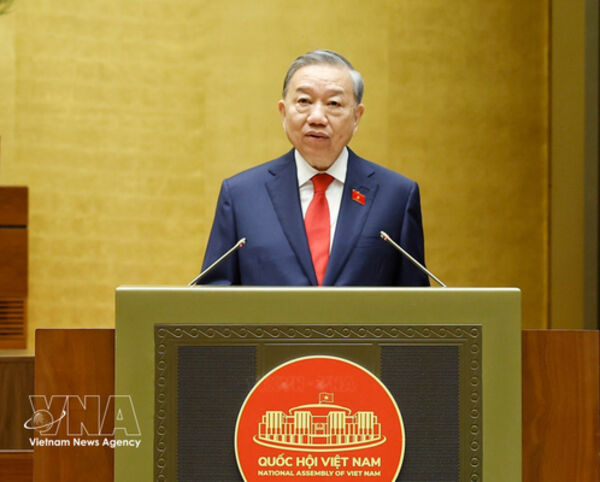
Vientiane (VNA) - The Party and State of Laos attach great importance to and highly value the visit by Politburo member and Standing member of the Communist Party of Vietnam (CPV) Central Committee's Secretariat Tran Cam Tu, stated Bounleua Phandanouvong, Secretary of the Lao People’s Revolutionary Party (LPRP) Central Committee and head of the LPRP Central Committee’s Commission for External Relations.
In an interview granted to the Vietnam News Agency correspondents in Vientiane, Bounleua Phandanouvong said that the visit holds great significance for the special ties between Laos and Vietnam.
According to the Lao official, this will be Tu’s first overseas visit in his capacity as Permanent member of the Secretariat of the Communist Party of Vietnam Central Committee. His decision to choose Laos as the first destination following the National Congresses of the LPRP and CPV, parliamentary sessions and the formation of new governments in both countries reflects the high level of political trust, the great friendship, special solidarity and mutual respect between the two nations. It also demonstrates the priority both sides consistently accord to the Laos–Vietnam special relationship.
The visit is expected to further strengthen and deepen the great friendship, special solidarity, comprehensive cooperation and strategic cohesion between the two countries, bringing practical benefits to the people of both nations and contributing to peace, friendship, cooperation and development in the region and the world.
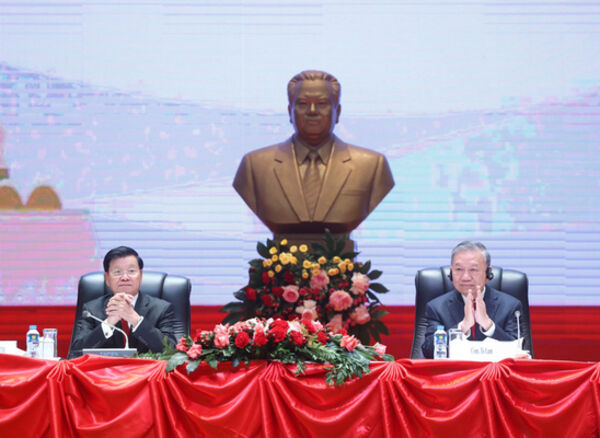
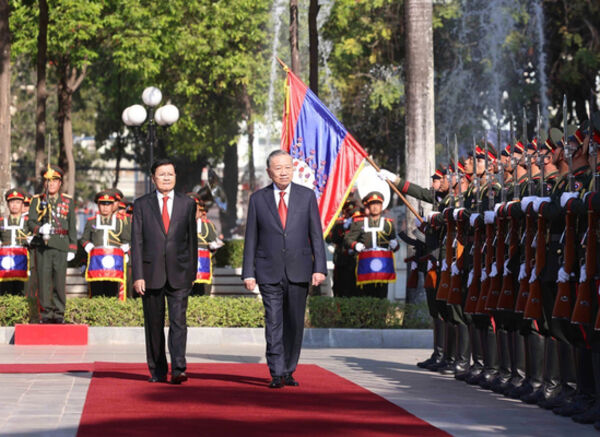
Key leaders of the Lao Party and State attach great importance to the visit, with preparations for the reception being conducted at a high and appropriate level. During the trip, in addition to talks between the two Permanent members of the Secretariats, the Vietnamese delegation is scheduled to pay courtesy calls on the LPRP General Secretary and President of Laos, hold meetings with the Lao Prime Minister and other leaders.
Bounleua Phandanouvong noted that the visit coincides with the traditional Lao New Year festival, Bunpimay, allowing the Vietnamese delegation to experience the festive atmosphere welcoming the Lao New Year. This also reflects the high-level importance attached to the special cooperation between Laos and Vietnam.
Amid rapidly evolving, complex and unpredictable regional and global developments, Laos and Vietnam should continue to maintain, strengthen and pass on this special relationship to future generations. This should be done on the basis of independence, self-reliance, equality and mutual benefit, while harmonising the special nature of Laos–Vietnam ties with international practices and continuing to give each other special priority and support, he emphasised.
The Lao official stressed the need to further deepen political relations, which serve as a solid pillar guiding cooperation between the two countries in all fields. Both sides should enhance the effectiveness of cooperation at all levels, sectors and localities, maintain exchanges of high-level visits and meetings, and closely monitor and promote the implementation of agreements reached between the two Politburos as well as treaties, joint declarations and cooperation agreements between the two governments.
He also highlighted the importance of improving the quality of theoretical seminars and exchanges among ministries, sectors, National Assembly bodies, mass organisations and localities of both countries, while intensifying communication and education on the tradition of the Laos–Vietnam special relationship.
While noting that political relations between the two countries are already strong, Bounleua Phandanouvong emphasised the need to further leverage political ties as a driving force to achieve more substantive socio-economic development results.
Given the significant potential in trade and investment, both sides should further promote cooperation in these areas. In education, the two countries should focus on developing human resources with greater emphasis on quality rather than quantity, aligned with the practical needs of each country.
Regarding energy cooperation, Laos and Vietnam both have strong potential in electricity production, and therefore should implement power purchase agreements and strengthen infrastructure connectivity in line with the agreements reached by the two Politburos.
In the field of transport connectivity, the two sides should accelerate the implementation of strategic projects already agreed upon, such as the Vientiane–Hanoi expressway and the Thakhek–Vung Ang railway. Once completed, these projects are expected to create strong momentum for socio-economic development in both countries.
Overall, relevant sectors should intensify coordination and cooperation to effectively implement agreements reached by leaders of the two countries, thereby realising the substance of the “strategic cohesion” between Laos and Vietnam and promoting socio-economic development in both nations.
In addition, the Lao official underscored that Laos and Vietnam should further strengthen cooperation in defence, security and diplomacy, while improving the quality and effectiveness of cooperation in economic, cultural, educational, healthcare and scientific–technological fields on the basis of each country’s strengths, in line with the newly elevated strategic connectivity and the evolving trends of the new era./.