 |
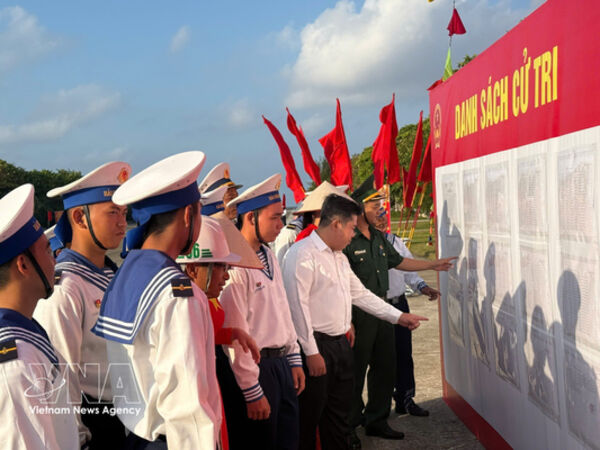
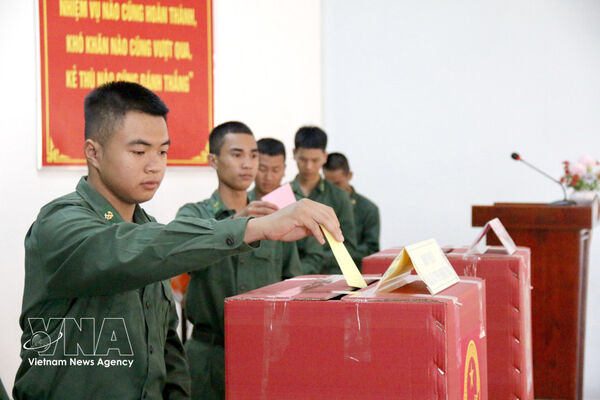
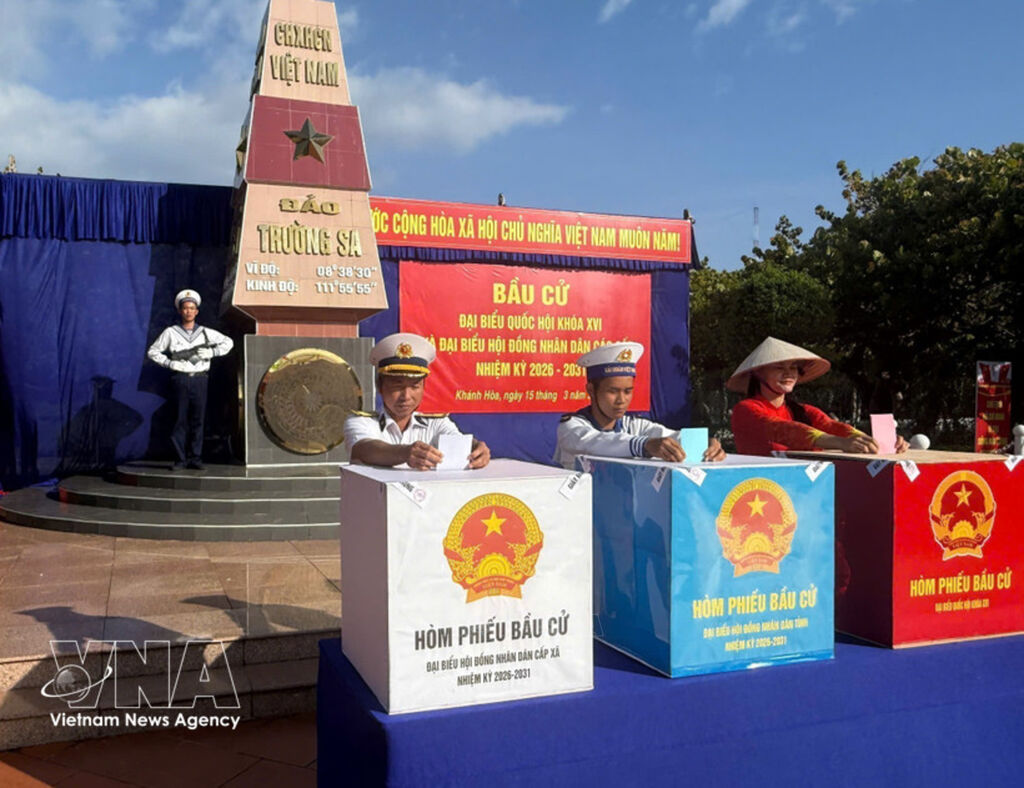
| Truong Sa voters cast ballots in the election (Photo: VNA) |
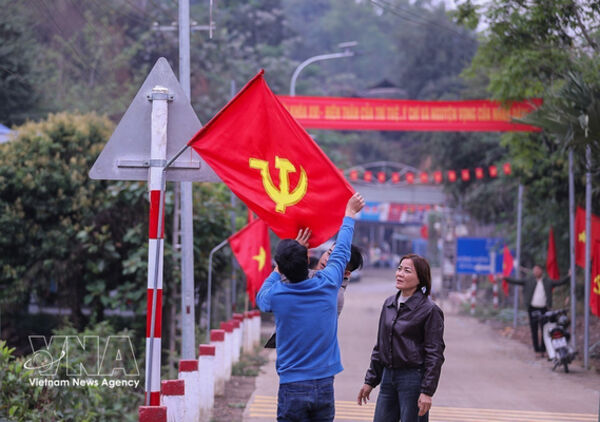
Hanoi (VNA) - The March 15 election of deputies to Vietnam's 16th National Assembly (NA) and People's Councils at all levels for the 2026-2031 term showed strong initial success through meticulous preparation, high voter turnout, and strict adherence to electoral laws.
A clearer gauge of the outcome will emerge in coming days: whether the newly elected representatives possess the expertise and resolve needed to build a more professional legislature and a proactive system of local councils capable of bold moves to accelerate growth in Vietnam's next development phase.
The vote came just over two months after the 14th National Party Congress, where delegates set an ambitious target of transforming Vietnam into a developing economy with modern industry and annual per capita GDP of around 8,500 USD by 2030.
To hit that mark, the Party Central Committee outlined an action plan comprising eight core priorities, anchored by the principle of "selecting correctly, acting quickly, following through to completion, and judging by results”.
Topping the list is refining development institutional framework and the socialist rule-of-law state, with execution as the yardstick. The institutional setup is often called the "bottleneck of bottlenecks", but also the potential "breakthrough of breakthroughs".
The 16th NA will bear primary responsibility for converting the Party Congress's core directives into legislation, while aligning with the Politburo's conclusion on overhauling the legal framework to match the demands of a new era of national advancement.
This directive was delivered by Party General Secretary To Lam, who outlined a draft proposal on legislative orientation for the 16th NA during the March 11 meeting of the Central Steering Committee on Institutional and Legal Reform.
Expectations for the new legislature are high: it must refine a legal system that is coherent, stable, transparent, and easy to understand and enforce, creating an open business climate where citizens and companies can start ventures, scale operations, and drive double-digit annual economic growth.
A major task is dismantling institutional obstacles. Once reformed decisively, the framework can unleash latent resources across society, from those of citizens to domestic and foreign capital inflows.
As the pinnacle of state power, the 16th NA leads institutional overhaul. It wields constitutional and lawmaking authority to shape development, decides on major national questions, and exercises supreme oversight of constitutional and legal enforcement.
If the 14th National Party Congress has been described as a “congress of action” where “words are matched by deeds”, the public expects the 16th legislature to embody the same spirit. Party policies can only be translated into reality when they are concretised through laws passed by the NA. In other words, the NA must move with speed and determination to enact Party policies, ensuring that the legal system paves the way and underpins new initiatives.
Signs of an action-oriented legislature appeared early in the electoral cycle. The gap between candidate finalisation and polling day shrank from 70 days to 42. Election day arrived roughly two months ahead of recent cycles, with results slated for announcement around March 22. The 16th NA’s inaugural session is then expected to convene on April 6, just two weeks later. Past terms typically saw nearly two months pass between result disclosure and the opening session.
Compressing that timeline from two months to two weeks goes beyond efficiency; it also ensures smoother institutional transition. The tighter sequence from the Party Congress to 16th NA’s first session enables swift leadership changes at senior levels and maintains operational continuity across Government and judicial bodies, with minimal gaps in the transfer of authority or policy translation into law.
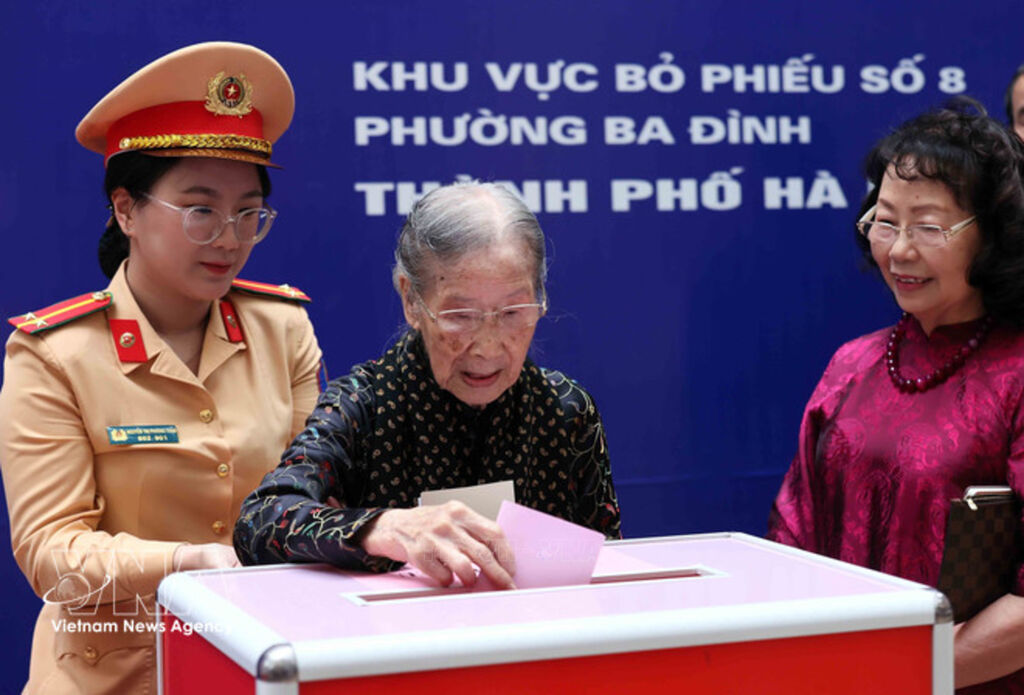 |
| A 101-year-old woman drops ballot in Ba Dinh ward, Hanoi (Photo: VNA) |
At its opening session, the 16th NA will handle personnel matters while immediately launching legislative work to bring Party resolutions into practice without delay, which demonstrates the determined spirit of action across the entire political system from day one of the new term.
The quality of deputies will define the legislature’s effectiveness. The 16th NA sets high bars for its members, not just accountability but genuine professionalism. Deputies are expected to commit substantial time and expertise to parliamentary duties, engage in candid yet constructive debates, and rigorously track the progress of resolutions until concrete results are achieved.
The Politburo's Resolution 66-NQ/TW dated April 30, 2025 on renewing lawmaking and enforcement to meet the national development requirements in the new era identifies these functions as the “breakthrough of breakthroughs” in institutional progress. Deputies therefore require deep professional knowledge and legislative skills to deliver a legal system that is coherent, stable, yet flexible and adaptable enough to advance global integration.
This cycle saw 145 candidates nominated for full-time NA seats at the central level. These full-time roles supply the expert backbone for NA committees.
The hope is that full-time deputies in the 16th term will inject fresh ideas into institutional and legal reform, eliminate choke points, unlock resources, spur momentum, and steer Vietnam confidently into its next era.
On the principle of judging performance by tangible results, Party General Secretary To Lam has urged the 16th NA to pivot evaluation from "good laws on paper" to "good laws in practice". That requires rigorous preparation starting at the policy-formulation stage rooted in real-world insights, wide consultations with citizens, businesses, experts, and scientists, including foreign ones, while prioritising stronger enforcement outcomes./.