 |
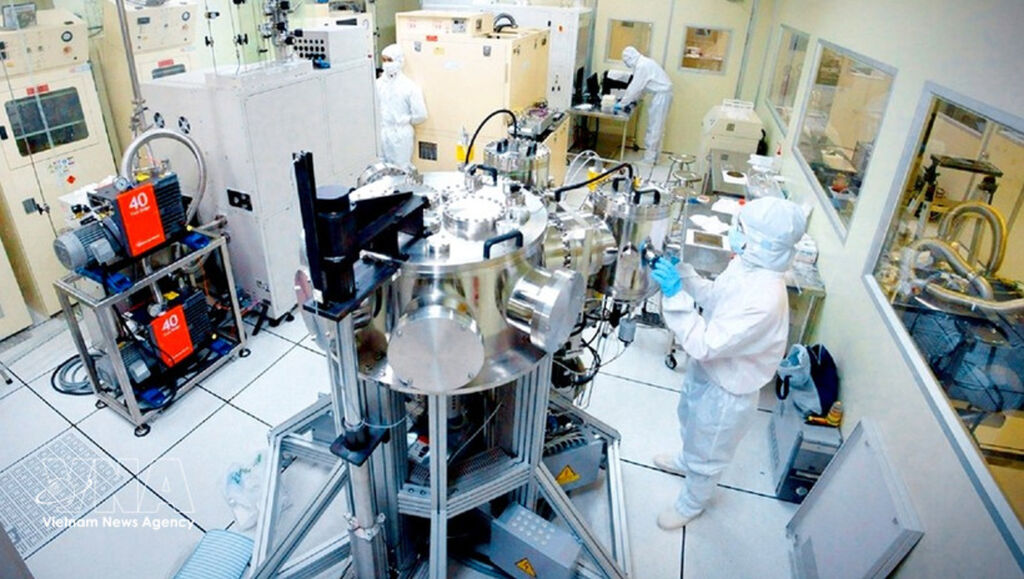
| The modern nanotechnology research laboratory of Vietnam National University, Ho Chi Minh City. (Photo: VNA) |
Hanoi (VNA) – The Politburo’s Resolution No. 57-NQ/TW on breakthroughs in science and technology development, innovation, and national digital transformation is being proactively implemented across localities through increasingly concrete and context-specific approaches.
From designing new development models and refining policy frameworks to organising task implementation aligned with clear timelines and targets, initial results point to a shift toward practical effectiveness tailored to local conditions.
Creating new development spaces
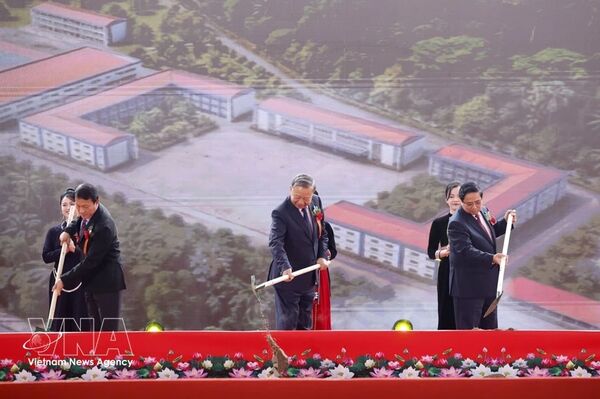
In the course of implementing this resolution, the northern province of Quang Ninh has emerged as one of the early movers in translating strategic orientations into comprehensive development models linked to innovation and digital transformation. The province is currently studying a proposal to establish a Free Digital and Knowledge Economic Zone as a new development space. The proposed zone will span nearly 26,400 hectares across 10 communes and wards, structured into three functional subzones.
The first subzone, covering 5,770 hectares, is envisioned as a hub for artificial intelligence (AI) research and development, high-quality human resources training, and the establishment of an international university cluster alongside a smart urban area. The second, at 19,380 hectares, will focus on smart governance based on the “Digital Twin” model, while hosting an administrative centre for testing, backup data centres, and industrial and logistics services, while the third, covering 1,230 hectares, will prioritise high-tech manufacturing, including semiconductors and electronic components.
This model is being developed in tandem with special policy mechanisms aimed at mobilising resources, particularly from global technology corporations and international experts, thereby fostering a technology- and knowledge-based development ecosystem. In parallel, Quang Ninh is implementing its Digital Transformation Strategy to 2030, built on three pillars: digital government, digital economy, and digital society, supported by foundational elements such as digital infrastructure, data, platforms, cybersecurity, digital human resources, and an innovation ecosystem.
Notably, in the first quarter of 2026 alone, the province has approved an allocation of 1.089 trillion VND (41.4 million USD) for science, technology, innovation, and digital transformation, underscoring its prioritisation of the sector.
Linking outcomes to specific tasks
In Ho Chi Minh City, the implementation of Resolution 57 takes place against a backdrop of strong scientific and technological capacity, yet persistent constraints in the commercialisation of research outcomes.
Data from the municipal Department of Science and Technology indicate that only about 5% of completed research projects have been successfully commercialised. Approximately 10% of domestic research outputs have been integrated into projects at the Saigon Hi-Tech Park, while around 20% of startups have secured connections with venture capital or major enterprises. These limitations stem from several factors, including complicated procedures for valuing intellectual assets, difficulties in transferring rights, risk-averse attitudes in implementation, and weak coordination between the stakeholders involved.
To address these challenges, Ho Chi Minh City has introduced a pilot scheme aimed at encouraging the commercialisation of research results and intellectual property. The programme is expected to create a strong policy push to bring research products from laboratories to the market.
Under the scheme, the State may provide financial support covering up to 50% of the cost of completing and commercialising research products, thereby sharing risks with enterprises. To date, the scheme has attracted 29 organisations registering for the first round with 54 science and technology products. The total projected funding for this round exceeds 500 billion VND (19 million USD), including more than 200 billion VND from the State budget.
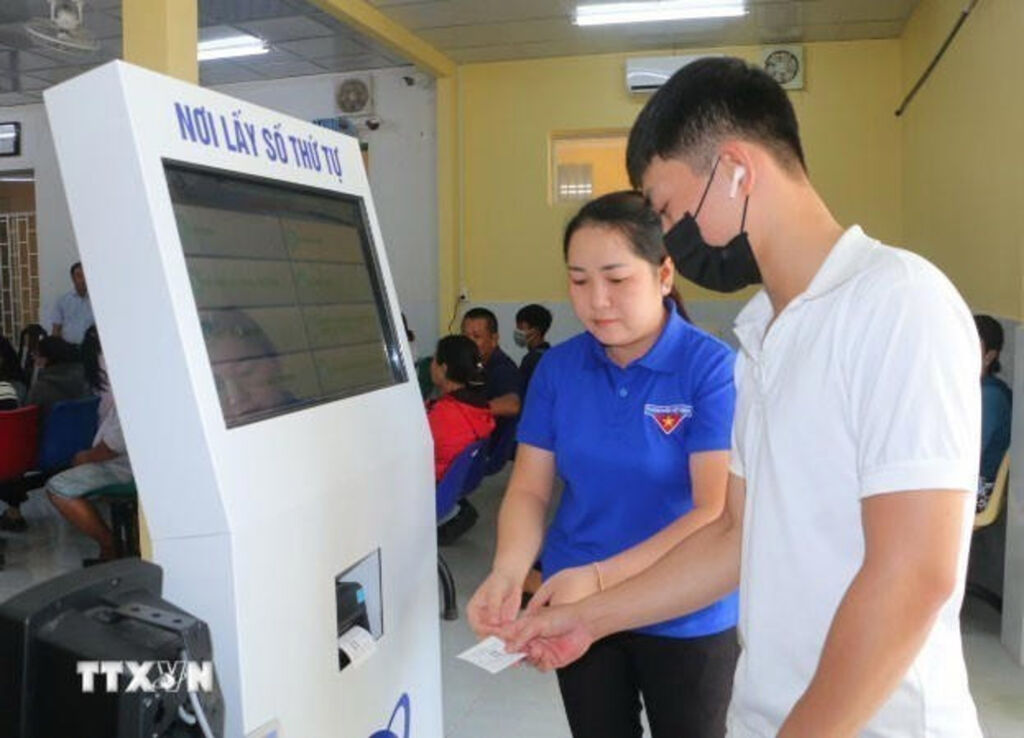 |
| Civil servants at the Public Administrative Service Centre of Cu Lao Dung commune, Can Tho city, process administrative dossiers. (Photo: VNA) |
Meanwhile, in the Mekong Delta city of Can Tho, the implementation of Resolution 57 has been identified as a key task in advancing science, technology, innovation, and digital transformation in tandem with local economic growth objectives. As of March 17, the city had completed 132 out of 244 assigned tasks, while the remaining 112 tasks, including 80 regular ones, are being implemented on schedule.
The implementation of Resolution 57 across localities demonstrates a clear trend toward translating policy directions into actionable tasks and solutions grounded in practical conditions. The proactive and dynamic role of local authorities is helping to bring science, technology, innovation, and digital transformation more deeply into socio-economic life, generating tangible contributions to both local and national development in the years ahead./.