Resolution 72 opens path to a modern, sustainable healthcare system
To build a resilient healthcare system capable of meeting the challenges of ageing, emerging diseases and rising expectations for quality care, Vietnam must continue to strengthen primary and preventive care, invest in human resources, accelerate digitalisation and big data development, and refine healthcare financing mechanisms.
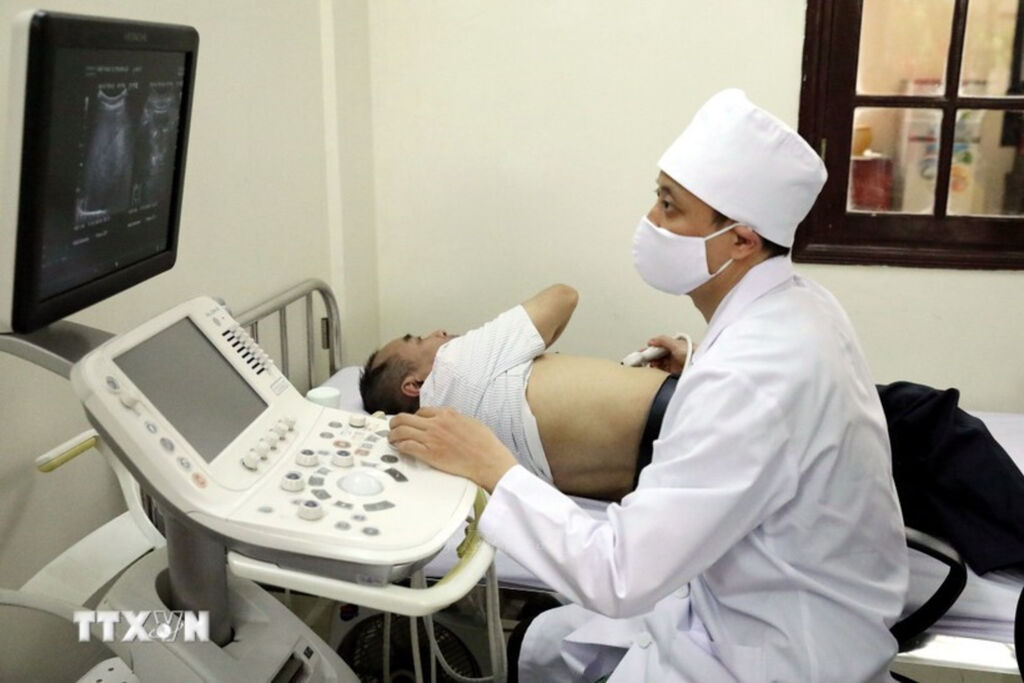
Military doctors conduct ultrasound examinations for residents in Dong Dang town, Cao Loc district, Lang Son province. (Photo: VNA)

Tokyo (VNA) – Resolution 72-NQ/TW issued by the Politburo on September 9, 2025, which sets out breakthrough measures to strengthen the protection, care and improvement of public health, provides a timely and strategic opportunity to restructure Vietnam’s healthcare system in a more modern, equitable and sustainable direction, according to Vietnamese oncologist Pham Nguyen Quy.

The head of the Department of Medical Oncology at Kyoto Miniren Central Hospital told the Vietnam News Agency (VNA) that the resolution places strong emphasis on equitable access to basic healthcare, especially for low-income and remote populations, while linking health policy to goals of longer life expectancy, better quality of life, and balanced attention to both physical and mental health.

He noted that the resolution’s focus on strengthening grassroots healthcare, increasing investment in local health stations, expanding health insurance coverage, and promoting science, technology and digital transformation aligns closely with the approaches adopted in advanced healthcare systems.

From his experience working in Japan, Quy said overseas Vietnamese medical professionals can make meaningful contributions by sharing policy expertise, clinical guidelines and healthcare management models, as well as supporting training programmes, clinical trials and professional exchanges between Vietnam and international partners.

He highlighted Japan’s long-established universal health insurance system, which allows residents to access medical services nationwide at regulated prices, while prioritising primary care, early screening and chronic disease management to ease the burden on major hospitals. Japan has also built a comprehensive ecosystem for elderly care, combining insurance coverage with community-based services, nursing facilities and home-based care.

However, Quy cautioned that Japan’s system also faces mounting pressures from population ageing and rising costs of advanced treatments, with more than 70% of hospitals currently under financial strain, underscoring the importance of long-term financial sustainability.

Drawing lessons from that experience, he said Vietnam should increase healthcare spending as a share of GDP, reinforce universal health insurance, and enhance the gatekeeping role of primary care, including palliative and end-of-life services.

He added that these reforms must go hand in hand with cost control, digital health records and effective community-based chronic disease management.

In oncology and the treatment of severe diseases, Quy noted that targeted therapies and immunotherapies are increasingly transforming care worldwide, improving survival and quality of life. Yet their high costs and technical requirements make it essential to develop pathology, genetic testing and multidisciplinary care systems before large-scale deployment.

Based on more than a decade of cooperation with domestic hospitals, he said Vietnam could prioritise participation in regional multicentre clinical trials, gradually build capacity for pharmaceutical and biotech production, and selectively adopt proven advanced therapies—while stressing that early detection and treatment remain the most effective tools for reducing cancer mortality.

In the long term, Quy said that to build a resilient healthcare system capable of meeting the challenges of ageing, emerging diseases and rising expectations for quality care, Vietnam must continue to strengthen primary and preventive care, invest in human resources, accelerate digitalisation and big data development, and refine healthcare financing mechanisms. Selective international cooperation in areas such as oncology, cardiology, geriatrics and infectious diseases will also be crucial to realising the goals of Resolution 72./.


Related News

14th National Party Congress: Vietnam - positive factor for peace, sustainable development

Pallab Sengupta, President of the World Peace Council, described the four decades of renewal as a historic success that vividly reflects Vietnam’s independent, people-centred development path. From a war-ravaged and impoverished nation, Vietnam has risen to become a country with political stability and rapid growth, recording remarkable achievements in poverty reduction, social welfare, education and healthcare, while firmly safeguarding political independence and social cohesion.

Health minister highlights comprehensive, people-centred healthcare orientation

Member of the Party Central Committee and Minister of Health Dao Hong Lan said the Politburo's Resolution No. 72 provides a breakthrough orientation for the protection, care and improvement of the people’s health. It places the people’s health at the centre of all healthcare policies and services, while aiming to address long-standing bottlenecks in the health sector that have yet to be fundamentally resolved.

Vietnam aims for 100% of citizens to have electronic health records by 2030

Resolution 262, adopted by the National Assembly on December 11, 2025, approves the investment policy for the National Target Programme on Health Care, Population and Development for the 2026–2035 period. One of the programme’s overarching goals is to ensure that, during 2026–2035, all citizens in Vietnam are provided with primary healthcare, with disease prevention carried out early, remotely and at the grassroots level, thereby reducing the burden of illness.

See Also

Foreign investors maintain strong confidence in Vietnam’s market

Looking ahead to 2026, prospects remain bright as manufacturing, economic growth and foreign investment in Vietnam are expected to stay robust, with the country forecast to post the highest growth rate in the region this year, according to Adam Sitkoff, Executive Director of the American Chamber of Commerce (AmCham) in Vietnam.

Building contingent of cadres meeting requirements of new development phase

Preparations for the 14th Party Central Committee’s personnel have been conducted in a scientific, rigorous, comprehensive, objective, and transparent manner, promoting democracy and collective wisdom while ensuring a balanced combination of standards and structure, as well as continuity, stability and development.

OP-ED: 14th National Party Congress – That of long-term vision, substantive breakthroughs

The Congress is an occasion to assess the country’s development situation during each term, review leadership outcomes, and draw valuable lessons of both theoretical and practical significance. It is also where the Party gives full play to collective intellect, the spirit of solidarity, renewal, and creativity in order to set out policies and orientations for national development in the subsequent period.

Collection of feedback on draft Party documents truly promotes democracy: official

Pham Tat Thang, member of the Party Central Committee, Vice Chairman of the Party Central Committee’s Commission for Information, Education, and Mass Mobilisation, and standing deputy head of the Central Steering Committee in charge of grasping the public situation and social opinion regarding party congresses at all levels, as well as the draft documents of the 14th National Party Congress, said that those documents not only review the five-year development journey and define the key directions, objectives, tasks, and solutions for the upcoming term, but also shape strategic thinking, vision, and development orientations for the country toward the middle of the 21st century.