 |
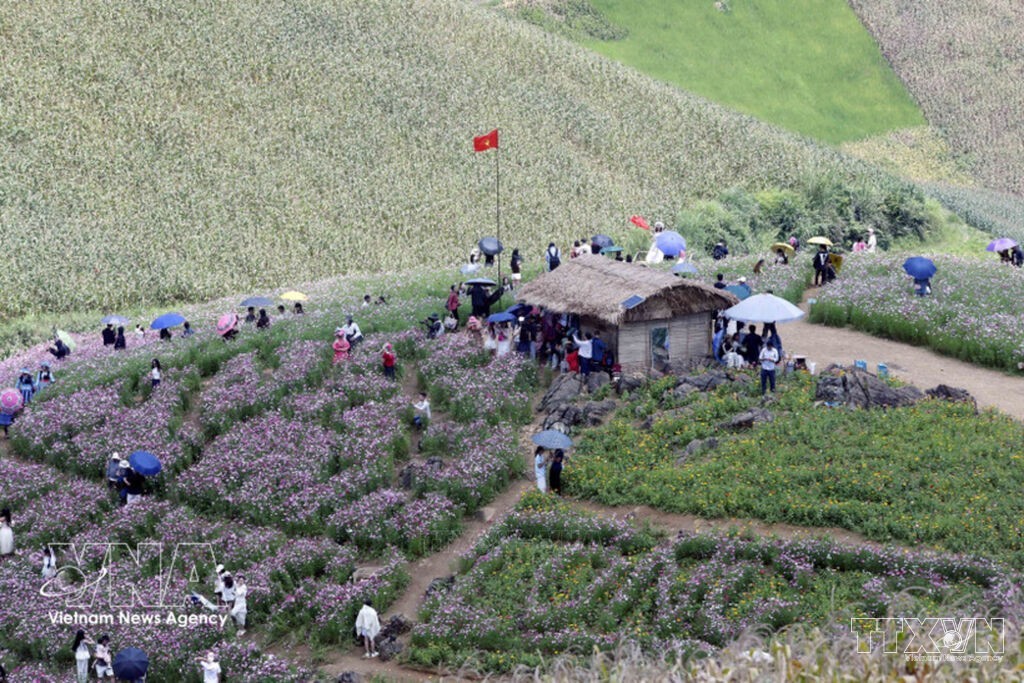
| Border residents and visitors join cultural, sports and tourism activities in Long Sap commune, Son La province. (Photo: QuVNA) |
Son La (VNA) – A series of cultural, sports and tourism activities took place at the Long Sap international border gate area in the northwestern province of Son La from August 31 to September 2, bringing together a large number of tourists and local residents along the Vietnam-Laos border.
The activities formed part of the 2026 Moc Chau Culture and Tourism Week, organised by the Son La provincial People’s Committee, contributing to friendship and solidarity among border communities.
Long Sap is a border commune with 14 villages and six ethnic groups living together, sharing more than 30km of border with Laos and hosting the Long Sap international border gate.
The programme featured a highland border market, a cultural, tourism and ethnic cuisine camp, as well as folk competitions and folk games, including tug-of-war, stick pushing, tu lu spinning and making banh day (glutinous rice cakes) of the Mong ethnic group. Cultural performances praising the Party, President Ho Chi Minh, the homeland and love also added to the festive atmosphere.
The highland border market was a major draw, with more than 200 stalls operated by businesses of Vietnam, Laos and Thailand, traders and producers showcasing and selling brocade clothing, household goods, farming tools, seedlings, specialty agricultural products and local cuisine.
Ha Van Suong, a resident of Chieng Khua village in Long Sap commune, said local residents were delighted to join the festivities and meet festival-goers from Laos and visitors from surrounding areas through cultural exchanges and culinary gatherings. These activities helped strengthen friendship and solidarity while creating opportunities for people on both sides to trade, exchange goods and work together for economic, cultural and social development.
On the occasion, cultural activities, performances and a trade fair around the border gate were held in Laos, drawing tens of thousands of visitors and border residents from both countries. The events boosted cross-border trade and created opportunities for people and businesses to promote and sell agricultural products and other goods.
For Hang Thi Dinh a resident in Long Sap commune, the festivities offered not only a chance to meet friends and shop, but also an opportunity to learn more about the customs and traditions of communities across the border in Laos.
Through the programme, Son La aims to showcase the nature, culture and people of Long Sap, promote traditional cultural values alongside sustainable tourism, boost tourism and trade, and foster stronger cooperation contributing to sustainable socio-economic development in Long Sap and the Moc Chau National Tourism Area.
The activities also encourage border communities to strengthen solidarity, boost production and socio-economic development while safeguarding national sovereignty and border security, further deepening the close friendship between the people of Vietnam and Laos./.