 |
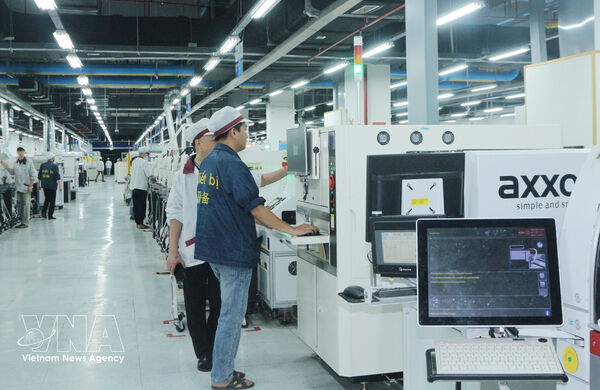
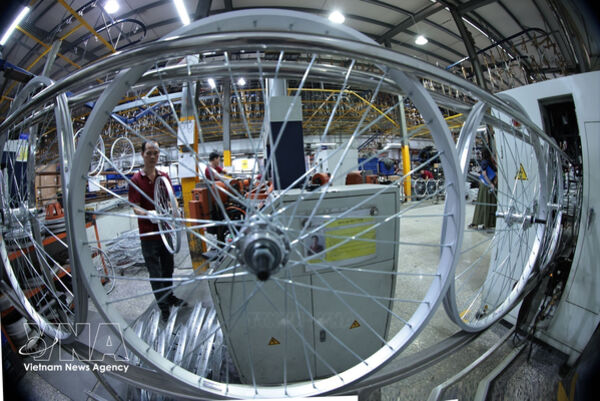
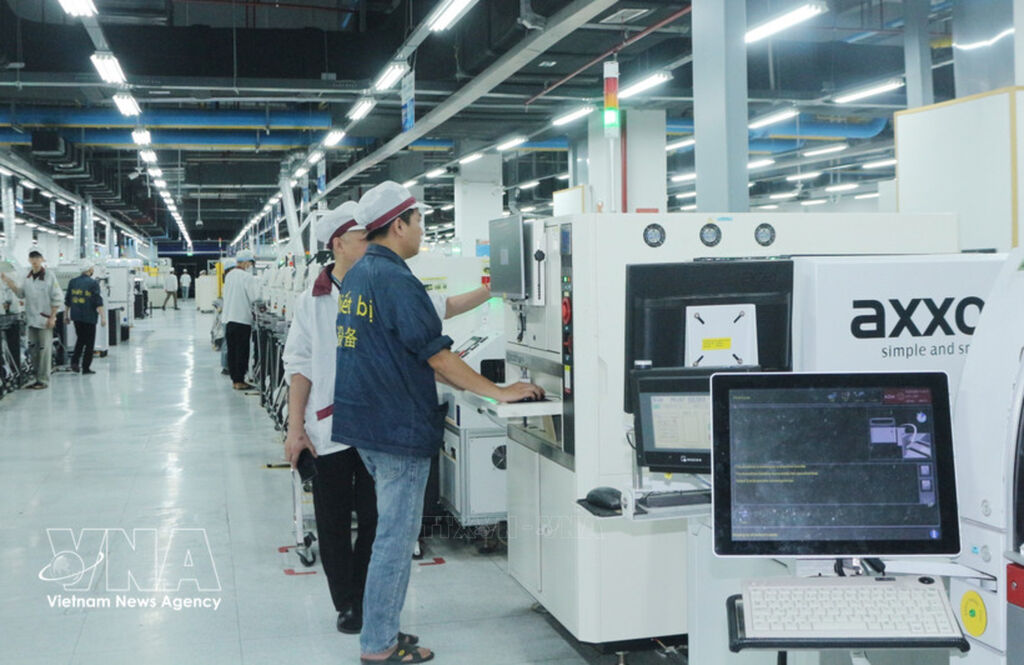
| Wistron Infocomm Vietnam Co., Ltd., has operated at the Dong Van III Industrial Park in Ninh Binh province since 2021 (Photo: VNA) |
Paris (VNA) – Vietnam is steadily moving beyond its role as a simple production base to become a higher-value link in global industrial value chains, driven by strong economic growth, political stability, a skilled workforce and deeper integration into international supply networks, a French expert has said.
Speaking to French business and financial news channel BFM Business, Mickaël Driol, CEO of Mekong Partners, noted that amid global trade tensions and geopolitical uncertainty, multinational companies are increasingly diversifying their supply chains, with Vietnam emerging as a key beneficiary of this trend.
In the first five months of 2026, Vietnam attracted around 25 billion USD in registered foreign direct investment (FDI), with nearly 10 billion USD already disbursed. These figures, the expert stressed, reflect not only commitments on paper but also concrete projects involving factory construction, production line installation, labour recruitment, and the formation of supplier networks.
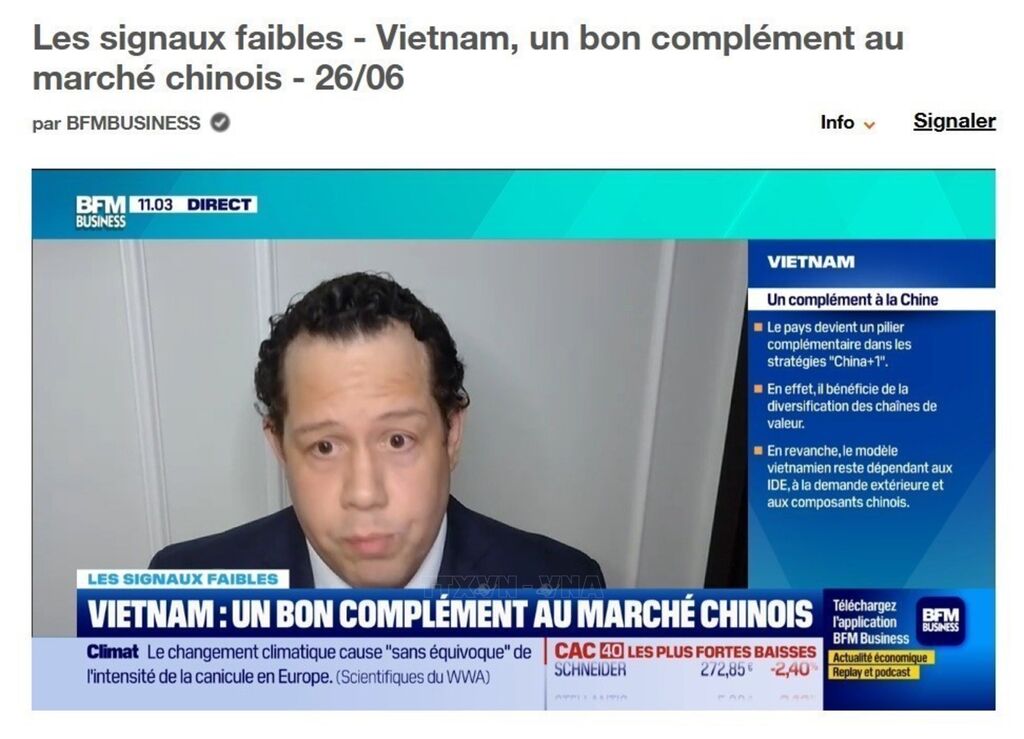 |
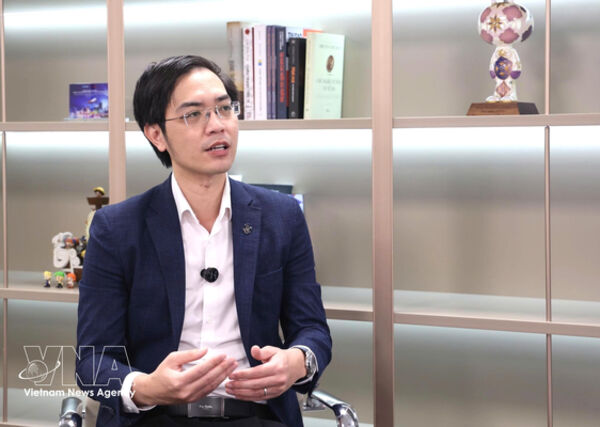
| Speaking to French business and financial news channel BFM Business, Mickaël Driol, CEO of Mekong Partners, notes that amid global trade tensions and geopolitical uncertainty, multinational companies are increasingly diversifying their supply chains, with Vietnam emerging as a key beneficiary of this trend (Photo: Screenshot) |
He noted that Vietnam’s advantages go beyond competitive labour costs, highlighting its political stability, increasingly well-trained young workforce, deep international economic integration, and strong connectivity with major markets such as the US, the European Union, Japan and the Republic of Korea.
Vietnam has already established a solid position in key sectors, including electronics, components, high-tech assembly and industrial equipment manufacturing, he said.
According to Driol, Vietnam’s foreign investment landscape is undergoing a clear shift. Instead of being focused mainly on labour-intensive manufacturing as in the past, investment is increasingly shifting toward higher value-added sectors, including high-tech electronics, semiconductors, automation, energy transition and digital transformation.
He pointed to the growing presence of French companies such as Air Liquide and Schneider Electric, which are expanding their operations in Vietnam through advanced technologies, engineering solutions and modern industrial projects.
Against this backdrop, he said that Vietnam is no longer simply a manufacturing hub, but is gradually becoming a destination for engineering development, production automation, smart factory transformation and the development of long-term industrial capabilities.
Comparing Vietnam with other regional economies, the expert said Vietnam stands out for export-oriented industrial production and its ability to integrate rapidly into global value chains.
He added that investment trends in Asia are shifting away from single-country strategies toward diversified portfolios, with Vietnam playing a key role as a regional production and export hub.
According to the expert, Vietnam should continue strengthening its domestic industrial capacity. He stressed that future challenges extend beyond administrative reform to ensuring more consistent policy implementation across key areas, including land clearance, investment licensing, customs procedures and energy infrastructure. He noted that progress in these areas will be crucial for Vietnam to sustain its competitiveness in attracting high-tech investment projects./.