Across the province, proactive and community-based approaches are helping disseminate election information widely, contributing to a safe, transparent and regulation-compliant election.
The establishment of the advanced semiconductor chip testing and packaging factory demonstrates FPT’s commitment to implementing Resolution 57 on breakthroughs in science and technology development, innovation and national digital transformation, and the National Strategy for Semiconductor Industry Development.
The European Union and Vietnam officially established diplomatic relations on November 28, 1990. Since then, their ties have grown positively, with frequent high-level meetings and exchanges, both bilaterally and on the sidelines of multilateral forums. The two sides coordinate closely in international organisations, particularly within the framework of ASEAN–EU, the Asia-Europe Meeting, and the UN.
According to Assoc. Prof. Dr. Pham Minh Phuc, Editor-in-Chief of the Social Sciences Publishing House under the Vietnam Academy of Social Sciences, the issuance of Resolution 80 places renewed and pressing demands on innovation in publishing activities in the new period.
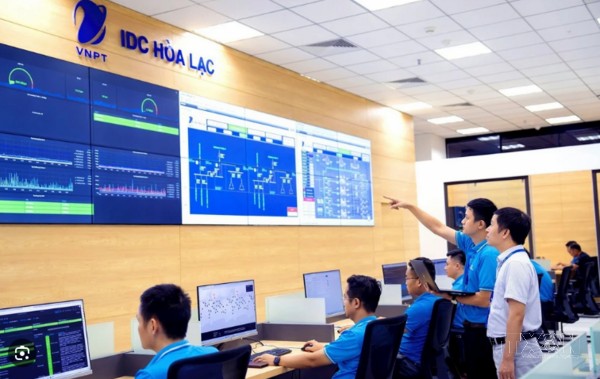
Vietnam’s Internet speeds have risen sharply, placing the country among regional leaders and within the global top 10–15 by international assessments, with 4G coverage exceeding 99.8% and 5G reaching more than 91% of the population.
The 14th National Party Congress set the goal of achieving an average annual growth rate of gross domestic product (GDP) of 10% or more; and a GDP per capita of approximately 8,500 USD by 2030.
On January 26, Cambodia’s Khmer Times published an article noting that the 14th National Congress of the Communist Party of Vietnam is not only a major milestone in the country’s development, but also brings new momentum to the traditional friendship between Vietnam and Cambodia, paving the way for deeper, more substantive and sustainable ties in the period ahead.
Resolution 57-NQ/TW has opened up new space and momentum for Vinh Long’s agriculture to transform towards modernity, sustainability and climate resilience.
On the morning of January 23, the 14th Communist Party of Vietnam Central Committee convened its first meeting, during which the 14th Politburo, comprising 19 members, was elected.
While describing the 14th National Congress of the Communist Party of Vietnam, held from January 19-23, as a historical milestone that carries not only domestic significance but also profound implications for stability in ASEAN, Dr. Kin Phea, Director of the International Relations Institute under the Royal Academy of Cambodia (RAC), stressed that Party building is the core of leadership capacity.
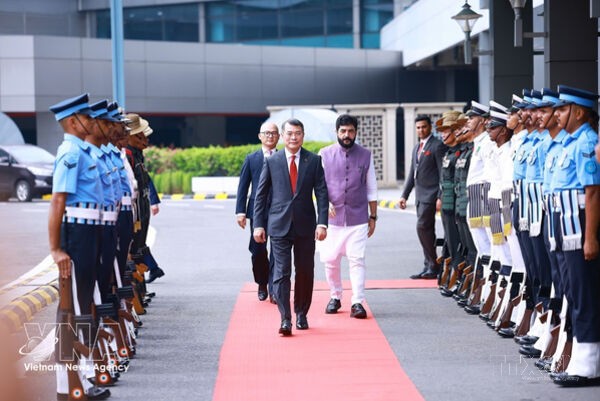
General Secretary of the Communist Party of Vietnam Central Committee To Lam and his spouse Ngo Phuong Ly chaired an official welcome ceremony in Hanoi on January 26 morning for General Secretary of the Lao People’s Revolutionary Party Central Committee and President of Laos Thongloun Sisoulith and his spouse Naly Sisoulith who are on a two-day state visit to Vietnam.
To mark the success of the 14th National Congress of the Communist Party of Vietnam, the National Library of Vietnam on January 26 opened an exhibition entitled “The Communist Party of Vietnam through its National Congresses.”
The State economic sector has effectively fulfilled its function of orienting, leading and regulating economic activities, contributing to promoting economic growth, stabilising the macro economy, maintaining major economic balances, ensuring national defence and security, fostering social progress and justice, improving living standards and raising Vietnam’s international standing.
By 2030, Vietnam aims to have 2 million active enterprises, at least 20 large firms participating in global value chains, private sector growth of 10–12% annually, and contributions of 55–58% of GDP.
In the time ahead, five strategic breakthroughs must be implemented in digital data, guided by the principles of decisive action, results as the ultimate measure, and synchronized implementation. This was the requirement set out by Prime Minister Pham Minh Chinh, Head of the National Steering Committee on Data, at the Committee’s first meeting, held online on January 12, with all 34 cities and provinces nationwide.
An event themed “Radiant Vietnam” was opened by the Vietnamese Consulate General in Osaka prefecture, Japan, on January 24 to welcome the Lunar New Year 2026.
In an article written on this occasion, the Party chief recalled President Ho Chi Minh’s call to action, “Forward! Total victory will be ours!” and emphasised that today the late President’s appeal still surges with momentum, “spurring us to strengthen our resolve, overcome poverty and backwardness, and build a prosperous and happy country.”
The three strategic breakthroughs identified at the 13th Party Congress remain vital for the 2021–2030 period. As Vietnam enters the 14th Party Congress term, they must be implemented more drastically, swiftly and thoroughly, as decisive levers for breakthrough development.
During the 1996–2005 period, Vietnam advanced industrialisation and modernisation under the Party’s leadership, achieving major milestones in economic restructuring, socialist rule-of-law construction, and broad international integration.
The overarching idea of the documents submitted to the 14th National Party Congress, and the enduring source of strength of the Vietnamese revolution, is that “the People are the foundation.” The People are at the centre of development, the key actors, the ultimate goal, the driving force, and the vital resource for national progress.
Resolution No. 80-NQ/TW of the Politburo on the development of Vietnamese culture consistently affirms the view that culture must be placed at the centre of development, serving simultaneously as the spiritual foundation of society, a development goal, and a key endogenous driver of national progress.