 |
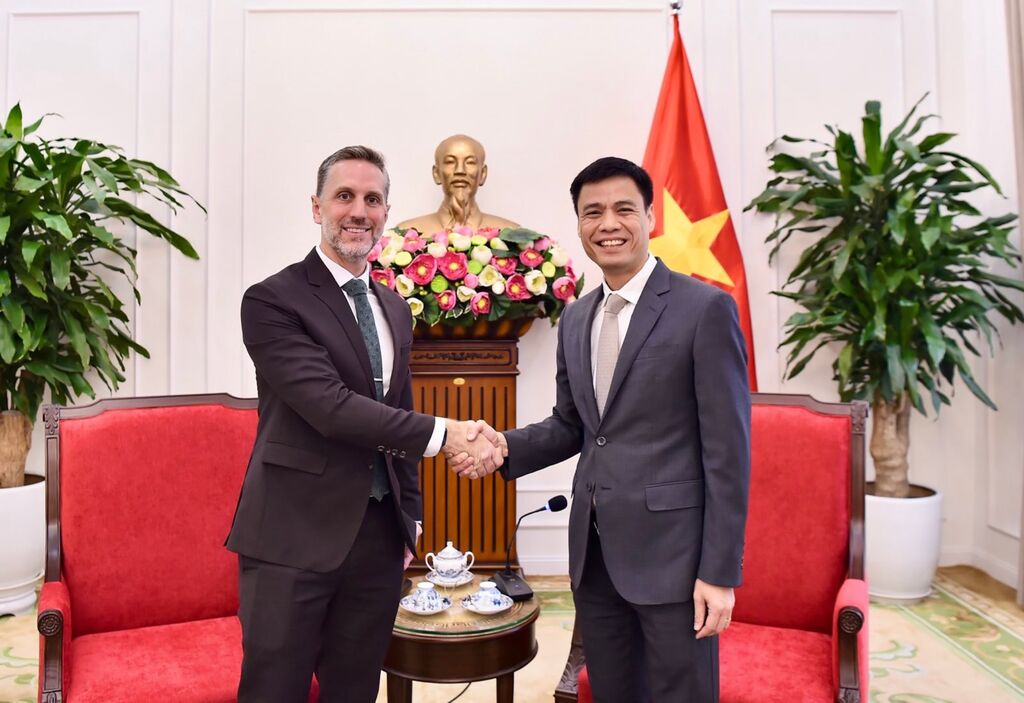
| Deputy Foreign Minister Dang Hoang Giang (right) meets with UNFPA Representative in Vietnam Matt Jackson in Hanoi on May 29. (Photo: Ministry of Foreign Affairs) |
Hanoi (VNA) – Vietnam has called on the United Nations Population Fund (UNFPA) to continue supporting the country in discussions and negotiations on a future international convention on the rights of older persons, underscoring its commitment to promoting and protecting the rights of the elderly amid rapid population ageing.
The proposal was made by Deputy Foreign Minister Dang Hoang Giang during a meeting with UNFPA Representative in Vietnam Matt Jackson in Hanoi on May 29.
Giang highly valued UNFPA’s contributions to Vietnam over the past 45 years and welcomed ongoing efforts to finalise the 2027–2031 cooperation programme between the two sides. He stressed that Vietnam attaches importance to cooperation with international partners in pursuing its strategic development goals, including its aspiration to become a developed country by 2045.
The deputy minister said the ministry is stepping up international cooperation on ageing-related issues and requested UNFPA’s continued support through technical expertise, international experience and policy recommendations in areas such as population ageing, long-term care, the care economy, the silver economy and promoting the role of older persons in society.
He also suggested that both sides explore opportunities to advance discussions on population ageing and the silver economy within relevant regional and international cooperation frameworks, including APEC 2027.
Vietnam affirms that it views the building of the convention as one of long-term significance and stands ready to play a proactive, constructive, and responsible role in relevant multilateral processes, Giang said.
For his part, Jackson praised the strong partnership between Vietnam and UNFPA, affirming that Vietnam is a key partner of the organisation. He affirmed UNFPA’s readiness to continue supporting Vietnamese agencies through experience-sharing and policy consultation in areas of mutual interest.
The two sides also exchanged views on ongoing reforms within the United Nations system aimed at enhancing efficiency, reducing overlap and improving resource utilisation, and agreed to maintain close coordination in implementing future cooperation initiatives./.