 |
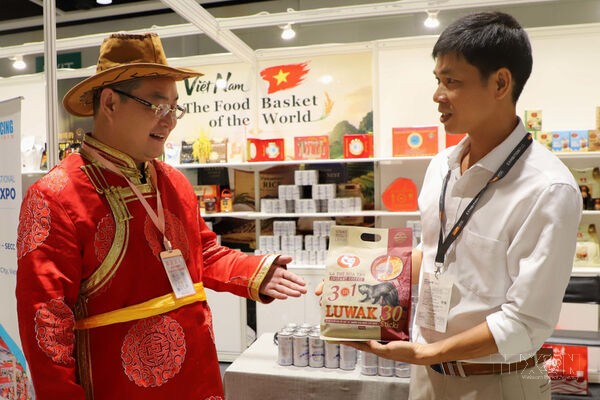
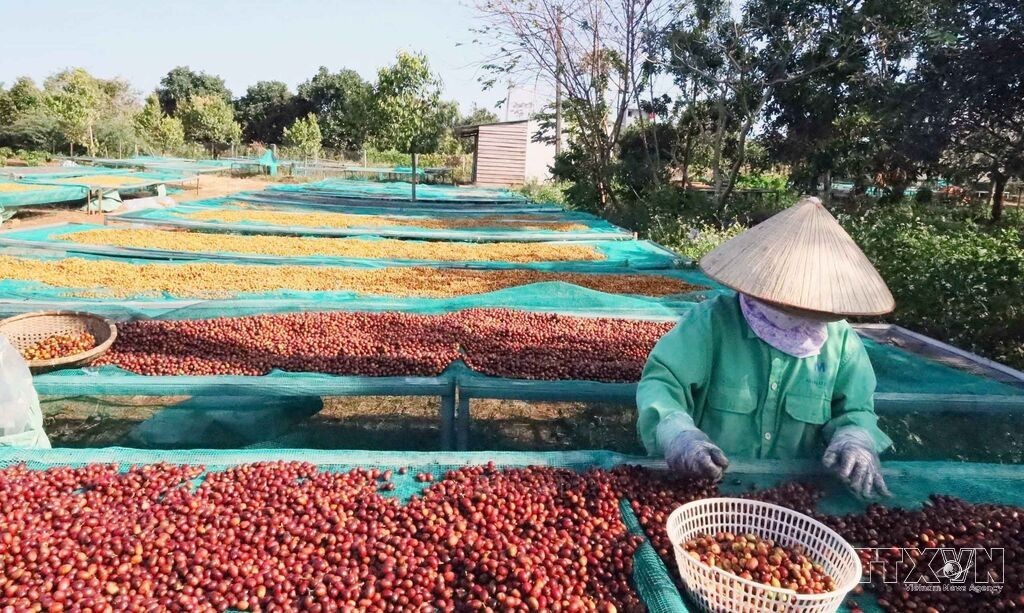
| According to the Vietnam Coffee Cocoa Association (Vicofa), Vietnam exported nearly 1.7 million tonnes of coffee in the first eight months of 2026, earning more than 6 billion USD. (Photo: VNA) |
Hanoi (VNA) – Vietnamese coffee has favourable prospects for a strong increase in both export volume and prices in the final months of the year, as low inventories, weather-related disruptions to global supply and higher product standards among importers create supportive conditions, with the quality and brand of Vietnamese coffee increasingly established.
According to the Vietnam Coffee Cocoa Association (Vicofa), Vietnam exported nearly 1.7 million tonnes of coffee in the first eight months, earning more than 6 billion USD. Export volume rose by over 10% year on year, while export value fell by 11.2% due to lower export prices.
The EU and the US continue to be the main export markets for Vietnamese coffee. Meanwhile, several Asian markets, particularly China, are emerging as new growth drivers for the industry.
Coffee prices are forecast to trend upwards in the coming period, supported by several factors. Climate change and heavy rainfall have delayed harvesting in Brazil, while El Niño, heatwaves and drought expected to affect Asia in late 2026 and 2027 could impact coffee production and supply. Low inventory levels are another supporting factor.
Notably, the European Union Deforestation Regulation (EUDR) will officially take effect on December 30, except for small and micro enterprises.
Vicofa said this presents an opportunity for Vietnamese coffee to boost exports, particularly green coffee beans meeting EUDR requirements, amid the relatively low level of compliance among some other producing countries.
Currently, more than 30% of Vietnam's coffee-growing area has been certified under sustainable production schemes, providing an important foundation for meeting increasingly stringent standards in import markets.
Therefore, export growth in the coming period will depend significantly on the ability to meet sustainability standards, particularly the EUDR, alongside efforts to increase deep processing and improve product quality.
Opportunity to accelerate growth in volume and prices
Nguyen Nam Hai, Chairman of Vicofa, said Vietnamese coffee has significant opportunities to accelerate growth in both export volume and prices in the final months of the year.
Currently, around 35-40% of Vietnam's coffee supply is capable of meeting EUDR requirements. As a result, many buyers are focusing on purchasing EUDR-compliant Vietnamese coffee for contracts to be signed from October. This could help increase export volume by 8-10%. In particular, EUDR-compliant shipments are expected to command prices approximately 50 USD per tonne higher than conventional coffee, helping significantly boost export turnover.
According to Hai, global demand for deeply processed products is growing strongly. They are therefore also expected to become a key driver helping the industry work towards its target of 9 billion USD in coffee export turnover this year.
However, alongside factors supporting higher prices, Hai noted that the market is also facing developments that could push prices down. According to forecasts by the US Department of Agriculture (USDA), coffee production in major producing countries is generally expected to increase in the 2026-2027 crop year compared with 2025-2026.
Global coffee supply is estimated at around 189 million bags, while consumption in major markets such as the US and Europe is expected to stand at only around 179 million bags, leaving a surplus of approximately 10 million bags. As more coffee enters the market, export prices are likely to come under downward pressure./.