 |
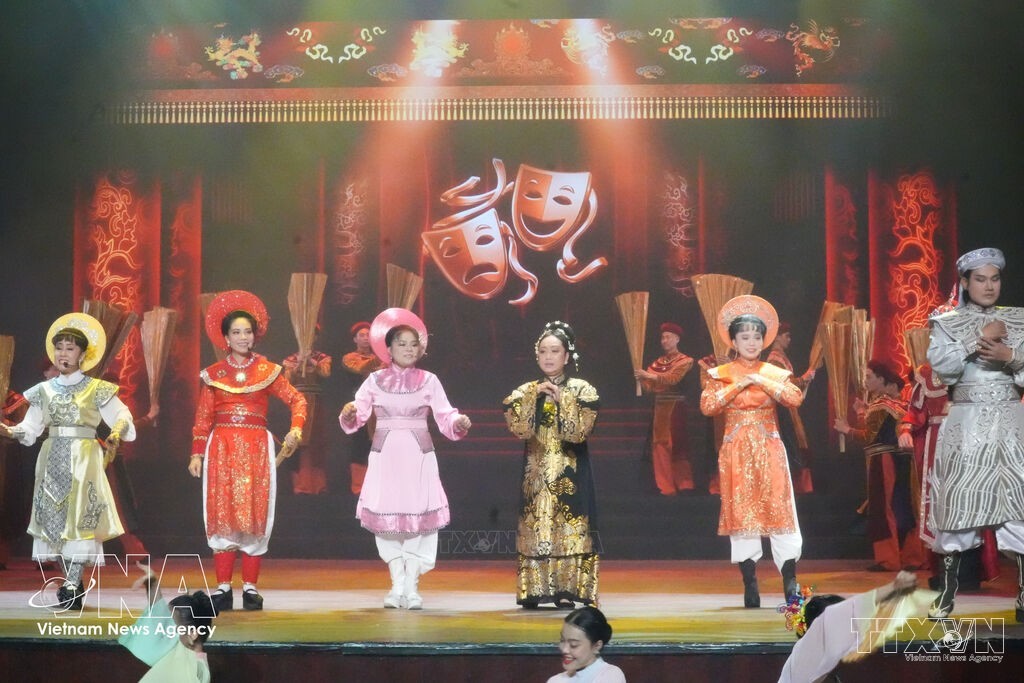
| A performance of classic "cai luong" excerpts at a 2026 competition to look for talents. (Photo: VNA) |
Hanoi (VNA) – Party General Secretary and State President To Lam’s address at the second meeting of the Central Steering Committee for the Vietnamese Culture Development on July 13 directly confronted the bottlenecks in the implementation of the Politburo’s Resolution 80-NQ/TW and charted strategic directions for culture in a new era.
Artists, scholars and researchers praised the speech as a strategic, action-driven blueprint designed to turn culture into the nation’s spiritual foundation, a source of internal strength and a key engine of national development.
Confronting ‘four gaps’ to unlock breakthroughs
Six months after the Politburo issued the Resolution 80-NQ/TW, Lam acknowledged initial progress but pointed to “four major gaps” requiring urgent attention and outlined “three major transformations” to align cultural development with the demands of the new period.
Photographer Tran Thi Thu Dong, Vice President of the Vietnam Union of Literature and Arts Associations and President of the Vietnam Association of Photographic Artists, said the leader’s four gaps strike at the core bottlenecks.
Those include the limited appeal and reach of Vietnamese cultural values in the digital space, which has failed to keep pace with surging online content. Vietnam holds a vast cultural trove of more than 40,000 historical sites, nearly 70,000 items of intangible cultural heritage and 38 UNESCO-inscribed elements, yet most remain undigitised, lack standardised data and have yet to be converted into digital knowledge or intellectual property (IP) assets.
Other gaps lie with the country’s limited capacity to create competitive cultural products that could become national icons, a fragmented institutional framework, and an underdeveloped cultural industry ecosystem. The sector contributes roughly 4% of GDP, well below the Government’s 2030 target of 7%.
Against this backdrop, the “three major transformations” set a comprehensive strategic framework: recasting culture from a standalone sector into a spiritual foundation, strategic pillar and new economic growth engine; expanding cultural development into both physical and digital spaces, where sovereignty over data, platforms and content is treated as an integral part of national sovereignty; and shifting from a preservation-only mindset to a model that fuses preservation with innovation.
Dong welcomed the focus on genuine digital transformation rather than superficial digitisation. A heritage asset, she said, is not digitised simply because it has been photographed or uploaded online. Digital records must carry standardised identification, technical specifications, interoperability and the capacity for data sharing and reuse, while serving education, research, tourism and cultural industries. Equally critical is a fair benefit-sharing mechanism among the State, local communities, artisans, creators and businesses, which has been long demanded by the domestic creative community.
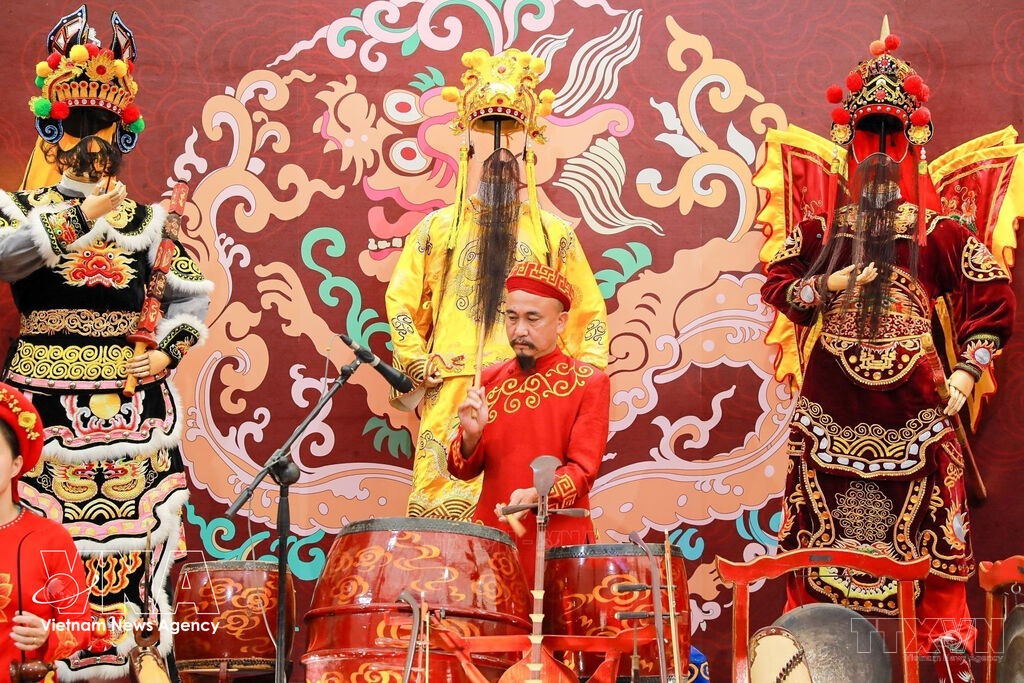 |
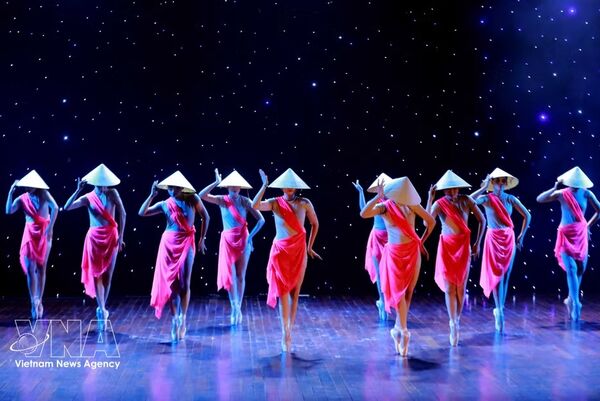
| A performance at the 2025 Hanoi Autumn Festival. (Photo: VNA) |
According to her, the directions come with clearly defined tasks, timelines and measurable targets. Those include completing a legal framework through foundational laws on copyright, artistic activities and cultural industries, developing a National Cultural Index, raising public spending on culture to at least 2% of the state budget, and turning cultural industries into a new growth driver via flagship projects and cultural hubs in key localities.
For artists, cultural managers and researchers, the push represents both a major opportunity, with increased state support and targeted investment in quality works, and a profound responsibility to create works that become national symbols and tell Vietnam’s story to the world.
From strategic vision to a measured roadmap
Dr. Dang Vu Canh Linh, Deputy Director of the Institute for Personnel Training and Scientific Research under the Vietnam Fatherland Front Central Committee, said the four gaps the leader identified make the practical challenges of realising the resolution plain. Turning culture into genuine internal strength, soft power and a pillar of national competitiveness requires further refining institutional framework, policies and an ecosystem capable of converting cultural values into data, knowledge, creative works, products and markets that the public voluntarily embraces.
In his view, the address plays a crucial role in translating the resolution from a strategic policy framework into a focused action agenda, complete with clear responsibilities, deliverables, deadlines and evaluation criteria.
Drawing on that detailed and practical guidance, artists and researchers voiced confidence that with the entire political system, businesses and the creative community engaged, Vietnamese culture will undergo a sharp transformation and truly become both a spiritual foundation and a key driver of sustainable development in the new era./.