 |
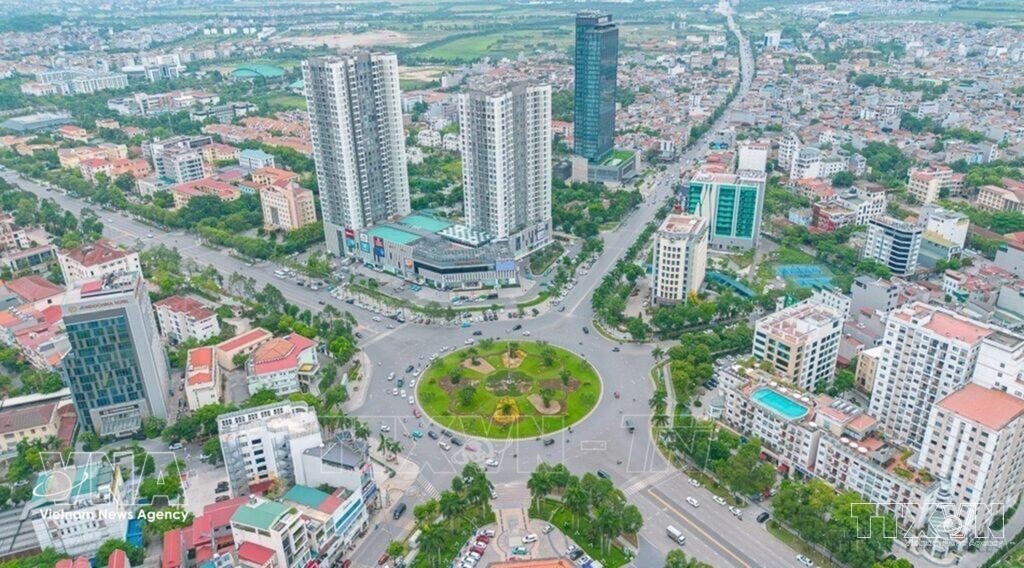
| A part of Kinh Bac ward, Bac Ninh province (Photo: VNA) |
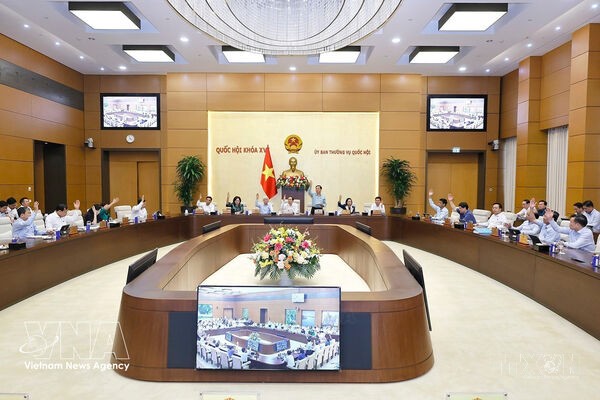
Bac Ninh (VNA) – Bac Ninh is approaching a historic milestone as the Government has approved a proposal to establish the province as a centrally-run city and submitted it to the National Assembly for consideration, with localities across the province accelerating urban development and infrastructure preparations.
Aspirations for transformation from the grassroots
As part of the roadmap, the merger and upgrade of commune-level administrative units into wards is key to completing the urban structure. Preparations are proceeding well in Hiep Hoa commune, which was formed after the merger of administrative units in former Hiep Hoa district.
Bui Huy Khanh, Secretary of the Party Committee of Hiep Hoa, said the commune is working to answer residents’ key question: how becoming a ward will improve their lives.
Hiep Hoa has launched a 100-day plan to tackle bottlenecks in digital transformation, aiming to become the best performer of Bac Ninh in the field. Computers and scanners have been provided for Party cells and villages while online meetings are being extended to the grassroots level to improve administrative capacity.
The commune is also upgrading roads and cultural facilities, and piloting five “comprehensive villages”, or smart villages, in economic development, digital infrastructure, environmental protection, and public security, Khanh noted.
Meanwhile, Nenh ward, regarded as an “economic engine”, hosts four operating industrial parks (IPs) and is pressing on with major projects such as the Quang Chau 2 IP and the second phase of the Viet Han IP. The ward contributes around 30% of the province’s GRDP.
With its temporary resident population twice its permanent population, Nenh faces significant infrastructure pressure. Chairman of the ward People’s Committee Le Hoang Bach said the locality plans to adopt a “compact city” model, with apartment buildings of around 30 storeys to be built to optimise land use.
As workloads increase while staffing is reduced, digital transformation is seen as essential, and AI is expected to be applied to administration to ease pressure on civil servants and improve management efficiency, he added.
In Viet Yen ward, efforts focus on meeting criteria for a second-tier urban area. Vice Chairman of its People’s Committee Tran Manh Xam said Viet Yen is attracting investment in two large IPs, namely the 200ha Song Mai–Nghia Trung and the nearly-300ha Minh Duc–Thuong Lan–Ngoc Thien.
It also aims to eliminate household poverty by 2027 as part of sustainable urban development goals, the official noted.
Shaping smart city that perserves local identity in new era
According to the Government’s proposal, Bac Ninh will be established as a centrally-run city, with the current natural area and population scale maintained. Home to nearly four million people and serving as the northern gateway of Hanoi, it is not only a hub of the Hanoi–Hai Phong–Quang Ninh economic triangle and but also the nucleus of key economic corridors.
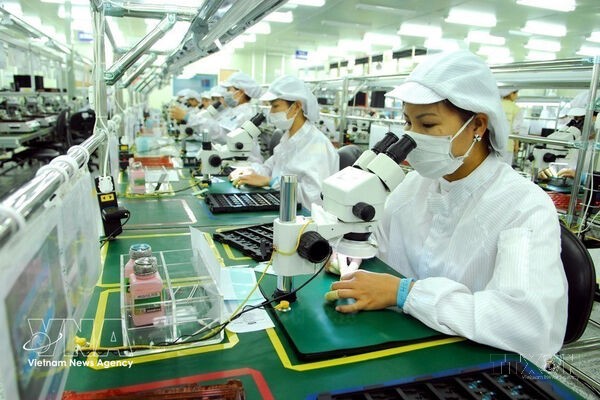
Project No. 576/DA-UBND of the provincial People’s Committee sets a vision for a green and smart city, with science, technology, and innovation identified as the core growth driver. Bac Ninh is particularly applying itself to developing high-tech industries, including semiconductors, microchip manufacturing, and AI.
Chairman of the provincial People’s Committee Pham Hoang Son said Bac Ninh aims to transform into a data-driven smart city by 2030 and rank among the world’s top 50 reputable smart cities. To that end, it is deploying a city information model (CIM) towards a digital twin to support decision-making and urban management in a more efficient manner.
In addition, strategic infrastructure projects such as Ring Roads No.4 and No.5 and Gia Binh International Airport are being accelerated to strengthen inter-regional connectivity.
Alongside modernisation, he said, Bac Ninh is committed to preserving the Kinh Bac cultural identity as an important internal resource. The establishment of new wards such as Chi Lang, Phu Lang, and Gia Binh is intended not only to improve urban management but also to preserve local heritage, including Quan Ho folk singing, traditional pottery villages, and nationally recognised historical sites.
The province envisions a “multi-polar, multi-centred” development model to spread growth more evenly, from logistics hubs to eco-urban areas and cultural tourism destinations, Son went on.
As it enters a new development phase, Bac Ninh is targeting not only double-digit economic growth but also greater improvement in quality of life. It is expected to become a city where more than 90% of locals access end-to-end online public services, 100% of household waste is collected and treated properly, and per capita income continually increases.
With strong public consensus and determined action by the entire political system, Bac Ninh is confident of crossing the historic threshold to become a centrally-run city, a civilised, modern, and liveable city with regional stature./.