 |
| The Bach Ma National Park is renowned for its cool climate, spectacular landscapes and exceptional biodiversity. (Photo: VNA) |
Hue (VNA) – Home to one of Vietnam's richest biodiversity reserves, the Bach Ma National Park is stepping up efforts to transform its unique natural assets into sustainable tourism products while maintaining long-term conservation goals.
Located in Phu Loc commune of Hue city, where the Truong Son mountain range stretches closest to the East Sea, the Bach Ma National Park is renowned for its cool climate, spectacular landscapes and exceptional biodiversity. Rising more than 1,400 metres above sea level, its Hai Vong Dai (sea view tower) offers panoramic views of Cau Hai and Tam Giang lagoons, the East Sea and the forests of the Truong Son range.
The park is recognised as one of Vietnam's most biologically diverse protected areas, with a history of scientific exploration and conservation spanning more than a century, closely intertwined with many of the country's important historical milestones.
According to the park's management board, the Bach Ma mountain range has long served as a natural ecological barrier protecting the central coastal plain while supplying water to major river basins. Its rich ecosystems attracted many renowned scientists, whose botanical, zoological and geographical surveys helped establish Bach Ma as one of Indochina's important scientific sites.
Botanists such as Eugène Poilane, François Gagnepain and Pierre Lecomte collected thousands of plant specimens from central Vietnam, including many from Bach Ma. Ornithologists Jean Théodore Delacour and Pierre Jabouille also conducted pioneering research on the region's birdlife, documenting several endemic species, including the white-crested pheasant, which helped affirm the exceptional ecological value of the area's ecosystem.
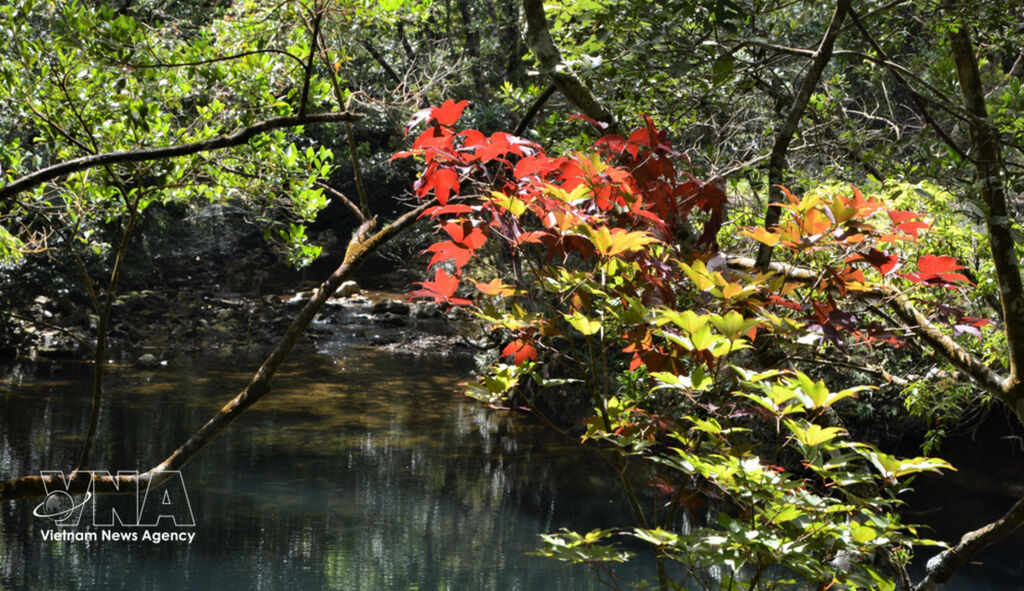 |
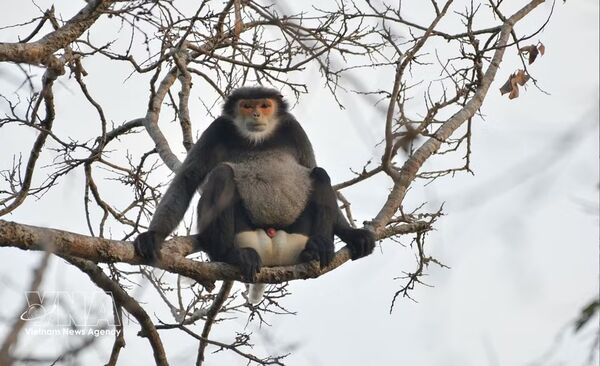
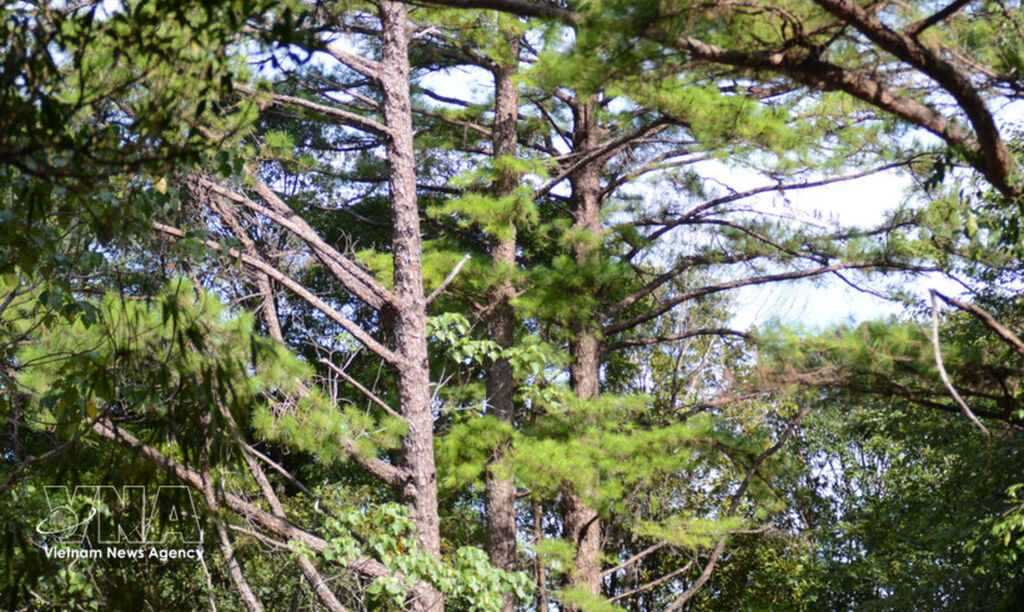
| The park is rich in flora, with 2,421 plant and fungal species, accounting for nearly 17% of Vietnam's recorded plant species. (Photo: VNA) |
Recent surveys by the park have identified 1,728 animal species from 54 orders and 266 families. Of these, 70 are listed in Vietnam's Red Data Book 2007, 52 appear on the International Union for Conservation of Nature (IUCN) Red List in 2016, and 15 are endemic species. Scientists have also discovered 14 species new to science named after Bach Ma.
The park is equally rich in flora, with 2,421 plant and fungal species, accounting for nearly 17% of Vietnam's recorded plant species. They include 74 species listed in Vietnam's Red Data Book, 20 on the IUCN Red List and 204 endemic species. Ten plant species newly identified by scientists also bear the name Bach Ma.
Nguyen Vu Linh, Director of the Bach Ma National Park, said the park's biodiversity has been safeguarded through forest patrols and scientific research. Over the years, scientists, researchers and technical experts have undertaken extensive field surveys, leading to the discovery and documentation of many rare species and providing a solid scientific foundation for conservation.
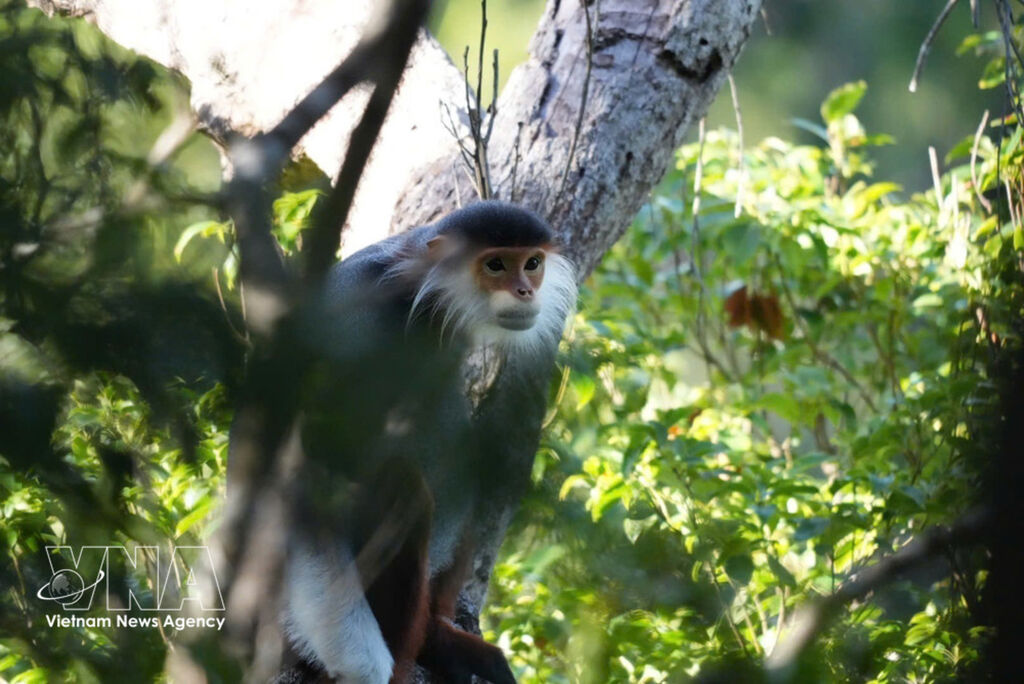 |
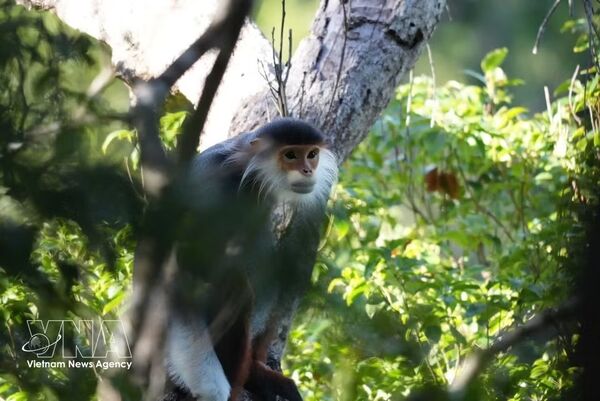
| A red-shanked douc langur at the Bach Ma National Park. (Photo: VNA) |
He said the park has gradually built a highly qualified workforce while improving forest protection, expanding international cooperation, promoting digital technology applications and environmental education, and developing ecotourism.
As conservation efforts continue, Bach Ma is also seeking to unlock its tourism potential.
Under the ecotourism, resort and recreation development plan for 2024-2030, approved by the Ministry of Agriculture and Environment, the park will develop 12 ecotourism sites and 14 tourism routes. Tourism activities will be confined to service and ecological restoration zones, while strictly protected areas will remain off limits to recreational development.
After the plan was adopted, the park launched the first phase of selecting investors to lease forest environmental services at 13 approved tourism locations.
The park plans to further enhance visitor experiences by developing specialised ecotourism products, building the Bach Ma ecotourism brand and strengthening environmental education through tourism, aiming to balance conservation with sustainable economic development./.