Credit growth nears 18% in 2025: central bank
At a press conference on banking sector performance in 2025 and tasks for 2026, held in Hanoi on December 29, SBV Deputy Governor Pham Thanh Ha said that as of December 24, 2025, total outstanding credit to the economy exceeded 18.4 quadrillion VND (about 670 billion USD), up 17.87% compared to the end of 2024.
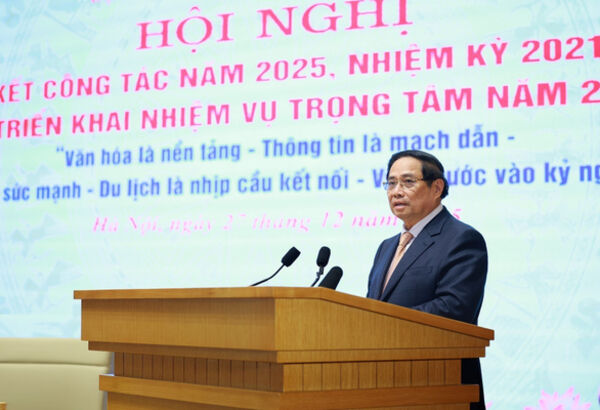
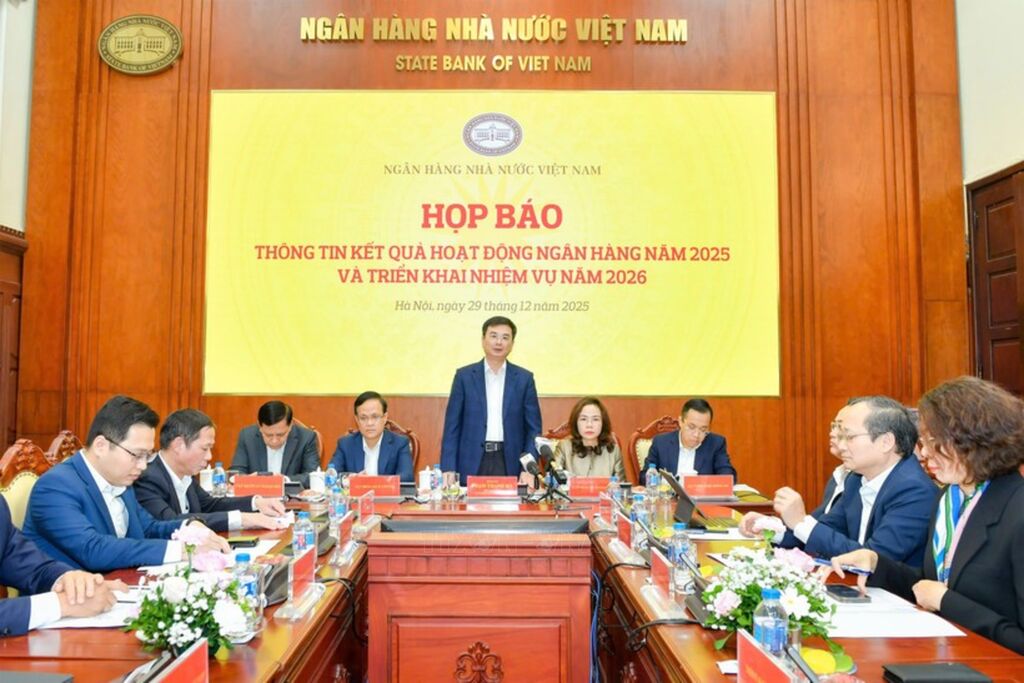
Deputy Governor of the State Bank of Vietnam Pham Thanh Ha speaks at a press conference on banking sector performance in 2025 and tasks for 2026, held in Hanoi on December 29. (Photo: VNA)

Hanoi (VNA) – Credit growth in Vietnam reached nearly 18% in 2025, reflecting the State Bank of Vietnam’s (SBV) flexible and proactive monetary management aimed at supporting economic growth while keeping inflation under control.

At a press conference on banking sector performance in 2025 and tasks for 2026, held in Hanoi on December 29, SBV Deputy Governor Pham Thanh Ha said that as of December 24, 2025, total outstanding credit to the economy exceeded 18.4 quadrillion VND (about 670 billion USD), up 17.87% compared to the end of 2024.

According to the Deputy Governor, throughout 2025, the central bank closely monitored macroeconomic developments and implemented credit policies in a timely and adaptive manner. From the beginning of the year, the SBV set an initial credit growth target of around 16% for the entire banking system, while allowing for adjustments in line with actual economic conditions. The management of credit growth continued to be renewed more transparently and openly, enabling credit institutions to plan and implement their lending activities.

Credit flows were directed toward production and business activities, priority sectors, and key growth drivers in line with directives from the Government and the Prime Minister. These measures helped improve access to bank credit for both businesses and individuals, thereby contributing to economic recovery and growth.

In response to severe impacts caused by natural disasters and floods during the year, the SBV promptly instructed credit institutions to review affected borrowers, assess their debt repayment capacity, and apply appropriate support measures. These efforts aimed to help businesses and households overcome difficulties, stabilise production, and resume normal operations.

Regarding credit structure, Ha noted that lending continued to align well with the structure of the economy. By the end of October 2025, outstanding loans to the agriculture, forestry and fisheries sector accounted for 6.15% of total credit, while the manufacturing and processing industry made up 12.39%, and construction 7.47%, including major infrastructure projects prioritised by the Government. Wholesale and retail trade remained the largest recipient of credit, accounting for 22.24% of total outstanding loans.

Priority sectors such as agriculture and rural development, as well as small and medium-sized enterprises, continued to hold a significant share of total credit. Notably, lending to supporting industries and high-tech enterprises recorded strong growth.

Government-directed credit programmes were also actively implemented. The credit package for the forestry and fisheries sectors was expanded significantly to 185 trillion VND from 15 trillion VND, while the programme supporting high-quality, low-emission rice production in the Mekong Delta recorded cumulative disbursement of around 3.1 trillion VND by the end of November.

On interest rate management, the SBV maintained its policy rates to ensure low-cost access to central bank funding. Credit institutions were encouraged to cut operating costs and enhance digital transformation, contributing to a continued decline in lending rates. Exchange rate management was undertaken, using coordinated monetary policy tools to stabilise the foreign exchange market, support macroeconomic stability, and control inflation./.


Related News

Agricultural sector to cut at least 15% greenhouse gas emissions by 2035

The project on low-emission crop production for the period for 2025-2035, with a vision extending to 2050, focuses on high-emission crops such as rice, cassava, sugarcane, coffee, and bananas. It aims to pilot at least 15 farming models nationwide that are ready for carbon credits and meet international standards.

See Also

New-style rural building drive delivers strong results nationwide

The “new-style rural area building” emulation movement for the 2021–2025 period delivered key achievements nationwide, contributing to a fundamental transformation of rural landscapes, improved living standards, and progress in agricultural restructuring, rural economic development aligned with urbanisation, environmental protection, and the preservation of traditional cultural values.

Key economic policies taking effect in January 2026

A wide range of new economic policies and legal provisions will come into force in January 2026, covering taxation, advertising, land use, minimum wages, public finance, railways, technology transfer and statistics, among others.

Government to provide cash gifts to social policy beneficiaries ahead of Tet 2026

People who rendered meritorious services to the revolution, those entitled to social protection, and social pensioners as defined by respective national ordinances, and decrees, together with orphans without guardians or those living in orphanages will receive a cash gift of 400,000 VND (15.2 USD) per person on the occasion of the 14th National Party Congress and the 2026 Lunar New Year (the Year of the Horse).

Culture must be Vietnam’s strength, people’s spiritual foundation: PM

He emphasised that the sector must cultivate an advanced Vietnamese culture rich in national identity, promote well-rounded human development, and foster a humane, civilised, and modern cultural environment, ensuring that culture permeates society and serves as both a strong spiritual foundation and an internal driver of development.

Khanh Hoa tightens fisheries management to combat IUU fishing

Khanh Hoa province is stepping up comprehensive measures to prevent illegal, unreported and unregulated (IUU) fishing, while making thorough preparations for the fifth inspection by the European Commission (EC), with the aim of lifting the “yellow card” warning and promoting sustainable fisheries development.

Hanoi strengthens efforts to curb sex imbalance at birth

Alongside changing mindsets, the capital has implemented a wide range of coordinated solutions to address sex imbalance at birth. Communication campaigns have been intensified at the grassroots level, targeting residential communities, youth, couples preparing for marriage and women of reproductive age.

11th National Patriotic Emulation Congress successfully wraps up

Patriotic emulation movements across the country have produced landmark achievements in the Ho Chi Minh era, including defeating the COVID-19 pandemic, completing the elimination of substandard housing four months ahead of schedule, building more than 3,000 kilometres of expressways, and advancing science – technology, innovation, and digital transformation.

11th National Patriotic Emulation Congress officially opens in Hanoi

The 11th National Congress of Patriotic Emulation is an extremely important political and social event of the country, aiming to summarise the patriotic emulation movement and commendation work in the 2021-2025 period, and to propose and launch the patriotic emulation movement for the 2026-2030 stage.