Fitch Ratings gives positive assessment of Vietnam’s economic fundamentals
Deputy Minister Tran Quoc Phuong stressed that Fitch’s credit assessments have enhanced Vietnam’s image and credibility in international financial markets, and provided additional motivation for the country to continue improving institutions, strengthening policy management efficiency and increasing economic transparency.
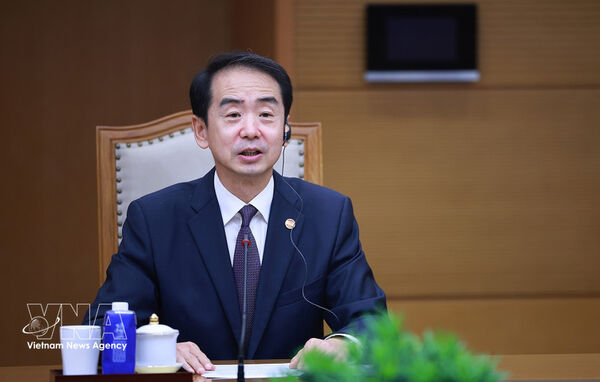
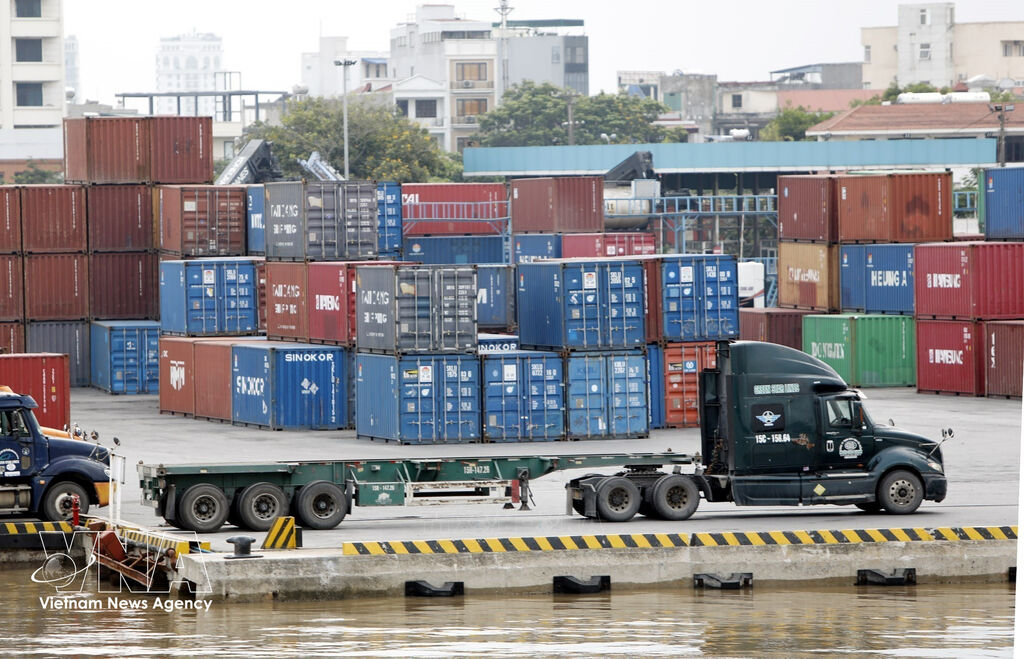
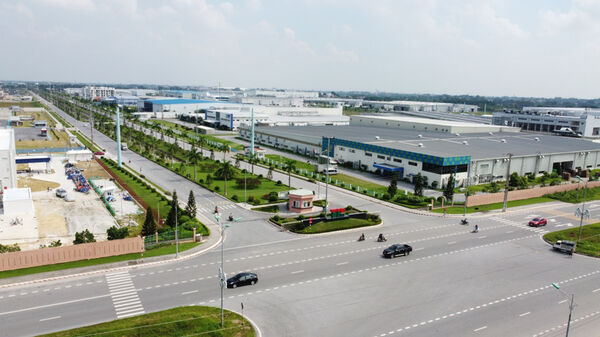
Fitch Ratings gives positive assessment of Vietnam’s economic fundamentals (Illustrative image. Source: VNA)

Hanoi (VNA) – Fitch Ratings has given a positive assessment of Vietnam’s economic fundamentals, highlighting the country’s macroeconomic stability and resilience amid continuing global uncertainty.

According to the Ministry of Finance, Deputy Minister Tran Quoc Phuong recently held a working session with a delegation of Fitch Ratings experts as part of the agency’s 2026 sovereign credit rating assessment programme for Vietnam.

At the meeting, Phuong acknowledged Fitch Ratings’ long-standing support through its independent and objective analyses of Vietnam’s economy over the years.

He stressed that Fitch’s credit assessments have enhanced Vietnam’s image and credibility in international financial markets, and provided additional motivation for the country to continue improving institutions, strengthening policy management efficiency and increasing economic transparency.

The Vietnamese Government remains steadfast in its goal of maintaining macroeconomic stability, reinforcing major economic balances and enhancing resilience against external shock, the deputy minister said.

According to him, despite ongoing volatility in the global economy, Vietnam continues to pursue proactive and flexible policy management, with close coordination between fiscal and monetary policies to support growth and ensure macroeconomic stability and inflation control.

George Xu, Director of Asia-Pacific Sovereign Ratings at Fitch Ratings, appreciated Vietnam’s macroeconomic management efforts amid mounting international economic risks and uncertainties. He noted that Vietnam has maintained positive growth momentum, macroeconomic stability and relatively effective inflation control despite increasing external pressures.

The Fitch Ratings delegation also expressed interest in Vietnam’s measures to control inflation, ensure energy security, sustain economic growth and accelerate institutional reforms and improvements to the investment climate. In addition, they sought updates on Vietnam’s medium-term growth outlook, fiscal policy, public debt management, foreign investment attraction and the restructuring of state-owned enterprises.

Phuong said that in response to energy price fluctuations and geopolitical tensions in the Middle East, Vietnam has implemented a range of concerted measures, including market stabilisation tools, tax policy adjustments, enhanced market supervision and diversification of fuel supply sources.

He affirmed that his ministry will monitor global economic and financial developments to formulate appropriate policy scenarios should international conditions become more complicated.

Vietnam is currently reviewing and updating its growth scenarios to ensure the achievement of its 2026 economic development targets, with the Government focusing on removing investment bottlenecks, improving the business environment, accelerating public investment disbursement and attracting more foreign and private investment capital, he added.

Despite global economic headwinds, Foreign Direct Investment (FDI) inflows into Vietnam have remained positive in recent months. Vietnam is also continuing efforts to reform State-owned enterprises through restructuring and divestment to improve efficiency, transparency and governance capacity.

Fitch Ratings representatives also commended Vietnam’s policy orientation, particularly its efforts to maintain macroeconomic stability amid global economic turbulence. According to Fitch, Vietnam’s continued commitment to institutional reform, investment climate improvement and enhanced fiscal governance will remain key factors supporting the country’s sovereign credit outlook in the coming period.

The Ministry of Finance said both sides agreed to maintain regular exchanges and strengthen information sharing to support the sovereign credit rating assessment process, improving Vietnam’s reputation and access to international capital markets./.
Related News

Strong economic conglomerates drive domestic economic growth

In manufacturing, THACO has built one of Southeast Asia’s largest automobile and mechanical engineering ecosystems in Quang Nam province, while VinFast has become Vietnam’s first electric vehicle producer, establishing a major factory in Hai Phong, listing on Nasdaq and expanding into North America, Europe and Southeast Asia.

Logistics set to drive Vietnam’s rise in global supply chains

Amid sweeping restructuring in global trade driven by digitalisation, green transition and geopolitical shifts, logistics is no longer a back-end function. It is increasingly a decisive factor in economic performance, especially as Vietnam deepens integration into international supply chains. The challenge now extends beyond faster delivery to building a modern and interconnected logistics ecosystem capable of organising supply chains at a regional scale.

See Also

President Ho Chi Minh’s thought on national unity remains relevant today

President Ho Chi Minh's ideology of national unity continues to carry profound significance amid growing global challenges, including conflicts, social divisions and economic instability. His message of solidarity, consensus and placing national interests above sectional differences remains a valuable lesson for many developing nations.

Top Vietnamese leader’s vision puts scientists at core of growth drive

As the country enters a new era, the Party and State have designated sci-tech and and innovation as central priorities, Kiem said, adding that VNU-Hanoi, alongside other higher education establishments, must not only produce high-caliber talents but also function as a hub for knowledge transfer and groundbreaking innovation.

OP-ED: Beyond rhetoric, urban reconstruction moves ahead

Transport infrastructure development is a key task in the capital’s major development strategies, closely linked with the Hanoi Capital Master Plan with a 100-year vision and the implementation of the revised Capital Law. A series of major projects, including ring roads, urban railways, national railways and regional economic connectivity projects such as the Red River Landscape Boulevard Axis, are being implemented to enhance connectivity, promote the growth of Hanoi and the country, and lay the foundation for urban reconstruction in a modern, synchronised and sustainable direction.

OP-ED: Controlling power, preventing corruption at roots

As the country enters a new development phase, the anti-corruption focus is shifting from strict punishment alone to prevention at the roots, while also protecting officials who dare to think innovatively and act decisively for the common good.

Top leader’s visits opening new phase of deeper, more effective ties with India, Sri Lanka: FM

Minister of Foreign Affairs Le Hoai Trung described the visits as particularly important and historic, taking place at a meaningful moment as Vietnam and India mark the 10th anniversary of their Comprehensive Strategic Partnership and just one month after the top leader of Vietnam assumed his new position. For Sri Lanka, this was the highest-level visit by a Vietnamese leader since the two countries established diplomatic relations.

Top leader's state visit set to propel Vietnam–Sri Lanka ties into new phase: Deputy FM

The upcoming visit to Sri Lanka by General Secretary of the Communist Party of Vietnam Central Committee and State President To Lam not only reaffirms Vietnam’s commitment to strengthening relations with Sri Lanka but also signals both countries’ determination to elevate their traditional friendship into a partnership focused on development and shared prosperity.