 |
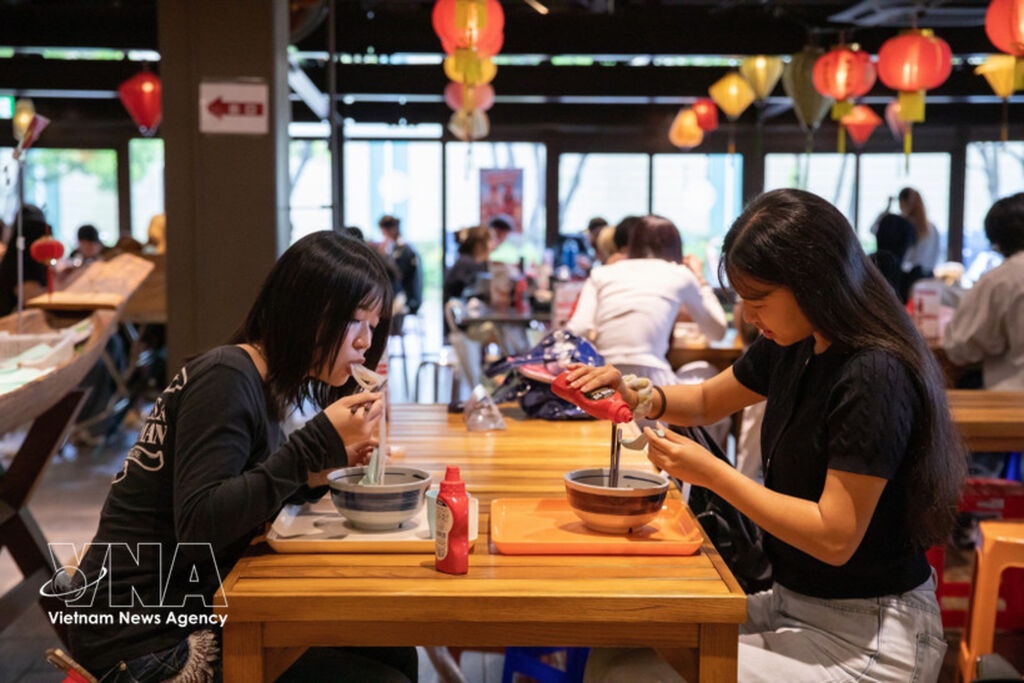
| Students at Kanda University of International Studies in Japan’s China prefecture enjoy Pho (Photo: VNA) |
Tokyo (VNA) – “Pho,” the iconic traditional noodle soup of Vietnam, has quickly become a favourite among students at Kanda University of International Studies in Japan’s China Prefecture after being introduced to the university’s lunch menu as part of a programme promoting global culinary culture.
The Vietnamese dish has been served at the university cafeteria for a two-week period beginning May 18, allowing students to experience and learn more about Vietnamese cuisine.
Vietnam is already familiar to many students at the university, which offers Vietnamese language studies and hosts an annual Vietnamese speech contest. However, this marks the first time pho has officially appeared on the campus dining menu.
The cultural experience programme, jointly organised by the university cafeteria and its food research division, has received an enthusiastic response from students. To enhance the atmosphere, organisers decorated the cafeteria with familiar elements of Vietnamese street food culture, including lanterns, plastic stools, snack carts and small grocery stalls.
The university also set up a dedicated pho serving area to meet strong student demand.
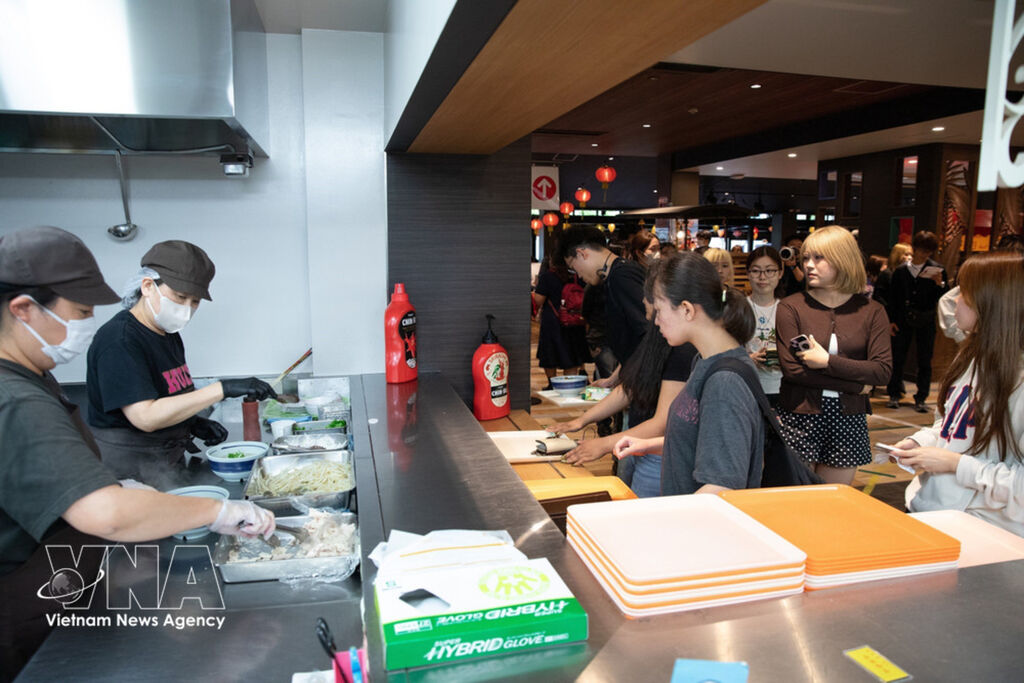 |
| “Pho,” the iconic traditional noodle soup of Vietnam, has quickly become a favourite among students at Kanda University of International Studies (Photo: VNA) |
Sato Yuta, head chef responsible for preparing pho at the university, said he had initially learned the dish through traditional recipes and is now adjusting the flavour slightly to better suit Japanese tastes while preserving its authentic characteristics.
He noted that the aroma of fish sauce and the rich broth are defining features of pho, which the kitchen has sought to maintain during preparation.
According to Sato, many students first tried the dish out of curiosity, but a growing number have since become genuine fans, with long queues regularly forming at the pho counter during lunchtime.
Student Fafa Moroi said she especially enjoyed the soft yet chewy texture of the rice noodles and the fragrant broth.
She observed that both Japanese and Vietnamese cuisines place strong emphasis on broth flavours, creating certain similarities, but added that Vietnamese pho stands out thanks to its meat-based broth and distinctive blend of spices.
In just a few days, Vietnamese pho had become one of the best-selling dishes at the university cafeteria.
Through the programme, the university hopes students will not only enjoy Vietnamese cuisine but also become more interested in studying the Vietnamese language and exploring Vietnam’s rich culture more deeply./.