 |
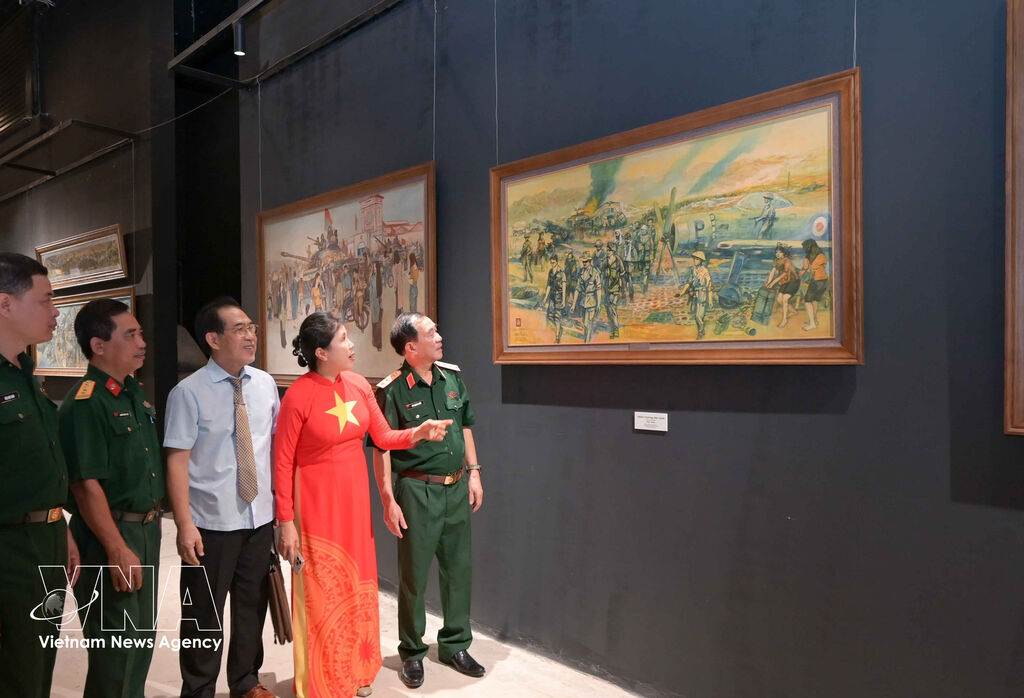
| Recreating the historical journey of Vietnam through the art exhibition "Historical Days". (Photo: VNA) |
Hanoi (VNA) - As hostile forces are accelerating their “peaceful evolution” strategy against Vietnam, using art as a tool of distortion, clarifying the boundary between genuine artistic creativity and deliberate historical falsification is essential to preserving the sacred values shaped by generations of sacrifice and dedication, according to scholars.
When art is exploited as a tool for distortion
According to Lieutenant Colonel, Dr. Tran Huu Huy from the Vietnam Institute for National Defence Strategy and Military History, war has become an inevitable subject in Vietnamese literature and the arts because modern Vietnamese history is inseparable from the struggles for national independence and reunification.
These historic chapters reflect the indomitable spirit, patriotism and aspiration for freedom of the Vietnamese people. A just war, he said, is not only about battlefields and weapons, but also about solidarity, love for the homeland and the determination to defend the nation. Genuine art, therefore, has a responsibility to help audiences, especially younger generations, understand that today’s peace came at the cost of immense sacrifice.
However, hostile forces and distorted ideological trends have long viewed war-related topics in the cultural and ideological sphere as fertile ground for sowing doubt as part of their “peaceful evolution” strategy against Vietnam. In recent years, under the guise of “humanistic perspectives” or “multi-dimensional narratives”, some overseas-produced audiovisual works have deliberately attempted to construct so-called “untold truths” about Vietnam’s liberation struggle. These productions often focus on tragedy, suffering and the ashes of war to blur the distinction between justice and injustice, ultimately undermining the significance of national victory.
Through ambiguous and manipulative storytelling, such works isolate personal fates from the broader destiny of the nation, portraying the resistance war as merely a tragic “civil conflict”. They paint a bleak picture of history dominated only by pain and irreversible wounds, leading audiences – particularly young people – to falsely conclude that all wars, even wars of national liberation, are mistakes or crimes.
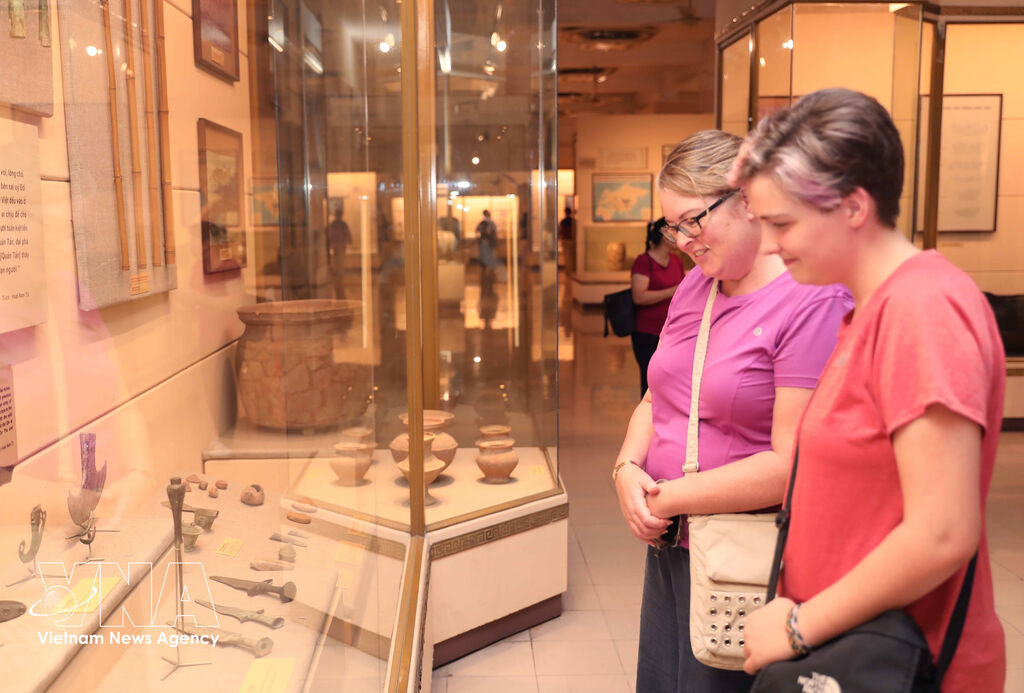 |
| Visitors at the Vietnam National Museum of History (Photo: VNA) |
According to experts, this constitutes a form of “cultural invasion”, using art as a means to desacralise history, weaken public trust and undermine the ideological foundation and national unity of Vietnam.
As such content increasingly spreads through cyberspace and social media, experts stress the need to clearly distinguish between authentic artistic creativity and politically motivated distortion disguised as humanism.
Senior Lieutenant Colonel Dr Vu Duc Tho, from the Political Officers College under the Ministry of National Defence, recently won an award in the fifth “Protecting the Party’s ideological foundation in the new context” writing competition with his work titled “Historical distortion films in cyberspace – a toxic cultural virus that must be stopped”. He emphasised that national history should not be viewed merely as the past, but as a continuous link between past, present and future.
In today’s digital era, films and multimedia content have enormous influence on social awareness, especially among young audiences. Disturbingly, some films, videos and online clips that distort Vietnamese history, deny revolutionary achievements and misrepresent the just nature of Vietnam’s liberation struggle have recently emerged.
Without a solid historical understanding, parts of the public, particularly younger generations, may be vulnerable to such narratives.
“This is not simply an issue of cinema or art. More deeply, it concerns protecting the ideological foundation, national history and cultural identity in cyberspace,” Tho stressed.
He added that genuine cinema should promote humanistic values, patriotism, national spirit and the sense of responsibility for the history, rather than becoming a tool for distorting history or creating doubt about values built on the sacrifices of generations of Vietnamese people.
Art cannot be separated from historical truth and national responsibility
Discussing the portrayal of war in literature and the arts, Huy emphasised that artistic works, especially films, must first uphold historical authenticity. While art allows for creativity and fictionalisation, it must not distort historical realities or deny values validated through the sacrifices of an entire nation.
At the same time, authentic art should embody profound humanistic values, giving works enduring vitality. War-themed works should not merely glorify victory in a simplistic way, but portray people as historical subjects in all their emotional complexity – from hardship, pain and loss to faith, resilience and aspiration.
Importantly, artists must maintain objectivity, clarity and social responsibility, as art not only reflects reality but also shapes public perception. Each work should balance artistic, historical and educational values, avoiding both extremes: romanticising war or viewing it through excessively pessimistic or anti-historical lenses that distort understanding.
Colonel Tran Nam Cuong, from the Communication and Education Department under the General Department of Politics of the Vietnam People’s Army, affirmed that works on revolutionary history and war must respect historical truth above all else.
Facts must be based on verified documents and serious research, while artistic fictionalisation cannot be used to distort events or reverse historical values.
He added that such works should also convey humanistic depth and realistic perspectives, reflecting not only military achievements but also sacrifice, loss and the human cost of war, thereby highlighting the value of peace. He warned against dangerous tendencies such as distorting or denying historical truth, using “multi-dimensionality” to blur the line between justice and injustice, or fostering scepticism towards the sacrifices of previous generations.
Sharing the same view, Tho said that works about Vietnam’s just wars must remain objective, truthful and humane while always placing national and public interests above all else. Humanism, he stressed, does not mean equating right with wrong or erasing the aggressive nature of invading forces. Likewise, “multi-dimensional perspectives” cannot justify denying historical truths or attempting to “rewrite history” through misleading narratives.
“If art becomes detached from historical truth and responsibility to the nation, it can easily become a tool that distorts public perception,” he said.
According to Dr. Tho, artistic works, particularly films, should therefore be grounded in respect for truth, avoiding distortion or selective manipulation of history for commercial or political purposes. They should uphold patriotism, national reconciliation and the aspiration for peace, while fostering civic responsibility, especially among young people who increasingly learn history through films and social media.
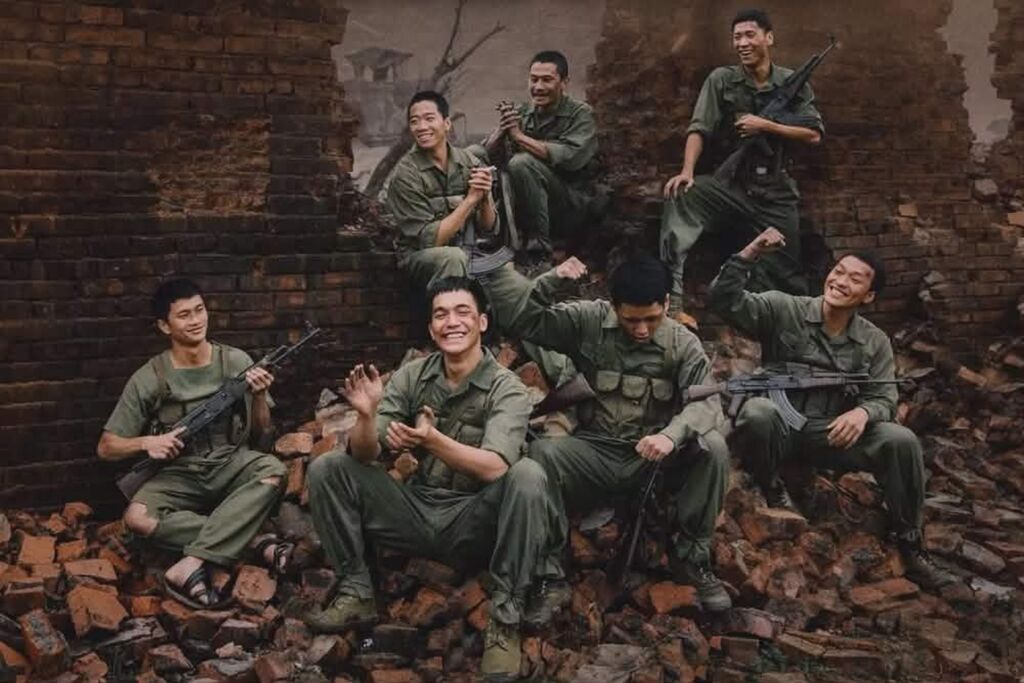 |
| A scene in film "Mua do" (Red Rain) (Source: Film producer) |
Extreme attempts to “desacralise history”, equate invaders with defenders of the homeland, sensationalise war for commercial gain, or spread historical scepticism under the guise of “multi-dimensionality” are deeply concerning trends that must be condemned, he warned.
Bringing history alive among younger generations
As war recedes further into the past, artistic works today are tasked not only with retelling history, but also with connecting past, present and future. Amid the rapid rise of social media, Cuong stressed that sharing or engaging with historical content online requires sound awareness, the ability to distinguish right from wrong, and a strong sense of responsibility towards national history.
At the same time, artists should use their works to deliver meaningful messages to society, especially younger audiences. According to Huy, historical works need to employ modern, relatable and emotionally resonant storytelling because young people are not drawn to rigid slogans or dry lessons. Instead, they seek authentic human stories and meaningful choices made in wartime.
The key is to make history “live” in young people’s consciousness through modern artistic language rich in emotion and humanity, he said.
Recently, some productions have successfully approached historical themes in engaging ways, including animated historical projects and the film “Mua do” (Red Rain). These works share a common strength: emotionally driven storytelling centred on human experiences, making them more accessible to younger audiences.
Tho described this as a highly encouraging direction for historical cinema, balancing artistic and humanistic values while maintaining respect for history and national identity. He said the most important message of history and war-themed works today should be to affirm the value of peace and independence, honour the sacrifices of previous generations, nurture patriotism and civic responsibility, and promote reconciliation and a shared future.
Authentic historical cinema is not meant to nurture hatred, but to help today’s generations understand the price of peace, why Vietnam had to fight for independence, and why preserving those values matters for the future, Tho said.
What young audiences need are historical works told through modern, truthful and emotionally rich language. If done well, cinema can become a bridge bringing history closer to younger generations, thereby strengthening public trust, patriotism and national solidarity, he added./.