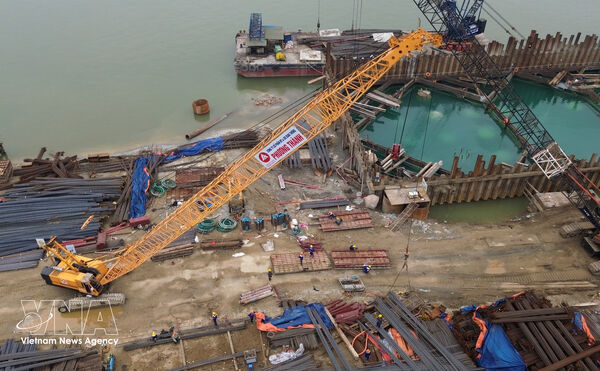
The expressway, a nationally important project, plays a crucial role in socio-economic development, creating new momentum for national development in the 2026–2030 period.
Prime Minister Pham Minh Chinh attended the groundbreaking ceremony for the 500 kV Lao Cai – Vinh Yen transmission line project in the northern province of Vinh Phuc on March 16.
Permanent Deputy Prime Minister Nguyen Hoa Binh provided further details on the Government’s proposal, which involves transferring about one-third of the responsibilities currently handled by district-lev administrations to provincial authorities, while decentralising the remaining two-thirds to the commune-level administrations.
In a document issued on March 11, the Hanoi People’s Committee stressed the need to mobilise all economic sectors, businesses and citizens to engage in socio-economic development, contributing to national growth. All institutional frameworks, mechanisms, and policies must be aligned with the objective.
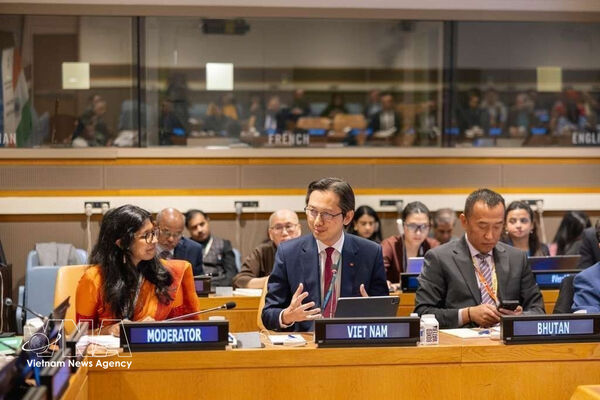
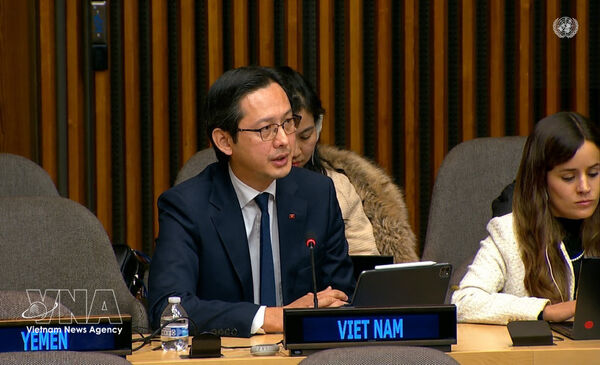
Sharing Vietnam’s achievements, Thanh noted that women account for nearly one-third of Vietnam’s National Assembly members; 40% of Vietnam’s STEM workforce is female; 26.5% of businesses in the country are owned by women; women account for 68.5% of the country’s labour force, surpassing the global average of 48.7% and 14.4% of Vietnam’s peacekeepers are women, higher than the UN average of 10.2%.
In his March 9 official dispatch, Prime Minister Pham Minh Chinh urged ministries, agencies, and localities to focus on thoroughly reviewing, reducing, and simplifying regulations and administrative procedures related to investment, production, business activities, and citizens' daily lives.
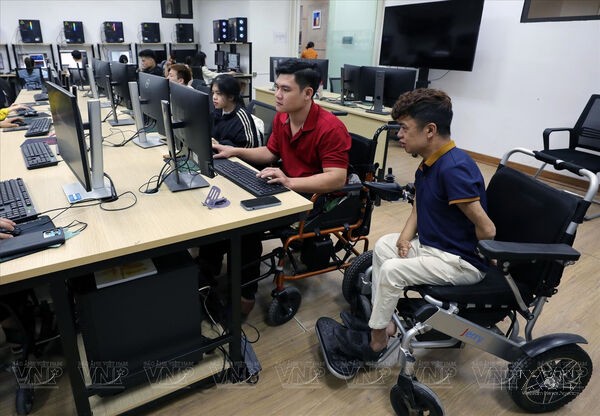
Vietnam’s Party and State highly prioritise the rights of the disabled as seen in the implementation of a system of support policies to ensure favourable conditions for the group to equally exercise their rights.
Chairing a meeting of the Government’s Party Committee in Hanoi on March 5, PM Chinh, who is also its Secretary, stressed the importance of preserving each region's unique geographical, socio-economic, cultural, and historical characteristics, while ensuring that merged units can complement and support one another.
The Party General Secretary To Lam has stressed the need for bold action in adopting and deploying science, technology, and innovation to improve governance and services for businesses and citizens.
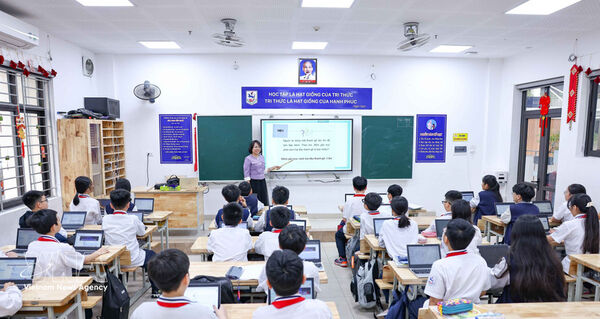
Lifelong learning aims to dare to think, dare to speak, dare to do, dare to take responsibility, dare to sacrifice for the common good, and to become useful persons for society.
Vietnam has once again proven its appeal as a global travel hotspot, with multiple destinations earning prestigious accolades in the 2025 Travelers’ Choice Awards Best of the Best by Tripadvisor, the world’s leading online travel platform.
With its traditional rituals, beautiful customs, and sacred significance, the forest worship ceremony of the Mong ethnic community in Na Hau commune, Van Yen district, Yen Bai province, was officially recognised by the Ministry of Culture, Sports and Tourism in 2024, as part of Vietnam’s national intangible cultural heritage.
On December 22, 2024, the Politburo issued Resolution No.57 on breakthroughs in science, technology, innovation, and national digital transformation, regarded as a resolution that aims to unleash Vietnam’s technological potential.
Politburo member, Secretary of the National Assembly (NA) Party Committee and Chairman of the NA Tran Thanh Man chaired a conference in Hanoi on February 27 to announce the establishment of 11 Party organisations under the NA Party Committee.
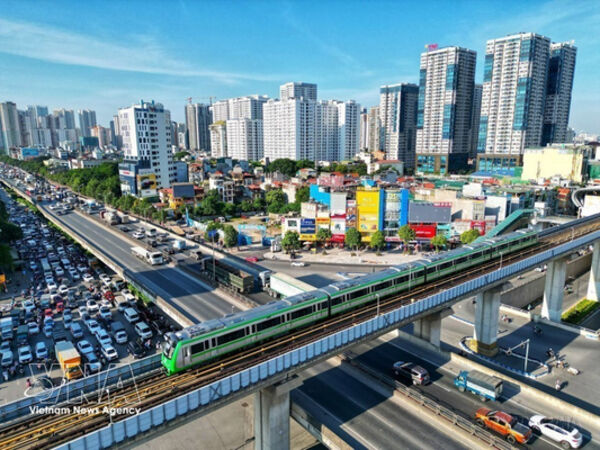
The resolution outlines a series of specific mechanisms and policies, including the mobilisation and allocation of investment capital; procedures for investing in urban rail projects and those based on the Transit-Oriented Development (TOD) model; the development of the rail industry, technology transfer, and workforce training; policies on construction materials and waste disposal; and specific regulations for HCM City.
In their speeches, leaders of countries and international organisations emphasised ASEAN’s cooperation, solidarity, inclusivity, and resilience amid global uncertainties and significant transformations.
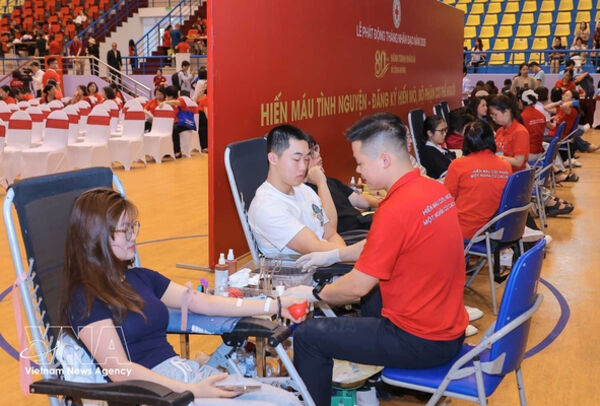
Seventy years ago, on February 27, 1955, President Ho Chi Minh sent a letter to a conference of medical workers across the country, encouraging them to uphold the noble principle of being “A good doctor is like an affectionate mother” and to unite in building a national healthcare system with the motto of “Science – National Identity – Public Service.” His words served as a guiding light for generations of medical professionals, urging them to dedicate themselves to the revolutionary cause and the well-being of the people.