 |
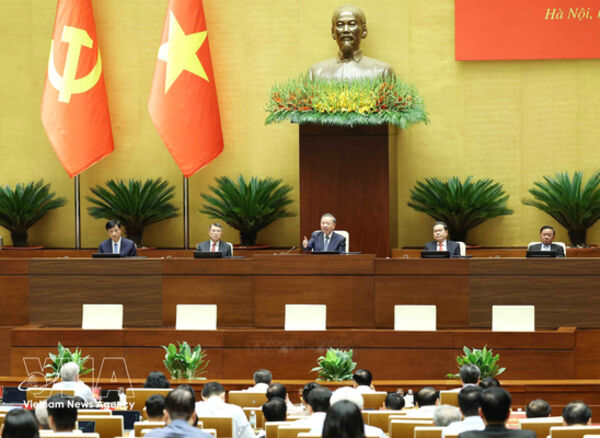
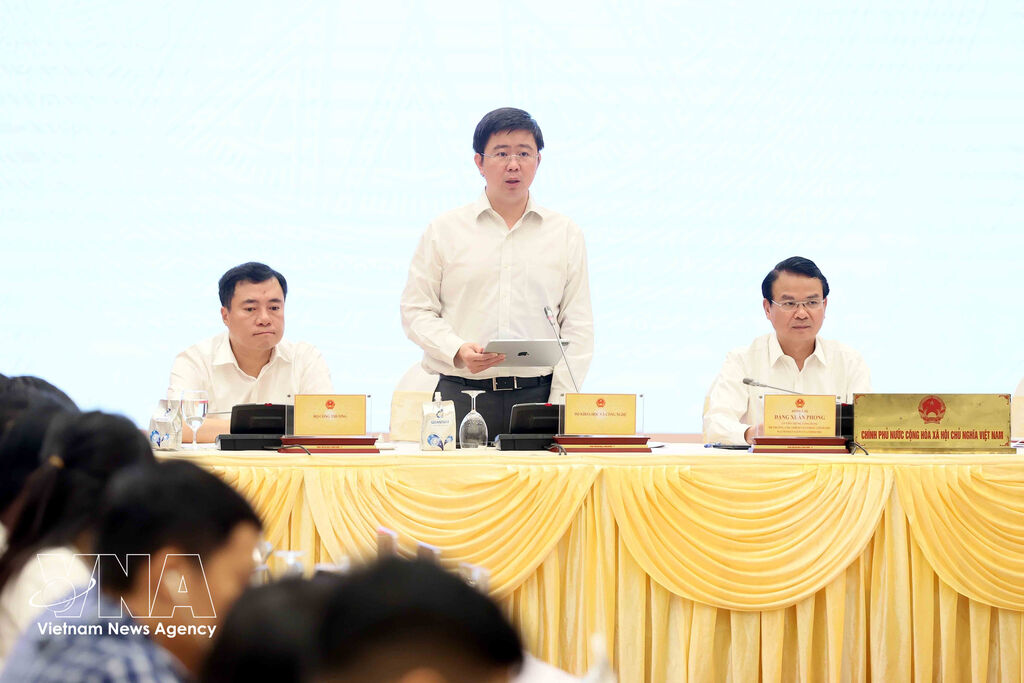
| Deputy Minister of Science and Technology Bui Hoang Phuong speaks at the Government's June regular press conference on July 4, 2026. Photo: VNA |
Hanoi (VNA) - Three strategic technology products, including AI cameras, autonomous mobile robots, and unmanned aerial vehicles (UAVs), are expected to produce initial commercial results as early as 2026, announced by Deputy Minister of Science and Technology Bui Hoang Phuong at the Government's June regular press conference on July 4.
At the Government's thematic meeting on June 23, the Prime Minister emphasised the need to concentrate resources on core technologies and strategic technology products, with commercialisation effectiveness serving as the key measure of success.
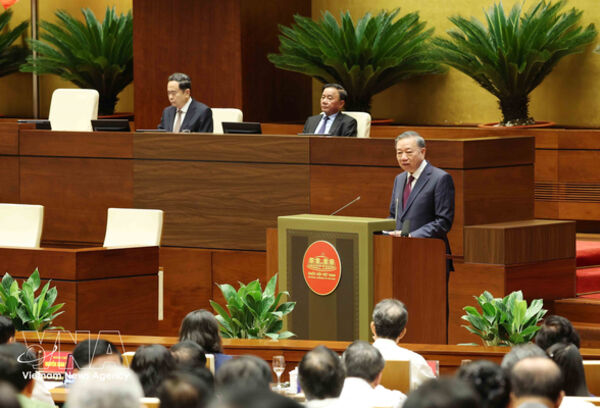
According to Phuong, following the direction of Party General Secretary and State President To Lam, who heads the Steering Committee for the implementation of Politburo Resolution No. 57-NQ/TW on breakthroughs in sci-tech development, innovation and national digital transformation, the Government and the Prime Minister have taken decisive actions to advance strategic technology development.
In May 2026, after issuing Decision No. 808/QD-TTg, assigning 20 strategic technology development tasks to ministries and sectors, the PM personally chaired two meetings on the matter. On July 3, he chaired another meeting to direct and accelerate the implementation of these strategic technology initiatives.
Deputy Prime Minister Ho Quoc Dung, head of the Government's Task Force on Strategic Technologies, has chaired five meetings and conducted working visits to three Vietnamese enterprises involved in strategic technology development.
As of July 1, the Ministry of Science and Technology had received 28 proposals from ministries, sectors, and central agencies concerning the application and development of strategic technologies. The ministry plans to devote all available resources to reviewing and evaluating these proposals.
"Although these are all major, new, and highly challenging tasks, in line with the Government's requirements, the Ministry of Science and Technology will complete the appraisal process and report them to the Government and the Prime Minister before July 20," Phuong affirmed.
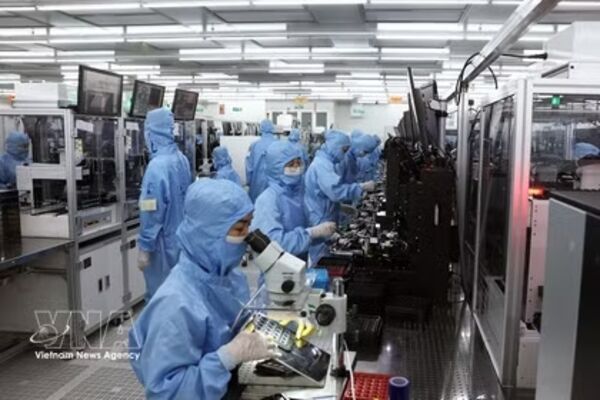
Based on its preliminary review, the ministry has identified several technology areas with a high level of readiness that could produce initial products as early as 2026. These include AI cameras, autonomous mobile robots, UAVs, smart education platforms, as well as several vaccines, biological products, and agricultural biotechnology solutions.
These are technology fields in which Vietnam has already achieved initial results or developed prototype models, he said, adding they have the potential to address practical needs in urban management, transportation, public security, agriculture, industrial manufacturing, logistics, healthcare, and education.
Reiterating the Prime Minister's direction that commercial viability must be the benchmark for strategic technology products, Phuong said several domestic enterprises already possess the capabilities and are prepared to participate in these projects, with existing markets and clearly identified application opportunities.
However, he noted that strategic technology is a new and highly complex field involving multiple sectors, making the active involvement of leaders of ministries, ministerial-level agencies, and local authorities essential.
He also stressed that science and technology in general and strategic technology research and development in particular are long-term, challenging endeavours closely linked to national self-reliance and competitiveness. Therefore, highly sophisticated technologies such as satellite technology, high-speed rail, and rare earth-related technologies require comprehensive research and development efforts supported by clear roadmaps by 2026 and 2030.
"We cannot expect every strategic technology to deliver concrete results as early as 2026," Phuong said.
He expressed confidence that with strong leadership from the Party and the State, together with the determination of ministries, sectors, and localities, Vietnam will achieve important initial milestones in strategic technology development within this year./.