 |
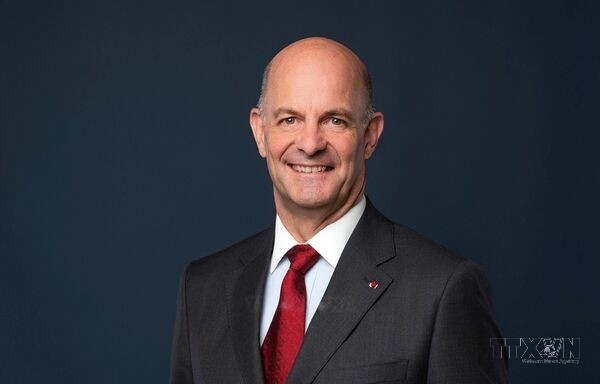
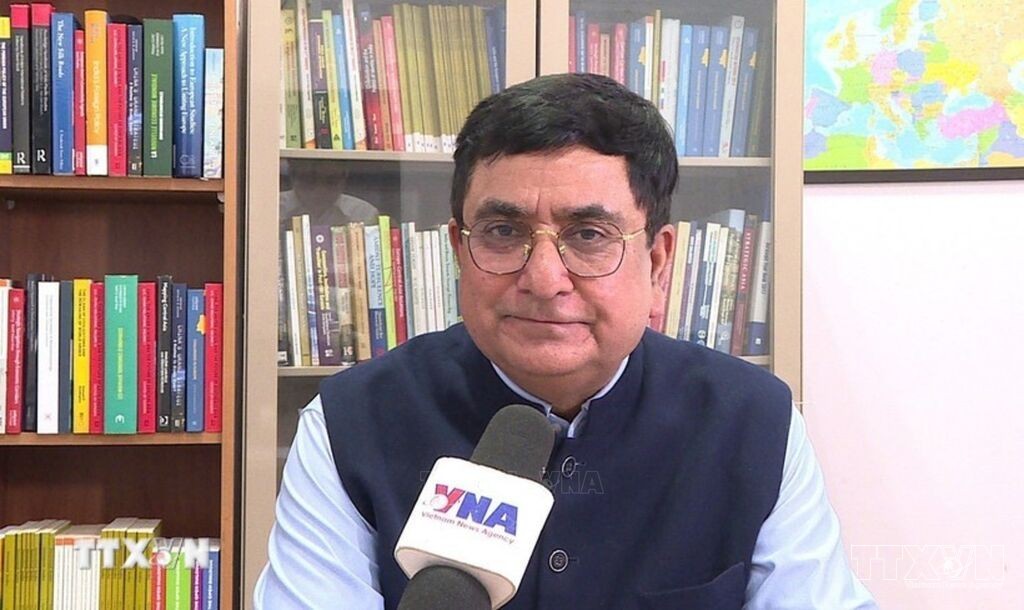
| Professor Gulshan Sachdeva of Jawaharlal Nehru University (JNU). (Photo: VNA) |
New Delhi (VNA) – Vietnam could contribute valuable development experience to BRICS and may emerge as a leading candidate for membership in any future expansion of the grouping, according to Professor Gulshan Sachdeva of Jawaharlal Nehru University (JNU).
Talking to Vietnam News Agency correspondents in New Delhi ahead of the BRICS Summit 2026, scheduled for September 12-13, he said Vietnam is an important country with significant potential to contribute to BRICS’ development. Over the past year, it has emerged as an increasingly important economy and a notable manufacturing hub, particularly in textiles and garments, electronics and other industries.
Vietnam has also managed its relations with regional and global partners effectively. Its participation in the Asia-Europe Meeting (ASEM) and the Comprehensive and Progressive Agreement for Trans-Pacific Partnership (CPTPP), as well as its trade agreement with the European Union, demonstrates the country’s deep economic integration.
Drawing on that experience, Vietnam has practical lessons that other countries in the Global South could learn from, Sachdeva said. As a BRICS partner country, Vietnam’s experience could be valuable to members in a range of areas.
He also said Vietnam could be among the leading candidates considered for BRICS membership in any future expansion. Its participation would give the grouping additional momentum and strengthen the role of an economy deeply integrated into Asian and global markets.
Another important contribution Vietnam can make is its development experience, Sachdeva said. Despite a challenging geopolitical environment, Vietnam has emerged as a major economy and an important link in global value chains across a range of industries.
Many countries would like to see Vietnam contribute and participate more actively in BRICS activities, he added.
The outlook is also linked to the increasingly broad relationship between India and Vietnam. The two countries have longstanding ties and have upgraded their relationship to an enhanced comprehensive strategic partnership, providing a basis for expanded cooperation across a range of areas, he stated.
Economically, India and Vietnam have identified several areas for cooperation, particularly manufacturing, information technology and the digital economy. The two countries also maintain close cooperation in defence and security.
Both India and Vietnam have their own development experiences and have managed their respective transitions relatively well. They could therefore share expertise and jointly implement projects in other developing countries.
Such cooperation will benefit not only India and Vietnam but also other developing countries, he said.
Against a complex and challenging geopolitical backdrop in Southeast Asia and the wider Indo-Pacific, the two countries are cooperating in economy, trade, sustainable development, defence and security. Energy transition and green transition are also emerging as areas of shared interest.
The expert said India-Vietnam relations now extend well beyond any single area, encompassing economic ties, development experience and broader security issues in the Indo-Pacific. The two countries are also seeking to boost trade and investment and expand cooperation in energy and green transitions.
There is considerable scope for further India-Vietnam cooperation, he said, adding that such partnerships could benefit not only the two countries but also others in the region and, more broadly, the Global South.
Regarding BRICS India 2026, Sachdeva said India’s agenda for its 2026 BRICS presidency is built around several priorities under the theme of “Building for Resilience, Innovation, Cooperation and Sustainability.” A key focus, however, is India’s push for a more people-centred BRICS, with greater attention to the interests and priorities of the Global South.
The approach comes amid a volatile geopolitical environment, including complex developments involving some BRICS members and security challenges in neighboring regions. These developments pose a challenge for India as it seeks to maintain cohesion and build consensus among BRICS members, he noted./.