Vietnam reaffirms independent foreign policy, strategic autonomy: Ambassador
Vietnam consistently pursues a foreign policy of independence and self-reliance, diversification and multilateralisation of international relations, Vietnamese Ambassador to Argentina Ngo Minh Nguyet said in a speech to professors, lecturers and students at the Catholic University of Argentina (UCA) in Buenos Aires on June 2.
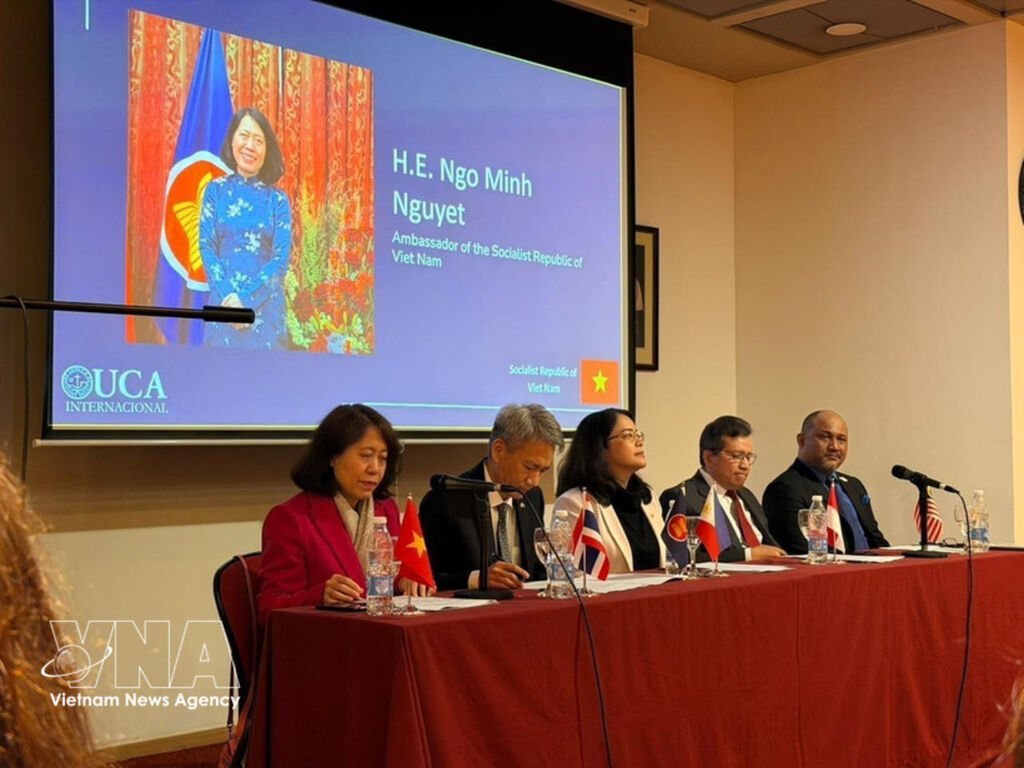
Vietnamese Ambassador to Argentina Ngo Minh Nguyet (first, left) speaks about Vietnam's foreign policy at the Catholic University of Argentina (UCA) (Photo: VNA)

Buenos Aires (VNA) – Vietnam consistently pursues a foreign policy of independence and self-reliance, diversification and multilateralisation of international relations, Vietnamese Ambassador to Argentina Ngo Minh Nguyet said in a speech to professors, lecturers and students at the Catholic University of Argentina (UCA) in Buenos Aires on June 2.

The event was held as part of the activities of the Association of Southeast Asian Nations (ASEAN) Committee in Argentina in 2026. It brought together the Ambassadors of Vietnam, the Philippines, Indonesia and Thailand, along with the Chargé d’Affaires of Malaysia’s Embassy in Buenos Aires, for an exchange with the university’s academic community and students.

In her remarks, the Vietnamese diplomat underscored that Vietnam continues to uphold its “strategic autonomy” model, cooperating with all powers, not joining military alliances, not taking sides in great power competition, and ensuring the capability to defend its national interests. She also reiterated Vietnam’s “Four No's” defence policy.

Vietnam is currently the only country maintaining comprehensive strategic partnerships with all five permanent members of the United Nations Security Council – the US, China, Russia, the United Kingdom and France, she said.

Responding to students’ questions about relations between major powers and ASEAN, Ambassador Nguyet expressed confidence in ASEAN’s central role in regional architecture. She stressed that the grouping’s relevance lies in its ability to manage strategic competition, sustain dialogue, prevent conflicts and foster strategic trust among countries.

For her part, Philippine Ambassador Grace T. Cruz-Fabella, Chair of the ASEAN Committee in Buenos Aires in 2026, provided an overview of ASEAN, describing it as one of the world’s most dynamic economic regions with a combined GDP exceeding 4 trillion USD. She noted that the bloc’s economy is supported by three key pillars – industry, services and agriculture. The diplomat also highlighted the successful holding of the 48th ASEAN Summit in Cebu, the Philippines, in May.

The ambassadors of Indonesia and Thailand, together with the Malaysian Chargé d’Affaires, answered a range of questions from UCA students concerning cooperation with Argentina and prospects for expanding trade and economic exchanges.
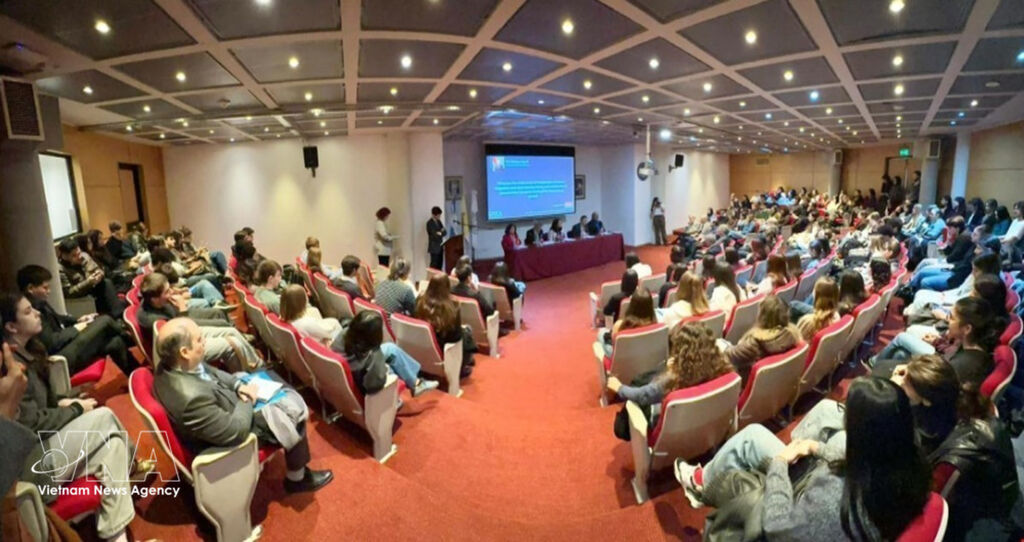
A large number of professors, lecturers and students of the Catholic University of Argentina participate in the exchange (Photo: VNA)

On the occasion, UCA Rector Miguel Ángel Schiavone said the ASEAN Committee’s visit to Buenos Aires offered an opportunity to strengthen mutual understanding between Argentina and Southeast Asia, encourage dialogue between diplomats and students, and explore future academic cooperation.

Meanwhile, Verónica Muñoz, Director of International Relations and Academic Cooperation, affirmed that internationalisation is a strategic priority for the university. The UCA is expanding student and faculty exchanges, broadening international partnerships, internationalising curricula, promoting collaborative learning initiatives and participating in global projects. The university is also seeking stronger engagement with Asia and ASEAN.

Founded in 1958, the UCA is one of the leading private universities in Argentina and Latin America, offering undergraduate, postgraduate and doctoral programmes in social sciences, humanities, law, economics, engineering, medicine and theology./.
Related News

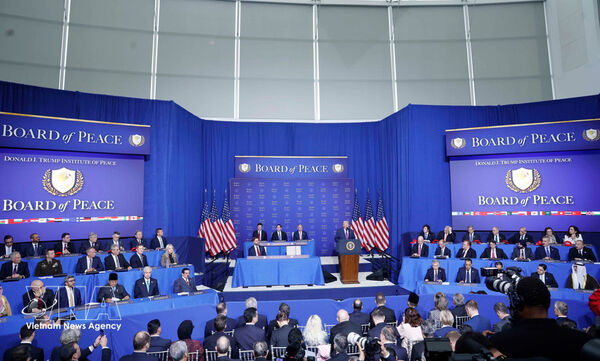
Party chief’s attendance at Gaza Board of Peace’s inaugural meeting helps elevating multilateral diplomacy

Vietnam’s role as a founding member of the Board reflects the consistent implementation of the CPV’s foreign policy, contributing to enhancing the country’s credibility and international image, and providing an opportunity for the country to bring into play its experiences and strengths, while learning from and deepening integration with other countries in performing shared missions.

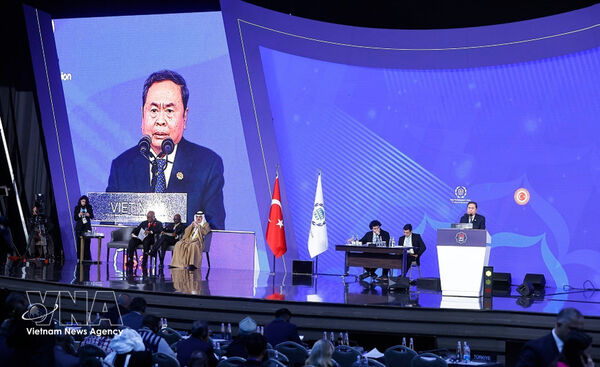
Deputy FM highlights parliamentary diplomacy gains from IPU-152, European trips

Regarding bilateral engagements in Italy and Türkiye, the deputy minister said the trips marked a meaningful step in implementing Vietnam’s foreign policy following the 14th National Party Congress, helping deepen relations with European and Middle Eastern partners while mobilising external resources for national development.

PM’s presence in ASEAN Summit spreads message of dynamic, strongly rising Vietnam: official

Deputy Foreign Minister Dang Hoang Giang said that the Vietnamese delegation made important contributions to the summit’s success, reflecting the foreign policy orientation set out by the 14th National Congress of the Communist Party of Vietnam, which continues to place ASEAN at the centre of Vietnam’s regional engagement, as well as its commitment to proactive, positive and responsible contributions to ASEAN Community-building process.

See Also

Lai Chau showcases potential for adventure tourism

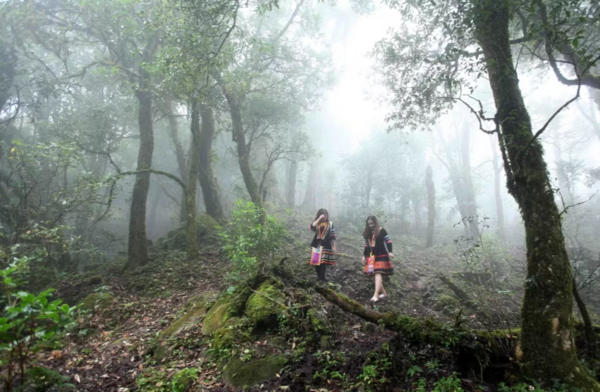
Lai Chau, Vietnam’s westernmost province, captivates visitors with its rich cultural heritage and spectacular mountain landscapes. Wrapped in clouds for much of the year and blessed with a climate that can deliver four seasons in a single day, its towering peaks have become both a challenge for adventurers and a symbol of the province’s wild natural beauty.

Vietnam's top leader holds talks with Philippine President

Vietnam always values and wishes to further deepen its friendly neighbourly relations with the Philippines in all areas on the basis of a shared commitment to peace, stability and respect for international law, affirmed General Secretary of the Communist Party of Vietnam (CPV) Central Committee and State President To Lam.

Vietnam, Philippines upgrade bilateral ties to Enhanced Strategic Partnership

Both sides emphasised the importance of international law and the United Nations Charter, the ASEAN Charter, and the principles of equality, cooperation, and mutual benefit; reaffirmed peace, stability, security, safety, and freedom of navigation and overflight in the East Sea; and stressed the need to resolve disputes peacefully on the basis of international law, including the 1982 United Nations Convention on the Law of the Sea (UNCLOS).

Vietnam's early ratification of Hanoi Convention reinforces commitment to global fight against cybercrime

Vietnam’s becoming the first country in Southeast Asia and the third in the world to ratify the United Nations Convention against Cybercrime, also known as the Hanoi Convention, not only demonstrates its strong commitment to cybersecurity but also underscores its active role in strengthening international cooperation against cybercrime. In today’s podcast episode, we explore how the Hanoi Convention reinforces Vietnam’s growing contribution to global efforts to combat cybercrime, drawing on insights from officials and experts at home and abroad.

Vesak 2026 highlights Buddhism’s enduring commitment to nation in new era

Most Venerable Thich Tri Quang, Supreme Patriarch of the VBS Patronage Council, called on Buddhist dignitaries, monks, nuns, and followers to continue serving society with mindfulness and compassion, uphold the noble traditions of Vietnamese Buddhism, and spread the light of kindness to foster a better life for all.