 |
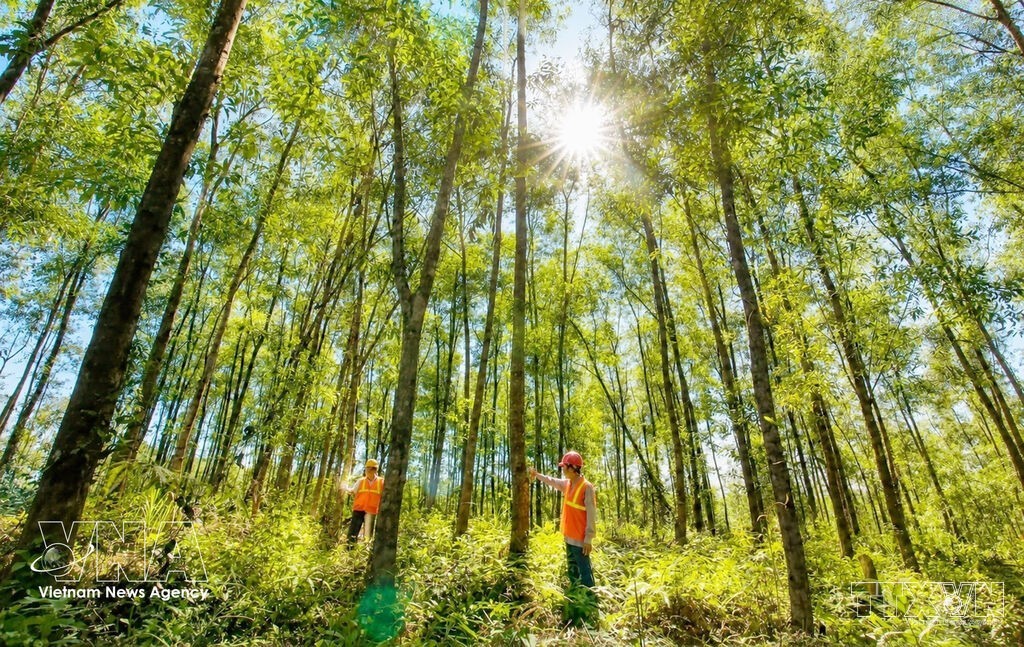
| Quang Tri steps up development of large-timber forests. (Photo: VNA) |
Hanoi (VNA) - Vietnam has around 4 million hectares of production forests, involving more than 1 million forest-growing households and thousands of processing and export businesses. However, weak linkages across the supply chain remain a major obstacle to increasing the value of the country’s wood industry.
According to the Vietnam Timber and Forest Product Association (VIFOREST), about 74% of timber from planted forests is currently used to make wood chips and pellets, while 18% goes into plywood and laminated veneer lumber (LVL). Although these products consume around 80% of the raw material supply, they generate only about 3-4 billion USD of the sector’s total export turnover of 18 billion USD.
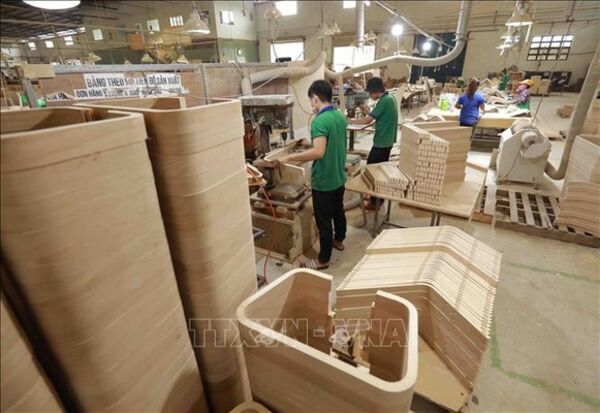
By contrast, deeper processing, including indoor and outdoor furniture and laminated boards, uses just 20% of raw materials but generates 14-15 billion USD in export value.
The association said stronger links across the supply chain are essential to developing a circular and green wood industry. A key challenge, however, is raising incomes for forest growers, whose low earnings discourage them from developing larger timber plantations.
Ngo Sy Hoai, Vice Chairman and Secretary General of the association, said fragmented forest land remains a major barrier despite policies allowing forest owners to lease or transfer land and participate in investment partnerships. Difficulties in land consolidation and cooperation among households have prevented businesses from establishing concentrated raw-material areas.
Vietnam has introduced policies on large-timber forests, forest certification and carbon credits, as well as joined international mechanisms such as VPA/FLEGT and the EU Deforestation Regulation (EUDR). However, the lack of stable linkages remains the sector’s biggest bottleneck.
Without stronger connections from raw-material areas to processing and exports, businesses will struggle to meet increasingly stringent requirements on traceability, legality and sustainability in major markets.
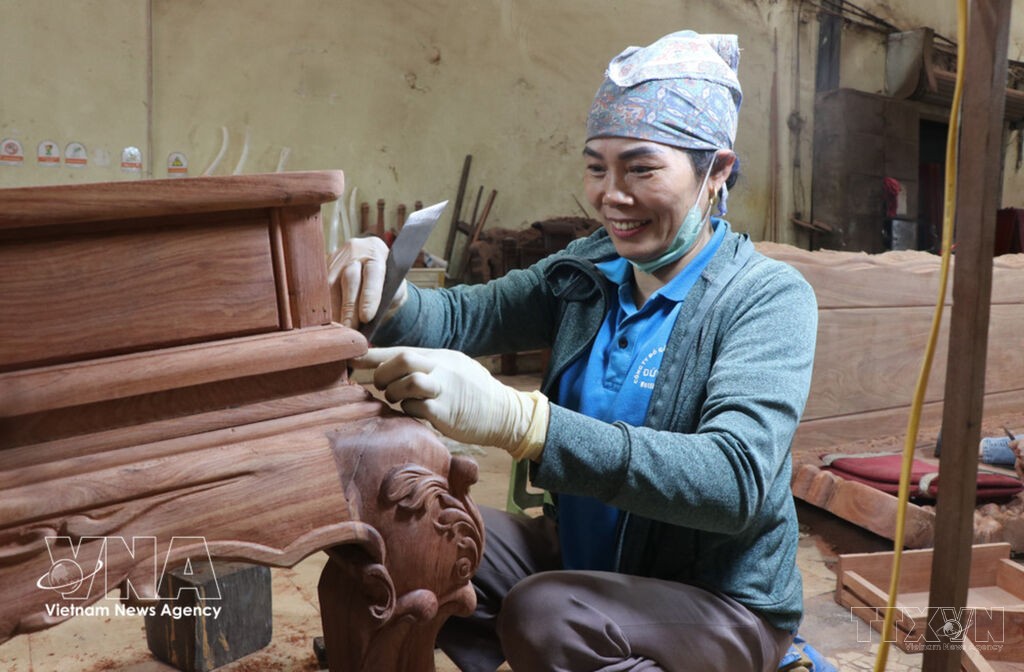 |
| An artisan at the Dong Ky woodcraft village in Dong Nguyen ward, Bac Ninh province. (Photo: VNA) |
The association said it plans to encourage members to increase the use of domestically grown, certified and legally sourced imported timber, while accelerating digital traceability systems and preparing for meeting EUDR requirements. It will also promote long-term partnerships among businesses, forest owners, cooperatives and forestry households, including contracts covering seedlings, technical support and forest certification.
Ha Cong Tuan, Chairman of the Vietnam Association of Agricultural Economics and Rural Development, said policy should shift from supporting individual tree-planting activities toward developing sustainable value-chain ecosystems.
Under this model, forest growers should become production partners rather than simply timber suppliers, while businesses should invest directly in raw-material areas and participate throughout the production cycle. Cooperatives would serve as a key link between households and businesses.
Tuan also called for long-term contracts backed by tax incentives, support for sustainable forest-management certification and forest insurance. He proposed tailored credit packages matching the forestry sector’s long production cycles, particularly for large-timber forests, as well as preferential loans for businesses investing in raw-material areas and guaranteeing product purchases.
Experts noted that very little planted forest is kept for more than five years, meaning most timber harvested is used for chips and pellets rather than higher-value products.
They therefore recommended that the Vietnam Academy of Forest Sciences work with VIFOREST and businesses to pilot longer harvesting cycles of six to 10 years, or even 12 years. Small-scale pilot plots of around two hectares could demonstrate the potential for significantly higher returns./.