 |
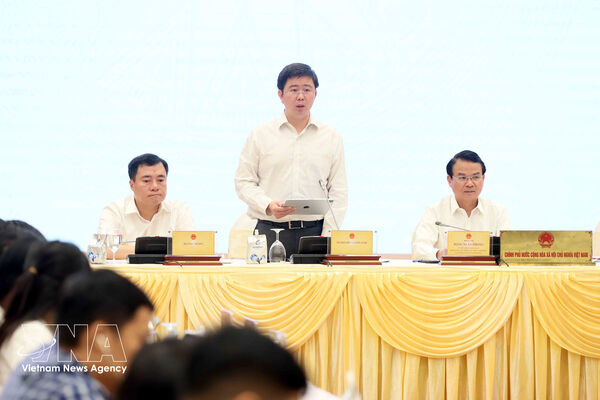
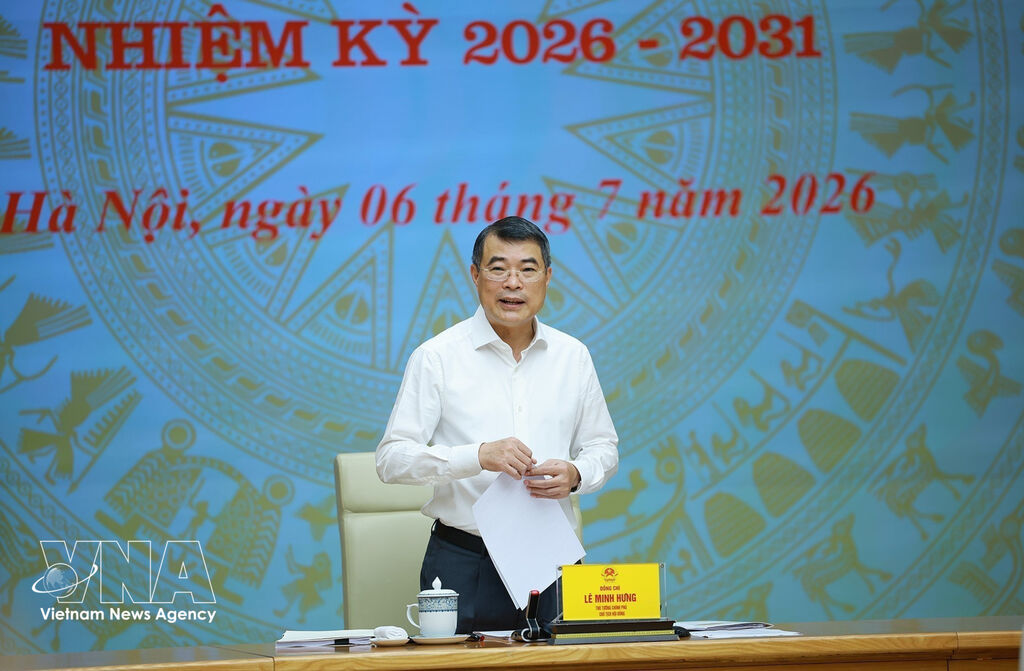
| Prime Minister Le Minh Hung, Chairman of the Central Council for Emulation and Commendation, addresses the council’s meeting in Hanoi on July 6. (Photo: VNA) |
Hanoi (VNA) - Prime Minister Le Minh Hung, Chairman of the Central Council for Emulation and Commendation, chaired the council’s second meeting for the 2026–2031 term at the Government headquarters in Hanoi on the afternoon of July 6.
The council reviewed its performance and the implementation of emulation and commendation work during the first half of the year, agreed on key tasks for the remainder of 2026, and considered nominations for the conferment and posthumous conferment of the “Hero of the People's Armed Forces” and “Hero of Labour” titles on collectives and individuals with outstanding achievements.
Addressing the meeting, PM Hung recognised the active participation of ministries, sectors, localities, citizens and businesses in emulation movements and commendation work, which provided important momentum for the country's recent achievements.
A report by the council showed that emulation movements and commendation work continued to receive close attention from ministries, sectors and localities, contributing to the fulfilment of urgent and key tasks while supporting socio-economic development, national defence, security and external relations.
On April 23, 2026, the PM issued Directive No. 15 launching an emulation movement to successfully implement annual socio-economic development tasks and the 2026–2030 five-year plan under the Resolution of the 14th National Party Congress. On June 13, he launched the national emulation campaign titled “Determined to achieve sustainable double-digit growth during 2026–2030”. On July 1, the Government leader signed Decision No. 1181 approving a nationwide implementation plan for the campaign across ministries, sectors and localities.
Efforts to publicise, honour and replicate exemplary role models were also strengthened. Many outstanding individuals and examples of good deeds were recognised and rewarded, creating a strong ripple effect throughout society, reinforcing public confidence and fostering national solidarity and the spirit of striving to overcome difficulties, said the report
PM Hung, however, pointed to a number of shortcomings, and called for continued efforts to refine the legal framework governing emulation and commendation, particularly through the dissemination of the revised Law on Emulation and Commendation and the timely issuance of implementing regulations.
Relevant agencies should promptly consolidate emulation and commendation councils at all levels while promoting appropriate decentralisation and delegation of authority, alongside stronger inspection and supervision to prevent misconduct, he asked.
The PM urged council members to play a more active role in reviewing and monitoring the implementation of emulation movements within their assigned sectors and clusters, identifying effective models and good practices for commendation while promptly reporting local difficulties to enable the council to propose appropriate solutions.
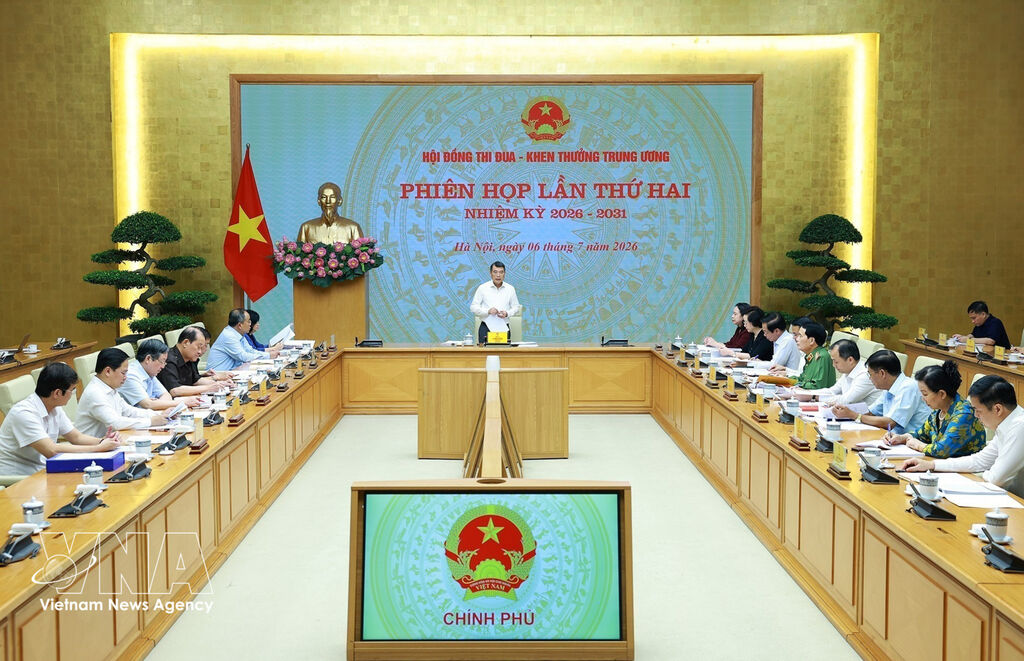 |
| Prime Minister Le Minh Hung chairs the Central Council for Emulation and Commendation’s meeting in Hanoi on July 6. (Photo: VNA) |
The Government leader instructed ministries, sectors and localities to promptly translate the double-digit growth emulation campaign into concrete action programmes with practical tasks and measurable targets. He also called for reforms to the commendation system to make it more substantive and grassroots-oriented, with greater recognition given to frontline workers, scientists, businesses and others whose innovative initiatives have strong impact.
PM Hung stressed that emulation movements can only be truly meaningful if they originate from the grassroots and serve as a driving force for local and sectoral development.
He outlined a number of priorities for future emulation and commendation work, highlighting key indicators such as regional GDP growth, State budget revenue, public investment disbursement, the timely and high-quality implementation of nationally significant projects, the resolution of stalled projects, institutional and legal reforms, breakthroughs in science, technology, innovation and digital transformation, and the development of high-quality human resources, particularly digital infrastructure, databases and strategic technologies supporting both public administration and business activities.
He encouraged the timely recognition of localities that effectively resolved obstacles and revived long-delayed projects to support economic growth.
He also highlighted bright spots in emulation movements, including the 500-day campaign to search for, recover and identify the remains of fallen soldiers and the military and public security forces' rapid deployment of rescue teams to Venezuela following a devastating earthquake.
PM Hung also stressed the need to accelerate administrative reforms and expand the use of digital technology in emulation and commendation work, particularly by modernising evaluation methods. Scoring and assessment, he said, should be based on real-time data, with objective and transparent procedures that minimise paperwork, he added./.