“Socialist communes/wards” concretise Vietnam’s new development orientation: Chinese scholar
With a comprehensive approach combining stronger grassroots governance, socio-economic development, improved living conditions, sustainable poverty reduction and a people-centred orientation, the “socialist communes/wards” model could become a meaningful direction in Vietnam’s development process.
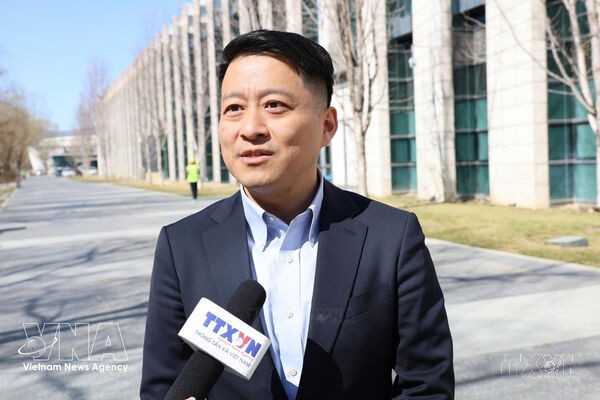
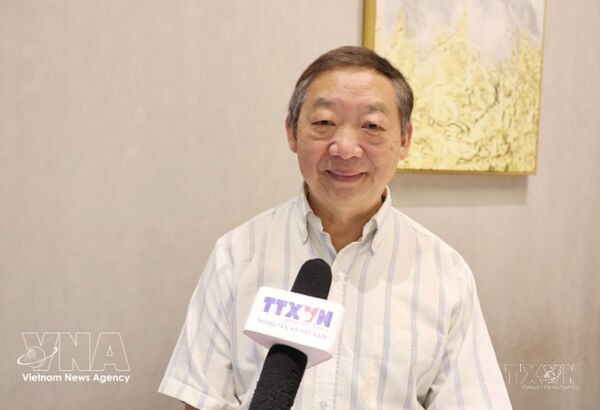
Professor Zhu Chenming, Honorary Director of the Institute of South and Southeast Asian Studies under the Yunnan Academy of Social Sciences, in an interview granted to the Vietnam News Agency. (Photo: VNA)

Beijing (VNA) – The pilot rollout of “socialist communes/wards” in Hanoi is an important step concretising the development orientations set out at the Communist Party of Vietnam’s 14th National Congress, and helping strengthen grassroots governance as Vietnam implements a two-tier local administration model, according to a Chinese scholar.

Speaking to Vietnam News Agency (VNA) correspondents in China, Professor Zhu Chenming, Honorary Director of the Institute of South and Southeast Asian Studies under the Yunnan Academy of Social Sciences, said the direct attention and direction of Party General Secretary and State President To Lam towards the pilot programme reflects the practical need to renew grassroots governance methods and provides an opportunity to draw lessons for future replication.

According to Zhu, the term “socialist communes/wards” itself reflects the comprehensive nature of the model, which goes beyond economic development, tourism or cultural activities to encompass economic, political, social and cultural development as well as people’s living standards.

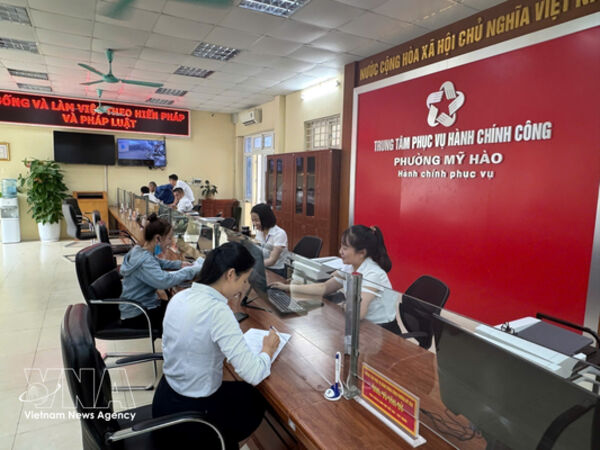
He highlighted the model’s relevance to Vietnam’s two-tier local administration. With the district level no longer serving as an intermediate administrative tier, communes and wards will assume greater responsibilities, requiring stronger management capacity and better policy implementation at the grassroots level. Zhu said the pilot could therefore serve as a testing ground for appropriate grassroots governance approaches, with improving the capacity of local officials being a key factor.

The model also stresses that people must remain at the centre, with its success not be measured solely by economic growth or infrastructure development, but more importantly by improvements in people’s quality of life, satisfaction and sense of wellbeing, Zhu said, adding that development should ensure that people can see and benefit from tangible improvements in their daily lives.

He recommended that Vietnam treat the model as a comprehensive and systematic undertaking requiring coordination among different levels and sectors. In the initial phase, priority could be given to improving infrastructure, the living environment and landscapes, as visible improvements could strengthen people’s confidence and encourage their participation in development.

He also suggested that Vietnam consider piloting the model in additional localities with diverse socio-economic and geographical conditions. While Hanoi offers favourable conditions for the pilot, experience from mountainous, remote and disadvantaged areas will provide more diverse lessons for nationwide replication.

Poverty reduction, particularly sustainable poverty alleviation, should be a key priority, Zhu said, stressing that socialist-oriented development should aim for shared prosperity and ensure that development benefits are broadly distributed. No group should be left behind.

With a comprehensive approach combining stronger grassroots governance, socio-economic development, improved living conditions, sustainable poverty reduction and a people-centred orientation, the “socialist communes/wards” model could become a meaningful direction in Vietnam’s development process, the scholar concluded./.
Related News

OP-ED: Streamlining state apparatus: A foundation for rapid, sustainable development

The election is unfolding as Vietnam presses ahead with sweeping administrative reforms, including efforts to streamline the state apparatus and implement a two-tier local government model from the central level to grassroots authorities. Amendments to key laws are also aimed at strengthening decentralisation, improving the management of public assets and accelerating digital transformation, enabling citizens to access information more easily while fostering a leaner, more transparent governance system that better upholds people’s rights.

OP-ED: Streamlining state apparatus: From restructuring to better governance

As institutions continue to improve, resources are allocated more effectively, officials are placed where their abilities can be best used, and digital transformation advances further, Vietnam's two-tier local administration model is expected to deliver increasingly better results for both the State and its people.

See Also

Resolution 10-NQ/TW changes "measure" of FDI success: HSBC

Success will increasingly be measured by whether foreign investment brings technology, develops local talent, establishes research and development (R&D) capability, and integrates Vietnamese enterprises more deeply into global value chains, according to HSBC.

Four orientations demonstrate shift in Vietnam’s development thinking: Chinese scholar

The most notable change is Vietnam’s transition from “organisational restructuring” to “improving governance effectiveness.” Previously, reforms focused on streamlining the apparatus and reducing intermediary levels. With organisational reforms largely completed, the more important task is now to ensure the new system operates more effectively, according to Professor Qu Qiang from Minzu University of China.

Investing in core capabilities key to elevating Vietnam's semiconductor industry: expert

Vietnam's ultimate goal should not simply be to establish a presence in the semiconductor industry, but to gradually master high-value, knowledge-intensive segments of the value chain and become a key link in the global semiconductor supply chain. This would provide a launch pad for strengthening the country's competitiveness in artificial intelligence, electronics and the digital economy.

Vietnam's 31-year ASEAN journey: From newcomer to rule shaper

According to former Deputy Foreign Minister Pham Quang Vinh, Vietnam's 31-year journey has seen it transform from a newcomer into a responsible, proactive and increasingly influential member. Its growing role reflects not only deeper regional economic and foreign integration but also its emergence as a key driver of ASEAN's development, resilience and global standing.

Top Cambodian lawmaker’s Vietnam visit further institutionalises legislative ties: Scholar

Talking with Vietnam News Agency correspondents in Phnom Penh, Assoc. Prof. Dr. Neak Chandarith, Director of the Institute for International Studies and Public Policy (IISPP) at the Royal University of Phnom Penh (RUPP), underscored the visit’s profound political and strategic significance for the two Southeast Asian neighbours’ traditional friendship, particularly in further institutionalising ties between their legislative bodies.

Four strategic priorities signal Vietnam’s next phase of development: Chinese scholar

According to Professor Zhu Chenming, Honourary Director of the Institute of South and Southeast Asian Studies under the Yunnan Academy of Social Sciences, the Vietnamese Party and State leader’s decision to outline new strategic directions immediately after the restructuring process reflects a clear understanding of Vietnam’s evolving development needs. Simply completing institutional reorganisation could create the misconception that the reform mission has been accomplished, while significant governance and development challenges remain.