 |
| A lecturer guides students on how to diagnose diseases in aquatic animals. (Photo: VNA) |
Hanoi (VNA) – Amid the Fourth Industrial Revolution, driven by digital technologies and with a digital workforce emerging as a key driver of productivity and business competitiveness, the Prime Minister's approval of a project on training and developing human resources in the field of standards, metrology and quality is expected to create a breakthrough in the coming period.
Developing an adaptive digital workforce
Vietnam possesses a solid foundation for a digital workforce, marked by high internet penetration and rapid infrastructure build-out. The Ministry of Education and Training’s circular on digital competency establishes a clear legal framework to equip workers with the technological skills and adaptability required for modern production.
Le Minh Tam, Director of the Training Centre for Standards, Metrology and Quality, said the project aims to train roughly 20,000 officials, civil servants, public employees and workers in the sector by 2030, while developing a specialised cohort of 1,500 experts in national quality infrastructure.
It seeks to modernise course delivery, deploy digital platforms, and strengthen post-training assessment to build a genuine digital workforce. This capacity is viewed as critical for firms navigating digital transformation, green transition, circular economy and tightening technical barriers to global trade.
According to Tam, future experts will require deep technical expertise combined with foreign-language proficiency and digital fluency to shape standards at the regional and global levels. The Commission for the Standards, Metrology and Quality of Vietnam (STAMEQ) plans to expand international cooperation to facilitate expert exchange and align knowledge with advanced benchmarks.
Developing this workforce is meant to upgrade national quality infrastructure, drive innovation, improve productivity and sharpen Vietnam’s competitive edge in its next growth phase.
Hoang Huu Hanh, Deputy Director of the National Digital Transformation Agency, said following the Politburo’s Resolution 52-NQ/TW on the orientations and policies for Vietnam to proactively participate in the Fourth Industrial Revolution and the national digital transformation programme through 2025, Vietnam has identified digital transformation as a key strategy.
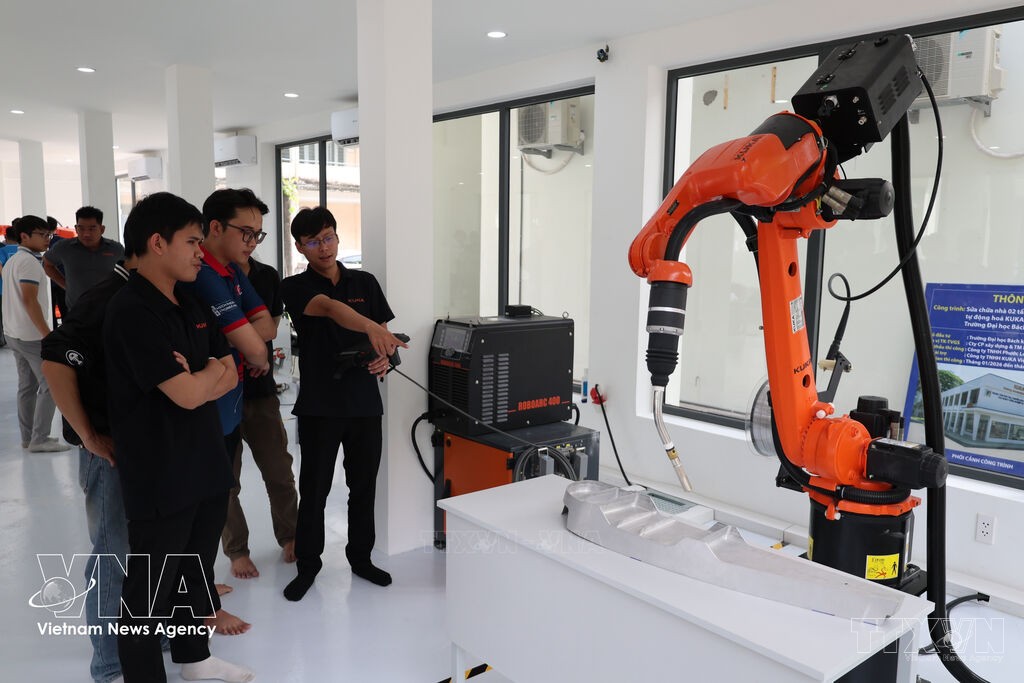 |
| An industrial robot is tested at the University of Da Nang. (Photo: VNA) |
Accordingly, digital infrastructure, artificial intelligence, and digital human capital are the pillars of rapid, sustainable development.
Digital workforce – a strategic asset for higher productivity
The Politburo’s Resolution 57-NQ/TW on breakthroughs in science, technology, innovation and national digital transformation underscores the imperative to overhaul education and training to supply a workforce capable of meeting the demands of scientific and technology development, innovation and national digital transformation.
Yet, reality reveals a critical gap: many firms possess technology but lack personnel with the digital skills and adaptive mindsets to leverage it. Consequently, investment fails to translate into productivity gains.
Le Thi Hoai Thuong, Director of External Affairs at Nestlé Vietnam Co., Ltd., said the company has adopted the “Connected Factory” model, under which its digital workforce has digitised all production data and processes, cutting around 60% of non-value-adding activities while improving operational efficiency and maintaining quality, safety and sustainability.
Tam stressed that Vietnam needs a cohesive national strategy linking the State, enterprises, and training establishments. The strategy must prioritise standardising training to international norms and investing in technological infrastructure to boost national productivity./.