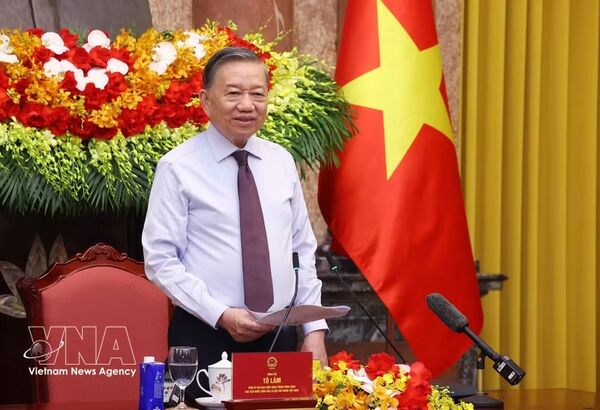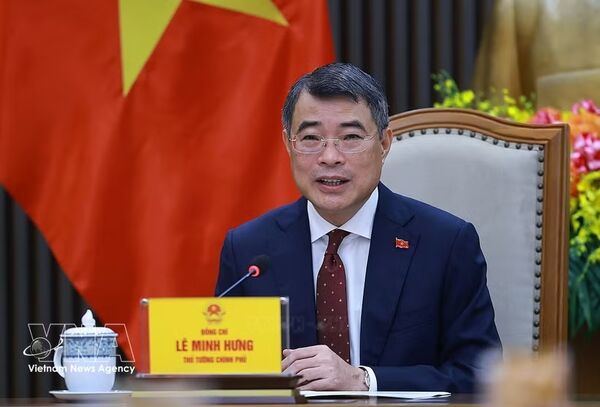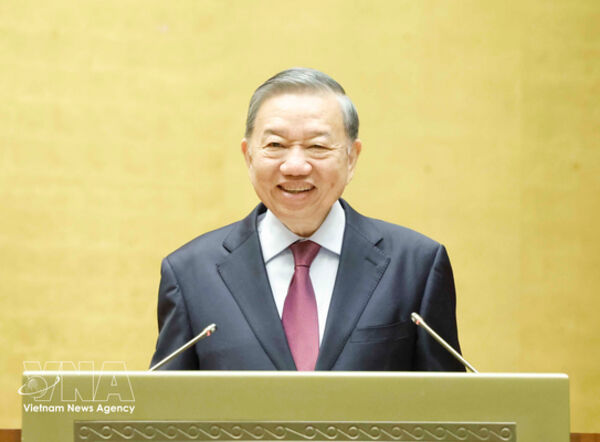
The jury unanimously voted on July 24 to confer the prestigious award on the Vietnamese leader, citing his role in "strengthening peace and cooperation among nations."
Despite volatility in aviation fuel prices triggered by tensions in the Middle East, flexible Government policies, particularly measures by the Ministry of Construction to cut fuel-related taxes, fees and infrastructure costs, helped maintain stable operations across the sector. As a result, no broad ticket shortages emerged.
According to Yang Feng, Secretary of the Party Committee of the School of International Education at Guangxi Normal University, the university has trained more than 5,000 Vietnamese students from the 1990s to the end of 2025.
Vietnam is a close neighbour, trusted friend and one of Guangxi’s most important partners. The Party organisation and authorities of China's autonomous region attach great importance to friendship and cooperation with Vietnamese localities; and will continue to take the lead in thoroughly implementing the important common perceptions reached by the two top leaders, thereby deepening cooperation and friendship between China and Vietnam.
The Hanoi–Quang Ninh high-speed railway is slated for completion by the end of 2028, with trains running at speeds that will cut travel time between the two localities by five to seven times, to just around 23 minutes.
They underscored that Party-to-Party exchanges have continued to play a pioneering role in guiding strategic orientation and effectively implementing high-level common perceptions.
Speaker of the Grand National Assembly of Türkiye Numan Kurtulmus described the IPU-152 as an event of historical importance with a highly relevant theme, not only globally but also directly related to important developments in regions.
The two leaders reviewed the positive outcomes of bilateral cooperation, noting satisfaction with the strong development of relations between the two Parties and countries, particularly in economy, trade, investment, tourism, and railway connectivity.
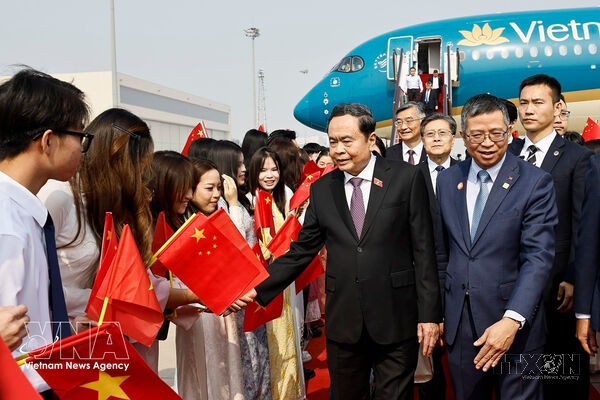
The Vietnamese leader affirmed that his visit aims to inherit and carry forward the consistent policy, strategic choice, and top priority of the Vietnamese Party and State regarding Vietnam–China relations. Together with Chinese leaders, including Zhao, the visit seeks to elevate strategic cohesion between the two Parties and countries to a higher level in the new era.
Guided by Resolution No. 80-NQ/TW on the development of Vietnamese culture, discussions highlighted institutional reform, a shift from administrative management to development-oriented governance, and strengthening the State’s facilitating role.
The Vietnamese leader reaffirmed Vietnam’s commitment to achieving net-zero emissions by 2050, identifying renewable energy development and green transition as strategic priorities. He proposed three key directions for cooperation to deal with energy risks and ensure supply chains.
On April 15, the APEC 2027 Secretariat, in coordination with the US APEC-RISE programme and the US Department of State, organised a workshop on enhancing capacity and promoting Vietnam’s role as host of APEC 2027.
Many overseas Vietnamese families, despite prioritising education and living standards, may face gaps in parent-child connection due to language and cultural differences. Therefore, the Talent Incubation Centre (HITA) in the Czech Republic seeks to foster deeper understanding within families, helping young people build confidence and character from within.
Against a backdrop of global market volatility, Russia and CIS countries are viewed as high-potential source markets, with visitors typically spending more and staying longer.
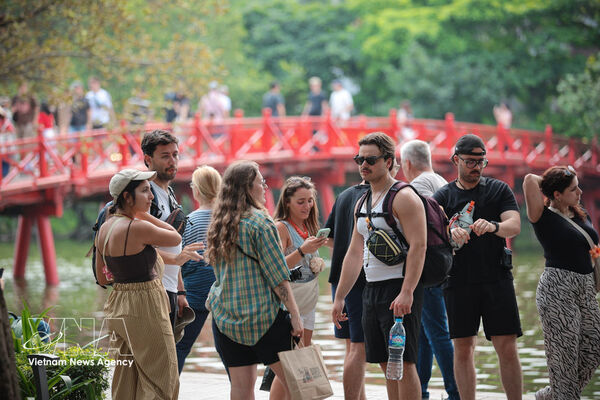
According to data released by the National Statistics Office, foreign arrivals in March reached nearly 2.1 million, up 1.3% year-on-year. In total, Vietnam welcomed an estimated 6.76 million foreign tourists in the first quarter, a more than 12% jump from the same period in 2025 and the highest Q1 figure ever recorded.
Last year, Tuyen Quang welcomed over 3.9 million visitors, and is aiming to attract around 4.1 million arrivals, including around 600,000 foreigners, this year. Tourism continues to be identified as a key economic sector, with development oriented toward sustainability, green growth, and enhanced competitiveness through digitalisation.
With its large scale, the ITE HCMC 2026 aims to promote tourism cooperation between Vietnam and priority markets such as Northeast Asia, Western Europe, North America, Southeast Asia, and Oceania while also boosting visitor arrivals from the Indian market