Vietnam's retail market hits 269 bln USD as e-commerce booms: report
Modern retail infrastructure in Vietnam grew substantially, reaching 1,293 supermarkets and 276 shopping malls nationwide, complemented by 8,274 traditional markets. The expansion has transformed urban economy and driven a consumer shift toward modern retail formats.
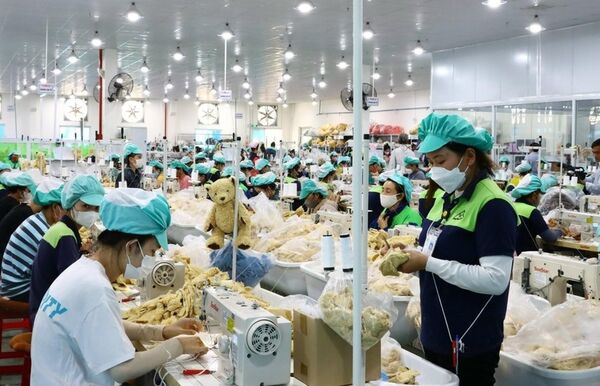
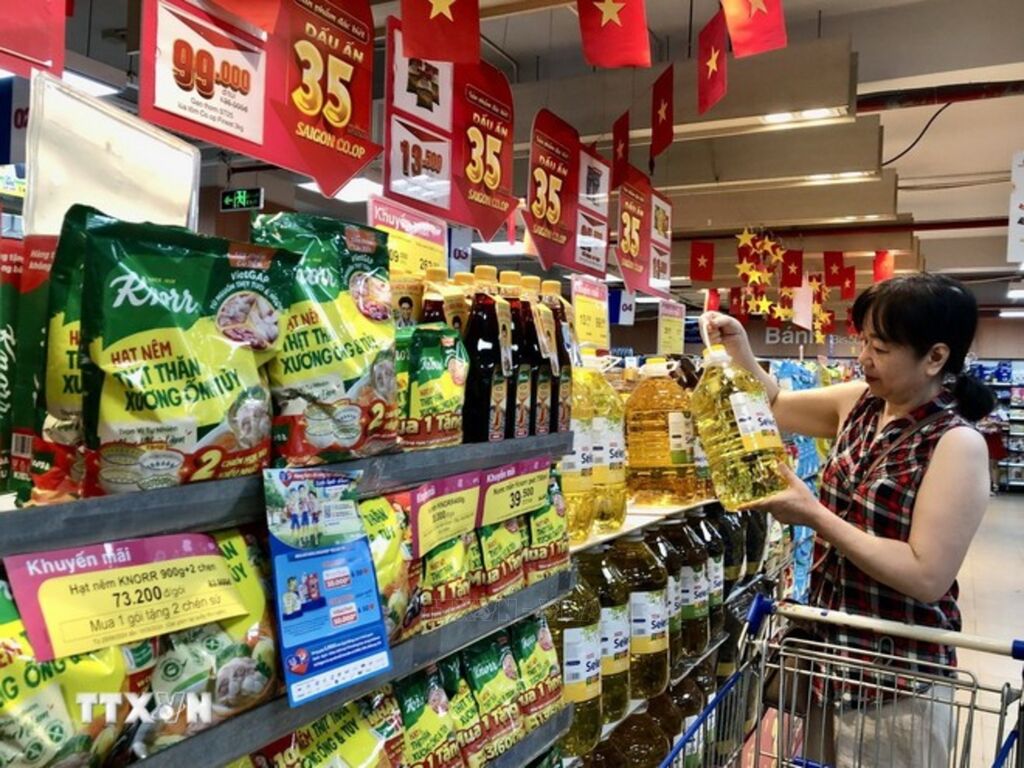
Vietnam's retail revenue hit roughly 269 billion USD in 2025. (Illustrative photo: VNA)

Hanoi (VNA) – Vietnam's retail revenue hit roughly 269 billion USD in 2025, with total goods sales and service revenue expanding 9-10% from a year earlier, the fastest pace in five years outside pandemic-distorted periods, according to the Vietnam Domestic Market Report 2025 from the Ministry of Industry and Trade’s Agency for Domestic Market Management and Development.

The surge signals the recovery of purchasing power and rising consumer confidence, boosted by the long-standing "Vietnamese Prioritise Vietnamese Goods" campaign, encouraging support for local products.

Modern retail infrastructure grew substantially, reaching 1,293 supermarkets and 276 shopping malls nationwide, complemented by 8,274 traditional markets. The expansion has transformed urban economy and driven a consumer shift toward modern retail formats.

Yet, stark urban-rural divides persist. Nearly half of modern outlets are clustered in Hanoi, Ho Chi Minh City, Da Nang and Hai Phong, leaving remote and mountainous areas dependent on traditional markets.

E-commerce stood out as a major success, reaching 32 billion USD, and claiming nearly 12% of the country’s retail sales. Growing over 20% year-on-year, it ranked as the second-fastest in Southeast Asia, driven by corporate investments in digital solutions like inventory management, cashless payments, online platforms, and livestream selling.

Consumption remains anchored in essentials, with food and foodstuffs at 34.1% of retail goods sales, highlighting the priority of basic needs. Services spending, covering accommodation, dining and tourism, outpaced goods, rising 12-14% annually, aligning with trends in more mature economies where consumers favour experiences and quality-of-life enhancements.

The report flags vulnerabilities, including exposure to external shocks from deep economic integration. Challenges include cumbersome administrative procedures, high land and rental costs, workforce skill gaps, uneven infrastructure in rural areas, and lingering issues with product quality and market transparency.

In 2025, exchange rate fluctuations, external inflationary pressures, and concerns over employment amid automation and artificial intelligence also weighed on consumer sentiment. Domestic firms have gained ground but trail multinationals in scale, technology and management sophistication.

Looking to 2026-2030, the outlook is optimistic. A population topping 100 million, youthful demographics and rising incomes position Vietnam as one of Southeast Asia's largest retail markets. E-commerce is forecast to reach 50 billion USD by 2030, solidifying itself among regional growth leaders.

The report provides critical insights for policymakers and businesses navigating one of Southeast Asia's fastest-growing economies. The full annual study, in Vietnamese and English, is available at www.dms.gov.vn./.

Related News


See Also

Credit growth nears 18% in 2025: central bank

At a press conference on banking sector performance in 2025 and tasks for 2026, held in Hanoi on December 29, SBV Deputy Governor Pham Thanh Ha said that as of December 24, 2025, total outstanding credit to the economy exceeded 18.4 quadrillion VND (about 670 billion USD), up 17.87% compared to the end of 2024.

New-style rural building drive delivers strong results nationwide

The “new-style rural area building” emulation movement for the 2021–2025 period delivered key achievements nationwide, contributing to a fundamental transformation of rural landscapes, improved living standards, and progress in agricultural restructuring, rural economic development aligned with urbanisation, environmental protection, and the preservation of traditional cultural values.

Key economic policies taking effect in January 2026

A wide range of new economic policies and legal provisions will come into force in January 2026, covering taxation, advertising, land use, minimum wages, public finance, railways, technology transfer and statistics, among others.

Government to provide cash gifts to social policy beneficiaries ahead of Tet 2026

People who rendered meritorious services to the revolution, those entitled to social protection, and social pensioners as defined by respective national ordinances, and decrees, together with orphans without guardians or those living in orphanages will receive a cash gift of 400,000 VND (15.2 USD) per person on the occasion of the 14th National Party Congress and the 2026 Lunar New Year (the Year of the Horse).

Culture must be Vietnam’s strength, people’s spiritual foundation: PM

He emphasised that the sector must cultivate an advanced Vietnamese culture rich in national identity, promote well-rounded human development, and foster a humane, civilised, and modern cultural environment, ensuring that culture permeates society and serves as both a strong spiritual foundation and an internal driver of development.

Khanh Hoa tightens fisheries management to combat IUU fishing

Khanh Hoa province is stepping up comprehensive measures to prevent illegal, unreported and unregulated (IUU) fishing, while making thorough preparations for the fifth inspection by the European Commission (EC), with the aim of lifting the “yellow card” warning and promoting sustainable fisheries development.

Hanoi strengthens efforts to curb sex imbalance at birth

Alongside changing mindsets, the capital has implemented a wide range of coordinated solutions to address sex imbalance at birth. Communication campaigns have been intensified at the grassroots level, targeting residential communities, youth, couples preparing for marriage and women of reproductive age.

11th National Patriotic Emulation Congress successfully wraps up

Patriotic emulation movements across the country have produced landmark achievements in the Ho Chi Minh era, including defeating the COVID-19 pandemic, completing the elimination of substandard housing four months ahead of schedule, building more than 3,000 kilometres of expressways, and advancing science – technology, innovation, and digital transformation.