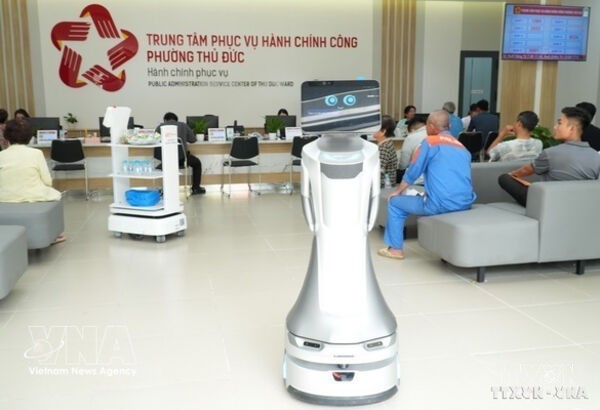
Resolution 57 is emerging as a powerful driver for building a modern administration, enhancing public service delivery, and offering increasingly convenient experiences for citizens.
With synchronised direction and unified implementation, ministries, sectors and localities are translating the Resolution into concrete institutions, mobilised resources and measurable outcomes.
In the course of implementing this resolution, the northern province of Quang Ninh has emerged as one of the early movers in translating strategic orientations into comprehensive development models linked to innovation and digital transformation.
The Ministry of Science and Technology is seeking feedback on a draft Prime Minister decision outlining four key categories: priority high technologies for investment, encouraged high-tech products, strategic technologies, and strategic tech products. The move is intended to capture emerging technology trends while strengthening the policy framework for high-tech development.
Only when integrated into the national strategy for cultural development and digital transformation, can archival work become a soft pillar of the national knowledge infrastructure, strengthening governance capacity and enhancing Vietnam’s soft power in the new era.
By the end of 2025, Vietnam had more than one million active enterprises. In the first two months of 2026, about 64,500 enterprises entered or re-entered the market, up 29.4% year-on-year, averaging 32,200 newly established or returning businesses per month.
The Ministry of Science and Technology has launched a Facebook page “Thong tin Khoa hoc va Cong nghe” (Information about Science and Technology), designed as a supplementary communication channel alongside its official fanpage.
A common feature in many successful economies is a fundamental shift in the perception of private enterprises. In countries such as Singapore, Germany, Republic of Korea (RoK) and China, private firms are viewed not mainly as entities requiring strict control but as development partners and key forces generating growth, jobs and innovation.
As the digital economy and knowledge-based sectors expand, institutions must evolve accordingly, regulating not only traditional economic relationships but also new resources such as data and intellectual capital.
After one year of implementing Resolution No. 57-NQ/TW of the Politburo, alongside notable achievements, the Central Steering Committee for science and technology development, innovation, and digital transformation has identified persistent shortcomings and bottlenecks requiring urgent attention - most notably a shortage of high-quality human resources in strategic technology fields.
The issuance of Resolution No. 80-NQ/TW on the development of Vietnamese culture in the new era has generated widespread excitement and high expectations among cultural regulators, artists and writers nationwide.
Implementing Resolution 79 is both a major political task and an intrinsic necessity as the capital faces mounting pressures from urbanisation, infrastructure demand, digital transformation, social welfare provision, and the need to improve residents’ quality of life.
When placed in its proper role, culture can serve as the “glue” that binds communities, reinforces identity, strengthens social consensus and provides a solid spiritual foundation for sustainable development.
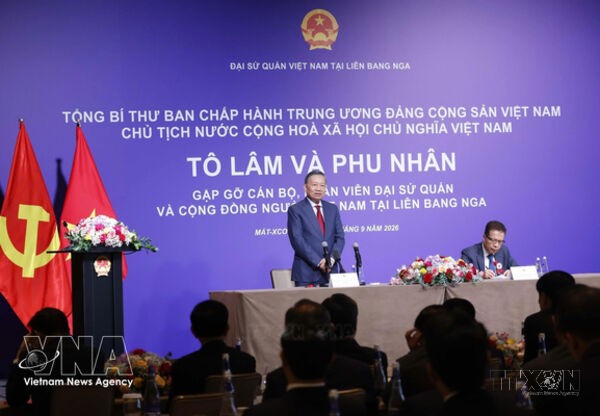
In a world marked by intensifying strategic competition, emerging conflicts and intertwined economic, security and social challenges, nearly 6.5 million Vietnamese living in over 130 countries and territories have continued to look to the homeland as a firm spiritual anchor. The homeland remains a source of confidence, connection and aspiration for Vietnamese abroad.
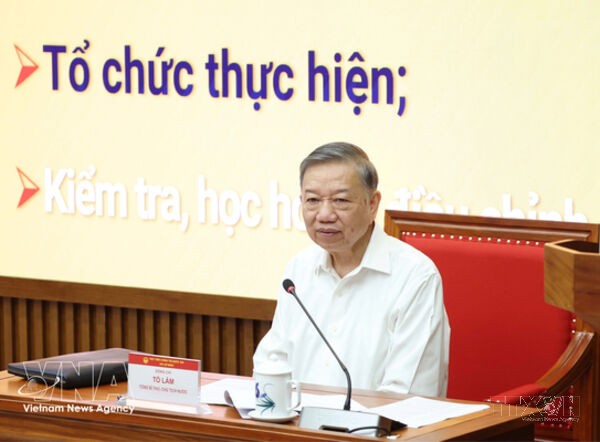
Organisational and personnel weaknesses must not be allowed to slow national progress, the Party General Secretary said, noting that time is a vital and non-renewable development resource, and delays in implementation risk wasting resources and missing opportunities for development.
Through 10 topics, the conference focuses on the key contents and new points in the documents of the 14th National Party Congress.Through 10 topics, the conference focuses on the key contents and new points in the documents of the 14th National Party Congress.
The platform represents the world’s most advanced high-performance computing infrastructure, designed to support research and development of next-generation artificial intelligence (AI) models.
To build a resilient healthcare system capable of meeting the challenges of ageing, emerging diseases and rising expectations for quality care, Vietnam must continue to strengthen primary and preventive care, invest in human resources, accelerate digitalisation and big data development, and refine healthcare financing mechanisms.
The author, a senior researcher at the Centre for Southeast Asian Studies (CSEAS), wrote that the Congress’s unanimously re-elect General Secretary To Lam for another five years clearly reflected a choice for stability and continuity amid increasingly complex regional and international developments.
Beyond reaffirming their leading role, the resolution assigns SOEs a pioneering and path-clearing function, requiring them to drive innovation, lead market development and serve as benchmarks for other economic sectors.