Thanks to its strengths in manufacturing momentum, human capital, and income convergence, Vietnam is not just joining; it is helping shape ASEAN’s next growth cycle.
In its strategy report for the second half of 2026, SSI Research projected Vietnam's real GDP growth at 8.2-8.5% year-on-year in the second quarter, with potential upside towards 9% if June data proves stronger. The forecast would mark an acceleration from the 7.83% growth recorded in the first quarter.
This will be PM Hung’s first participation in an ASEAN – Russia summit since taking office. The commemorative summit marks a vital milestone in the development of ASEAN – Russia relations, which have expanded over the past 35 years, especially since the establishment of their strategic partnership in 2018.
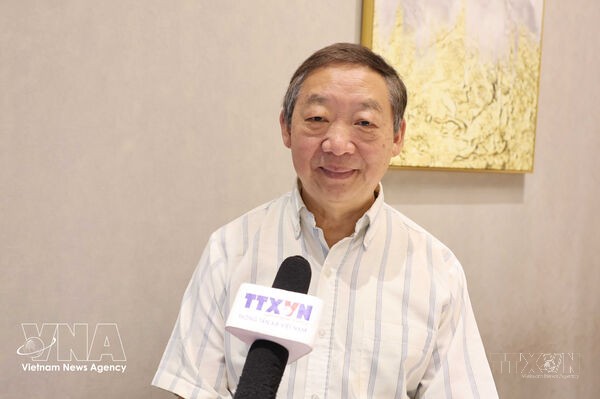
Dr. Kin Phea, Director General of the Cambodian Institute for International Relations (CIIR) under the Royal Academy of Cambodia (RAC), praised the forum as a forward-looking initiative that reflects Vietnam’s commitment to fostering dialogue on the future of Southeast Asia.
Recent developments have demonstrated that policies shaped through listening to public opinion have become a powerful source of social consensus and public trust, enabling the Party, the State and the people to work together toward more ambitious goals and a longer-term vision for national development.
Thayer observed that Vietnam is increasingly emerging as a regional hub not only for manufacturing but also for diplomacy, supported by an expanding network of international partnerships. In his view, AFF 2026 represents an open and forward-looking agenda in which Vietnam acts as a trailblazer, proposing and advancing new ideas for regional cooperation.
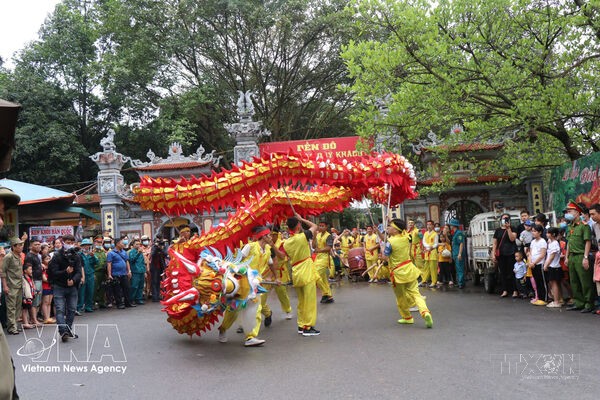
An AKP article emphasised that throughout the country’s development, the Vietnamese Party and State have consistently regarded ethnic minority cultures as an integral part of the national cultural heritage and an important endogenous resource contributing to the richness, diversity and unity of Vietnam’s culture.
Singapore and Vietnam remain committed to supporting a rules-based international order, strengthening ASEAN integration, and enhancing the bloc’s resilience. The two countries upgraded their ties to a Comprehensive Strategic Partnership (CSP) last year, marking Singapore’s first CSP with an ASEAN member state.
The writing suggested that Vietnam’s experience offers valuable lessons for countries seeking to balance national independence, international integration and economic growth.
Speaking to Vietnam News Agency correspondents in New Delhi, Pradhan noted that, drawing on his extensive experience in national security and international relations, as well as his deep knowledge of international law, the top Vietnamese leader identified three closely interrelated crises facing the world today: a crisis of the international order, a crisis of the development model, and a crisis of strategic trust.
Vietnam is among those few emerging market economies where an immense array of reforms is currently unfolding, generating considerable excitement and optimism. The reforms that the Government has been pushing over the last two years are the most significant since the Doi Moi (Renewal) era – a comprehensive, fast-paced reorganisation and restructuring of the state that could be potentially transformative if implemented well.
Vietnam is well positioned to remain among Asia’s fastest-growing economies. Future success will depend on the country’s ability to leverage opportunities from international integration while developing new domestic growth drivers to support its ambition of becoming a high-income economy by 2045.
The visits also took place at a time when the Philippines is serving as ASEAN Chair in 2026, Singapore is preparing to assume the ASEAN Chairmanship in 2027, and Vietnam is set to host the APEC Economic Leaders’ Meeting in 2027.
As digital transformation and global integration reshape the information landscape, Vietnam’s press sector continues to solidify its role as a key channel connecting the Party, State and people while providing comprehensive coverage of social life. The sector’s evolution reflects the country’s efforts to advance press freedom in line with its development goals and national circumstances.
The Straits Times noted that a significant portion of his address focused on the crisis of the international order, highlighting the need to strengthen respect for international law and exercise restraint.
Associate Professor Dr. Neak Chandarith said General Secretary and President To Lam demonstrated a clear understanding of global challenges and presented a balanced voice that advocates sovereignty, equality and fairness for small and middle-sized nations amid an increasingly uncertain international environment.
By moving from crisis response to proactive risk reduction, Vietnam has positioned itself as a responsible and mature “architect” of regional peace, said a Malaysia-based expert.
One of the highlights grabbing observers’ special attention was the first-time participation and keynote address by General Secretary of the Communist Party of Vietnam Central Committee and President of Vietnam To Lam.
The national programme aimed at promoting sustainable business practices across the country’s private sector during the 2026–2030 period sets out a comprehensive framework to promote the development of a responsible and sustainable private sector – one that balances economic performance, social responsibility and environmental protection.
An expert perceived that Vietnam needs to move towards a new-generation investment attraction model – one that seeks not only capital but also advanced technology, modern governance, innovation and stronger spillover effects on domestic enterprises.
The Vietnamese community in Singapore, numbering around 25,000 people, has remained closely connected, preserving national cultural identity while contributing actively to host society and bilateral friendship.